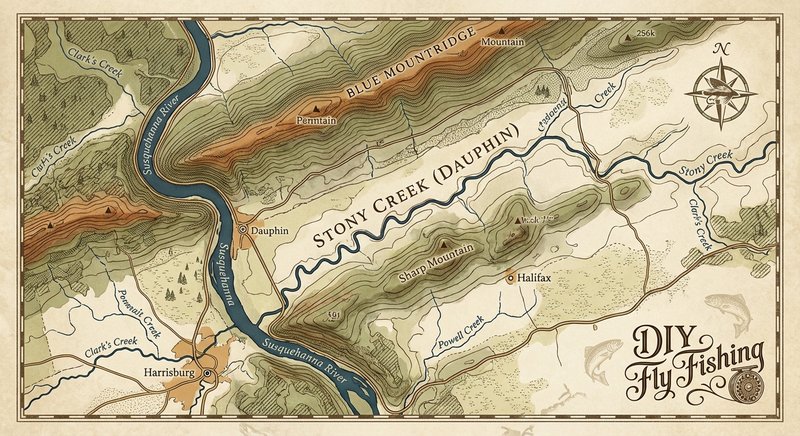
Stony Creek (Dauphin)
Fly fishing in Pennsylvania · Beginner · Best seasons: Spring, Summer, Fall
Target Species
Brown Trout, Brook Trout
About This Water
Freestone stream near Harrisburg with good wild trout populations. Scenic mountain fishing.
Fishing Recommendations
Stony Creek in Dauphin County, Pennsylvania, is one of the most unique fly fishing destinations in the Mid-Atlantic. Located just a short drive from the state capital of Harrisburg, it feels worlds away. Flowing through the heart of State Game Lands 211—often referred to as "St. Anthony’s Wilderness"—Stony Creek offers a remote, backcountry experience that is rare in the densely populated Susquehanna Valley.
Here is your comprehensive guide to fly fishing Stony Creek.
🎣 Location Overview
Stony Creek is a classic Appalachian freestone stream. What makes it special is the Gate. The road following the creek is closed to motorized vehicles for about 20 miles, creating a "Rail-to-Trail" corridor. This means if you want the best fishing, you have to earn it by hiking or biking.
The water is generally clear and cool, characterized by a mix of long, glassy pools, bouldery pocket water, and shallow riffles. Because it flows through a deep, forested valley, the water stays shaded, and the stream maintains a "wilderness" feel despite its proximity to urban areas.
🐟 Target Species & Behavior
- Brown Trout: You will find both stocked and "holdover" browns in the main stem. These fish are often found in the deeper pools near the numerous old bridge abutments and under the hemlock-shaded banks. They are wary and respond best to stealthy approaches.
- Brook Trout: The "gems" of Stony Creek. While the main stem holds some, the real magic happens in the many tiny "feeder" tributaries that tumble down the mountainside. These are wild, native Pennsylvania brookies. They are opportunistic but incredibly spooky; a shadow on the water will send them darting under a rock for an hour.
- Behavior: In the spring, fish are aggressive and hold in the swifter riffles. As summer heat sets in, they migrate to the "cold water refugia"—the mouths of tributaries and the deepest, oxygenated oxygenated pockets.
📅 Best Times to Fish
- Spring (April – June): This is the "Golden Age" on Stony. Water levels are optimal, and the major hatches occur. Late April and May provide the best dry fly action.
- Summer (July – Early September): The main stem can get low and clear. Fishing is best at dawn and dusk. This is the prime time to hike into the high-gradient tributaries to find cold water and active native brook trout.
- Fall (Late September – November): A spectacular time to be in the valley. Brown trout become more aggressive as they prepare to spawn. The water levels usually rise with autumn rains, and the cooling temperatures bring fish back into the riffles.
- Prime Conditions: Overcast days are superior here. The fish feel safer coming out from under the boulders when the sun isn't overhead.
🪰 Recommended Flies & Techniques
Dry Flies
Stony Creek trout are often "looking up" because of the heavy forest canopy.
- Mayflies: Adams (12-16), Hendrickson (14), Blue Winged Olive (18-22), and Sulfurs (16).
- Caddis: Elk Hair Caddis (14-16) in tan or olive.
- Terrestrials: This is the secret weapon. From June through September, Black Foam Ants (16-18), Beetles (14-16), and Cricket patterns are deadly.
- Attractors: Royal Wulff or Stimulators for the faster pocket water.
Nymphs
- Pheasant Tail (14-18): Mimics almost any mayfly nymph.
- Hare’s Ear (12-16): Great for the "buggy" look in deeper runs.
- Prince Nymph (12-14): Works well in the faster, oxygenated riffles.
- Zebra Midge (18-20): Essential for low-water summer conditions.
Streamers
- Wooly Bugger (6-10): Black or Olive. Swing these through deep pools or strip them past sunken logs to entice the larger holdover browns.
Techniques
- The "Dry-Dropper": A high-floating foam ant with a small Pheasant Tail nymph tied 18 inches below it is the most effective way to cover Stony Creek’s varied water.
- Stealth: Because the water is often clear, stay low. Avoid "lining" the fish with your fly line; use a long leader (9ft to 12ft) tapered to 5X or 6X.
💡 Pro Tips & Local Knowledge
- Bring a Bike: This is the #1 tip for Stony Creek. The "rail-trail" is flat and well-maintained. Biking 5–8 miles back from the Ellendale Gate will put you in water that sees a fraction of the pressure found near the parking lots.
- The "Cold Water" Rule: If the main stem feels warm to the touch in July, stop fishing it to protect the trout. Instead, look for where a small mountain stream enters the creek—the water there will be 10 degrees cooler and stacked with fish.
- Check the USGS Gauge: Look at the "Stony Creek at Dauphin, PA" gauge. You want a steady or slightly falling discharge. If it’s spiking after a heavy rain, the water turns "tannic" (tea-colored) due to the forest leaf litter and can be tough to fish.
- The "Blue Line" Adventure: Use a topo map to find the unnamed tributaries. Many of these hold wild fish in pools no bigger than a bathtub.
⚠️ Important Information
- Access: The primary access point is the Ellendale Forge parking area (Dauphin side). You can also access from the Cold Springs or Gold Mine areas on the Lebanon County side for a more remote start.
- Regulations: Stony Creek is generally managed under statewide regulations, but parts of the valley are within State Game Lands. Ensure you have a valid PA Fishing License and Trout Stamp.
- Rattlesnakes: Be Careful. This valley is famous for Timber Rattlesnakes. They like to sun themselves on the rocks near the trail and the creek. Always look where you are stepping or reaching.
- Cell Service: Expect zero cell service once you get a few miles past the gate. Tell someone where you are going and when you expect to be back.
- Ticks: The ferns and tall grass in the valley are prime tick habitat. Use Permethrin on your gear.
Stony Creek is a place for the angler who values solitude and scenery as much as the catch. Respect the wildness of the valley, and it will reward you with some of the most beautiful trout fishing in Pennsylvania.
Bug Hatches & Matching Flies
| Hatch | Type | Peak months | Time of day | Hook sizes | Matching flies |
|---|---|---|---|---|---|
| Blue Quill Paraleptophlebia adoptiva | mayfly | April | Afternoon | #16-18 | Blue Quill #16-18, Pheasant Tail #16-18 |
| Hendrickson Ephemerella subvaria | mayfly | April, May | Afternoon | #12-14 | Hendrickson Dark #12-14, Red Quill #12-14, Hendrickson Nymph #12-14 |
| Grannom Caddis Brachycentrus | caddis | April | Morning/Afternoon | #14-16 | Grannom Apple Gum #14-16, LaFontaine's Deep Sparkle Pupa #14-16 |
| March Brown Maccaffertium vicarium | mayfly | May, June | Afternoon/Evening | #10-12 | March Brown American #10-12, Hare's Ear #10-14 |
| Sulphur Ephemerella invaria | mayfly | May, June | Evening | #14-16 | Sulphur Parachute #14-16, Sulphur Emerger #14-16 |
| Slate Drake Isonychia bicolor | mayfly | June, September | Evening | #10-12 | Isonychia Parachute #10-12, Zug Bug #10-12 |
| Blue-Winged Olive Baetis | mayfly | March, April, September, October | Afternoon | #18-22 | BWO Sparkle Dun #18-22, RS2 #20-22 |
| Terrestrials (Ants/Beetles) Formicidae / Coleoptera | terrestrial | July, August, September | All Day | #12-18 | Black Cinnamon Ant #14-18, Black Foam Beetle #12-16 |