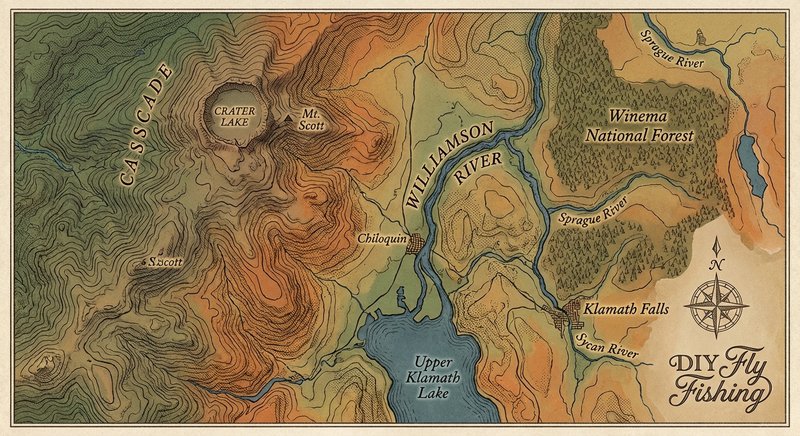
Williamson River
Fly fishing in Oregon · Intermediate · Best seasons: Spring, Fall
Target Species
Rainbow Trout
About This Water
Trophy rainbow trout fishery in Klamath Basin. Large fish migrate from Upper Klamath Lake.
Fishing Recommendations
Welcome to the "Land of the Giants." As your guide, I can tell you that the Williamson River in Southern Oregon is not just another trout stream; it is a world-class destination for trophy-sized Great Basin Redband Trout. This is a technical, often humbling, but incredibly rewarding fishery.
Here is your comprehensive guide to fly fishing the Williamson River.
🎣 Location Overview
The Williamson River is a spring-fed gem flowing through the high desert plateau of Southern Oregon. What makes it legendary is its relationship with Upper Klamath Lake. During the summer, as the lake warms and develops algae blooms, massive adfluvial Redband trout migrate into the Williamson seeking the river's cool, oxygenated, spring-fed waters.
The river is generally divided into two distinct sections:
- The Upper River: Above the Sprague River confluence. It has a classic spring creek feel—clear, meadow-lined, and intimate.
- The Lower River: Below the Sprague confluence. This water is deeper, slower, and darker (tea-colored), often requiring a boat to fish effectively.
🐟 Target Species & Behavior
The primary draw is the Inland Redband Trout. These are not your average rainbows; they are genetically distinct, high-desert survivors that grow to steelhead-like proportions (often exceeding 25–30 inches and 10 lbs).
- Behavior: These fish are migratory. They enter the river in "pulses." They are extremely wary due to the crystal-clear water in the upper sections and heavy pressure in the lower sections.
- Holding Patterns: Look for "cold water plumes." Because the Williamson is spring-fed, trout will stack up where cold springs enter the main stem. They also love deep undercut banks and the shadows of overhanging willows.
- Feeding: They are opportunistic but can be highly selective. They feed heavily on leeches, snails, scuds, and the famous Hexagenia limbata mayflies.
📅 Best Times to Fish
The Williamson is a seasonal fishery dictated by water temperature and migrations.
- Spring (Late May – June): The "Opener" (usually late May) is prime. You catch the first push of fish moving out of the lake. Water levels are high, and the fish are hungry.
- The "Hex" Season (Late June – July): This is the most famous window. The Hexagenia hatch occurs at dusk, bringing the largest fish in the river to the surface.
- Fall (September – October): This is my personal favorite. The crowds thin out, the big fish are at their heaviest weight of the year before spawning, and the BWO (Blue Winged Olive) hatches can be spectacular.
- Time of Day: Low light is your best friend. Early morning and the "magic hour" before dark are when the giants lose their inhibitions.
🪰 Recommended Flies & Techniques
You need to be prepared for both delicate dry fly sips and aggressive subsurface pulls.
Top Fly Patterns
- Leeches: The Seal Bugger (in black, olive, or "Klamath" plum) is the undisputed king of the Williamson.
- Nymphs: Prince Nymphs (size 10-14), Birds Nest, and Pheasant Tails. Don't forget scud and snail patterns, which are staples of their diet.
- Dries: For the Hex hatch, you need a Hexagenia Paradox or a Crippled Hex (size 4–6). For fall, have size 18-20 BWOs and Parachute Adams.
- Streamers: Mid-sized baitfish patterns in white or silver to mimic tui chubs.
Effective Techniques
- The "Williamson Swing": Using an intermediate sinking line or a light sink tip, cast across and slightly downstream, allowing the Seal Bugger to swing through the current. Give it short, erratic strips.
- Stillwater-Style Nymphing: In the slow lower river, many guides use long leaders (15+ feet) under a slip-indicator, hanging midges or scuds just off the bottom.
- Dry Fly Stealth: During the Hex hatch, don't blind cast. Wait to hear the "gulp" of a big fish, then target that specific ring.
💡 Pro Tips & Local Knowledge
- The 6-Weight Rule: Leave your 4-weight at home. You need a 6-weight or even a 7-weight rod. These fish are powerful, and the river is full of submerged timber. You need the backbone to turn a 10lb fish before it snaps you off in the roots.
- Long Leaders: These fish are incredibly leader-shy. Even when using streamers, a 10-12 foot leader is standard. For dries, 15 feet is not uncommon.
- Focus on the Confluence: The area where the Sprague River meets the Williamson is a major transition zone. The Sprague is warmer and murkier; the Williamson is cooler and clearer. Fish often hold right on the "seam" where these two waters mix.
- Collier Memorial State Park: This is one of the best public access points for those without a boat. It offers great wading water and beautiful scenery.
⚠️ Important Information
- Access: Much of the Williamson's banks are private property. Respect "No Trespassing" signs. Using a drift boat or a pointed-bow motorboat is the best way to see the river.
- Regulations: The Williamson is strictly Catch and Release for trout. Barbless hooks are required. Always check the current ODFW (Oregon Department of Fish and Wildlife) regulations before heading out, as zones and season dates can change.
- Wading Safety: The river bottom can be "mucky" in spots and extremely slick with volcanic rock in others. A wading staff is highly recommended.
- Environment: Be mindful of the "Klamath Midge"—they don't bite, but they can be thick enough to inhale! Bring a buff or face mask.
The Williamson is a "quality over quantity" river. You might only get two or three hookups in a day, but there is a very real chance that one of those fish will be the largest trout of your life. Tight lines!
Bug Hatches & Matching Flies
| Hatch | Type | Peak months | Time of day | Hook sizes | Matching flies |
|---|---|---|---|---|---|
| Hexagenia Hexagenia limbata | mayfly | June, July | Dusk/Evening | #4-8 | Paradrake Hex #6-8, Hexagenia Nymph #4-8, Crippled Hex #6 |
| Callibaetis Callibaetis spp. | mayfly | May, June, July, August, September | Late Morning/Afternoon | #12-16 | Callibaetis Spinner #14-16, Burk's Callibaetis Nymph #14-16, Quigley’s Callibaetis Cripple #14-16 |
| Blue-Winged Olive Baetis spp. | mayfly | March, April, October, November | Mid-day/Afternoon | #18-22 | RS2 #18-22, Parachute BWO #18-20, BWO CDC Emerger #20 |
| Damselfly Enallagma spp. | terrestrial | June, July | All Day | #10-12 | Marabou Damsel Nymph #10-12, Adult Damsel #12, Braided Butt Damsel #10-12 |
| Pale Morning Dun Ephemerella excrucians | mayfly | June, July | Morning/Early Afternoon | #16-18 | PMD Sparkle Dun #16-18, Pheasant Tail Nymph #16-18, Split Case PMD #16-18 |
| Traveling Sedge Hesperophylax occidentalis | caddis | June, July | Evening | #8-12 | Goddard Caddis #8-10, Mikulak Sedge #8-12, Peacock Caddis #10-12 |
| Midges Chironomidae | midge | March, April, May, September, October | Morning | #18-24 | Zebra Midge #18-22, Griffith's Gnat #20-24, Ice Midge #20 |
| Mahogany Dun Isonychia / Paraleptophlebia | mayfly | September, October | Afternoon | #16-18 | Mahogany Sparkle Dun #16-18, Parachute Mahogany Dun #16-18, Mahogany Cripple #16 |
| Trico Tricorythodes spp. | mayfly | August, September | Early Morning | #20-24 | Trico Spinner #20-24, Sunken Trico #22, Trico Drown Spinner #20-22 |