Wood River
Fly fishing in Oregon · Advanced · Best seasons: Spring, Summer, Fall
Target Species
Rainbow Trout, Brown Trout
About This Water
Spring-fed Klamath Basin stream with large rainbow trout. Technical fishing in meadows.
Fishing Recommendations
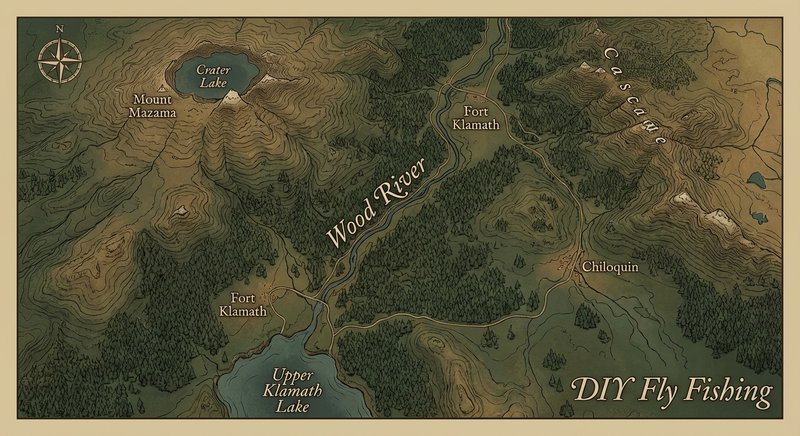
The Wood River in Southern Oregon is a hidden gem that feels like a slice of a Montana spring creek transported to the base of the Cascade Mountains. Located near Fort Klamath, this spring-fed river is famous for its gin-clear water, meandering loops, and the massive "adfluvial" Redband Rainbows that migrate up from Agency and Upper Klamath Lakes.
As your guide, here is the breakdown of how to tackle this technical but highly rewarding fishery.
🎣 Location Overview
The Wood River is a classic meadow spring creek. It rises from the ground at Jackson F. Kimball State Park and flows through lush pastures and pine forests before emptying into Agency Lake.
What makes it special is its consistency. Because it is spring-fed, the water temperature remains cold and stable year-round, providing a refuge for trout when other rivers get too warm in the summer. The river is characterized by deep, slow-moving bends, silty bottoms, and incredibly complex undercut banks. It is a "technical" river—the water is so clear that the fish can see you long before you see them.
🐟 Target Species & Behavior
- Great Basin Redband Trout: These are a unique subspecies of Rainbow Trout. Many are "adfluvial," meaning they live in the lake and move into the river to find cool water or to spawn. They are incredibly powerful, often reaching 20+ inches.
- Brown Trout: The Wood holds a very healthy population of resident and migratory Brown Trout. They are notorious "bank feeders," hugging the deep undercuts during the day and coming out to hunt in the shallows during low light.
Behavior: These fish are highly spooked by shadows and heavy footfalls. They hold tight to the banks, under overhanging grasses, and in the deep "buckets" at the apex of river bends.
📅 Best Times to Fish
- Spring (Late April – June): Opening day (usually late April) can be fantastic for nymphing and streamers. As the weather warms in June, the Pale Morning Duns (PMDs) start to pop.
- Summer (July – August): This is prime time.
- The Hex Hatch: Late June through mid-July features the legendary Hexagenia limbata (giant yellow mayfly) hatch at dusk.
- Terrestrials: August is "Hopper Time." Large trout will smash grasshopper patterns tight to the meadow banks.
- Fall (September – October): The big Browns begin their pre-spawn migration. This is the best time for trophy hunters to swing or strip large streamers.
Best Time of Day: During the heat of summer, the "magic hour" is the last 90 minutes of light. Mid-day is best for technical nymphing or hopper fishing when the sun puts the grasshoppers in flight.
🪰 Recommended Flies & Techniques
Dry Flies
- The Hex: Size 6-8 yellow/golden spent-wing mayflies or foam-bodied Hex patterns.
- Terrestrials: Fat Alberts, Morrish Hoppers, and Carpenter Ants (Size 8–12).
- Mayflies: PMD Sparkle Duns, Parachute Adams (Size 16–20).
- Caddis: Elk Hair Caddis (Tan/Olive, Size 14–16).
Nymphs & Streamers
- Nymphs: Zebra Midges (Size 18–22), Pheasant Tails (Size 16–18), and San Juan Worms (after a rain).
- Streamers: Black or Olive Woolly Buggers, Sculpzillas, and articulated streamers for big Browns.
Presentation Tips
- The "Reach Cast": Essential for getting a drag-free drift across the complex currents of a meandering river.
- Stealth Nymphing: Use long leaders (12ft+) and small indicators (or no indicator at all) to avoid spooking fish in the clear water.
- Bank Pounding: When fishing hoppers or streamers, your fly needs to land within inches of the grass. If you aren't occasionally getting stuck in the grass, you aren't fishing close enough to the fish.
💡 Pro Tips & Local Knowledge
- Use a Watercraft: While there is some bank access at Kimball Park and the Wood River Day Use area, the river is best fished by kayak or canoe. The banks are often boggy or private property, and a small boat allows you to sneak up on holes quietly.
- The "Shadow" Rule: Never let your shadow fall across a pool. On the Wood, a shadow is like a dinner bell for the fish to hide.
- Kimball Park Headwaters: The water at the source is ice-cold and crystal blue. It’s a great spot for small dry fly action, but the fish are smaller than those found further downstream.
- Mind the Weed Mats: In late summer, aquatic vegetation becomes thick. Learn to "dap" your fly in the open pockets of water between weed mats.
⚠️ Important Information
- Access Points:
- Upper: Jackson F. Kimball State Park.
- Middle: Wood River Day Use Area (off Hwy 62).
- Lower: Loosley Park and the Petric Canal area.
- Regulations: The Wood River usually falls under "Special Quality Research" or specific trout regulations. Most of it is catch and release only for Redband Trout, and there are strict gear restrictions (barbless hooks). Always check the current ODFW Fishing Regulations before heading out.
- Environmental Hazards: The mosquitoes in the Fort Klamath area are legendary. From June through August, bring the strongest repellent you can find—you will need it.
- Wading Safety: Be careful of the "bottomless" silt in the lower sections. Stick to the gravel bars when possible.
Bug Hatches & Matching Flies
| Hatch | Type | Peak months | Time of day | Hook sizes | Matching flies |
|---|---|---|---|---|---|
| Blue-Winged Olive (BWO) Baetis tricaudatus | mayfly | March, April, September, October | Late Morning/Afternoon | #18-22 | BWO Sparkle Dun #18-20, RS2 #20-22, Pheasant Tail Nymph #18-20 |
| Pale Morning Dun (PMD) Ephemerella excrucians | mayfly | June, July, August | Late Morning/Early Afternoon | #14-18 | PMD Parachute #16-18, Quigley's PMD Hackle Stacker #16-18, Military May #16-18 |
| Spotted Sedge Hydropsyche | caddis | June, July | Evening | #14-16 | Elk Hair Caddis #14-16, LaFontaine's Deep Sparkle Pupa #14-16, Godzilla Caddis #14-16 |
| Callibaetis Callibaetis ferrugineus | mayfly | July, August | Morning | #14-16 | Callibaetis Spinner #14-16, Hare's Ear Nymph #14-16, Crippled Callibaetis #14-16 |
| Trico Tricorythodes | mayfly | August, September | Early Morning | #20-24 | Trico Spinner #20-24, WD-40 #20-22 |
| Grasshoppers Orthoptera | terrestrial | August, September | Midday/Afternoon | #8-12 | Morrish Hopper #8-12, Dave's Hopper #10-12, Fat Albert #8-10 |
| Midges Chironomidae | midge | January, February, March, December | Morning/Late Afternoon | #18-24 | Zebra Midge #18-22, Griffith's Gnat #18-22, Brooks Sprout Midge #20-22 |
| Black Ants & Beetles Formicidae / Coleoptera | terrestrial | July, August, September | All Day | #12-18 | Cinnamon Ant #14-16, Black Foam Beetle #12-16 |
| Damselfly Enallagma | terrestrial | June, July | Midday | #10-12 | Marabou Damsel Nymph #10-12, Adult Damsel #10-12 |