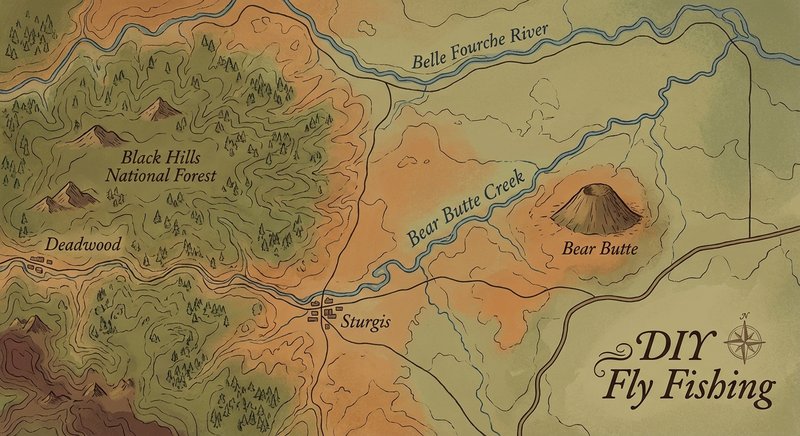
Bear Butte Creek
Fly fishing in South Dakota · intermediate · Best seasons: spring, summer, fall
Target Species
Brown Trout, Rainbow Trout
About This Water
Stream near sacred mountain with wild trout. Cultural and natural significance.
Fishing Recommendations
Welcome to the Black Hills of South Dakota. As your guide, I’m excited to talk about Bear Butte Creek. While most anglers flock to the "Big Three" (Rapid, Spearfish, and Castle Creeks), Bear Butte Creek is a hidden gem tucked away near the towns of Deadwood and Sturgis.
It is a smaller, more intimate stream that offers a "classic" small-water experience: technical casting, wild fish, and incredible scenery. Here is the breakdown for your trip.
🎣 Location Overview
Bear Butte Creek originates in the high limestone plateau of the northern Black Hills. It flows through a mix of steep canyons, lush mountain meadows, and eventually out toward the iconic Bear Butte state monument.
What makes this water special is its intimacy. This is not a river where you need a 6-weight and long hauls. It’s a 2- to 4-weight paradise. The water is crystal clear and relatively shallow, characterized by plunge pools, tight pockets, and short riffle-run sequences. Because it sees less pressure than Spearfish Creek, the fish are often less "educated," but the technical nature of the tight brush and clear water keeps it challenging.
🐟 Target Species & Behavior
The primary residents here are Brown Trout and Rainbow Trout.
- Brown Trout: These are the kings of Bear Butte Creek. Most are wild, displaying vibrant buttery gold flanks and bright red spots. They are wary and tend to hold in the "dark water"—underneath overhanging willow banks, behind large boulders, or in the deep undercuts of the canyon sections.
- Rainbow Trout: You will find Rainbows interspersed with the Browns, often in the faster, more oxygenated "bubble curtains" at the head of pools.
- Behavior: These fish are opportunistic but easily spooked. In such small water, they have a high "flight" response. If they see your shadow or a splashy landing, the pool is done for an hour. They feed heavily on aquatic insects (Midges, Baetis, and Caddis) and terrestrial insects in the summer.
📅 Best Times to Fish
Optimal Seasons
- Spring (April – June): This is prime time. As the snow melts and the water warms into the 40s and 50s, the fish become very active. This coincides with the first major hatches of the year.
- Summer (July – August): Excellent for dry fly fishing and terrestrials. However, keep an eye on water temperatures; if the water hits 68°F, give the fish a break. Stick to the higher-elevation stretches during the heat of summer.
- Fall (September – October): My personal favorite. The Brown trout move into their spawning colors and become aggressive. The changing aspen leaves make for a spectacular backdrop.
Best Times of Day
- Spring/Fall: 10:00 AM to 4:00 PM (Wait for the water to warm slightly).
- Summer: Early morning (sunrise to 11:00 AM) and "the magic hour" just before dusk when the caddis are out.
🪰 Recommended Flies & Techniques
Top Fly Patterns
- Dry Flies:
- Elk Hair Caddis (Tan or Olive, sizes 14–18)
- Parachute Adams (Sizes 16–22)
- Hippie Stomper or Foam Beetles (Summer terrestrials, sizes 12–16)
- Nymphs:
- Pheasant Tail (Beadhead or Jig style, sizes 16–20)
- Zebra Midge (Red or Black, sizes 18–22)
- Perdigons (Great for getting deep in small plunge pools quickly)
- Streamers:
- Woolly Bugger (Olive or Black, sizes 10–12) – Fish these through the deeper canyon holes.
Techniques & Presentation
- The "Dry-Dropper": This is the most effective way to fish Bear Butte Creek. Use a buoyant dry fly (like a Stimulator or Hippie Stomper) and hang a small Pheasant Tail or Midge 18–24 inches below it.
- Stealth is Key: Move upstream. Always. Approach pools from behind the fish’s field of vision. Stay low, sometimes even kneeling, to avoid being silhouetted against the sky.
- The Bow-and-Arrow Cast: You will encounter tight brush. Master this cast to get your fly into pockets that other anglers can't reach.
💡 Pro Tips & Local Knowledge
- Focus on the Upper Sections: The fishing is most consistent upstream of the Sturgis city limits. Explore the reaches within the Black Hills National Forest for the best wild trout habitat.
- Watch the "Micro-Eddies": In the canyon sections, even a 6-inch swirl of water against a rock can hold a 12-inch Brown trout. Don't skip the small stuff.
- Light Tackle: A 7.5-foot 3-weight rod is the perfect tool for this creek. It allows for delicate presentations and makes a 10-inch wild Brown feel like a monster.
- The "Post-Rain" Window: If you get a light afternoon thunderstorm in the summer, tie on a small streamer or a cricket pattern. The fish lose their wariness as the water gets a slight "stain" to it.
⚠️ Important Information
- Access: Much of the creek runs through a mix of National Forest and private land. Always look for Forest Service signage or use an app like OnX Maps to ensure you aren't trespassing.
- Permits: A South Dakota fishing license is required. You can purchase these online via the South Dakota Game, Fish and Parks (SDGFP) website or at local fly shops in Spearfish or Rapid City.
- Regulations: Bear Butte Creek generally falls under the Black Hills "inland water" regulations, but always check the current SDGFP handbook for specific length limits or tackle restrictions (which can change seasonally).
- Wildlife: This is mountain lion and rattlesnake country. While encounters are rare, keep your eyes open, especially when hiking through tall grass or rocky ledges near the water.
Final Guide Advice: Keep your shadow off the water, keep your tip up, and enjoy the solitude. Bear Butte Creek is a place to slow down and appreciate the "fine art" of fly fishing. Tight lines!
Bug Hatches & Matching Flies
| Hatch | Type | Peak months | Time of day | Hook sizes | Matching flies |
|---|---|---|---|---|---|
| Blue Winged Olive Baetis | mayfly | March, April, September, October | Late Morning/Afternoon | #18-22 | RS2 #18-22, Parachute Adams #18-22, Pheasant Tail #18-20 |
| Little Black Stonefly Capniidae | stonefly | February, March | Mid-day | #14-18 | Zebra Midge #18-20, Little Black Stone #16-18, Prince Nymph #14-16 |
| Mother's Day Caddis Brachycentrus | caddis | May | Afternoon/Evening | #14-16 | Elk Hair Caddis #14-16, Peacock Caddis #14-16, LaFontaine's Deep Sparkle Pupa #14-16 |
| Pale Morning Dun Ephemerella | mayfly | June, July | Morning/Early Afternoon | #16-18 | PMD Sparkle Dun #16-18, Split Case PMD #16-18, CDC Bubbleback PMD #16-18 |
| Trico Tricorythodes | mayfly | July, August, September | Early Morning | #20-24 | Trico Spinner #20-24, Sunken Trico #20-22 |
| Spotted Sedge Hydropsyche | caddis | June, July, August | Evening | #14-18 | Tan Elk Hair Caddis #14-18, Soft Hackle Hare's Ear #14-16, Goddard Caddis #14-16 |
| Grasshoppers Orthoptera | terrestrial | July, August, September | Late Morning/Afternoon | #8-12 | Parachute Hopper #10-12, Morrish Hopper #8-12, Joe's Hopper #10-12 |
| Midges Chironomidae | midge | January, February, March, December | All Day | #18-24 | Griffith's Gnat #18-22, Mercury Midge #20-22, Palomino Midge #20-22 |