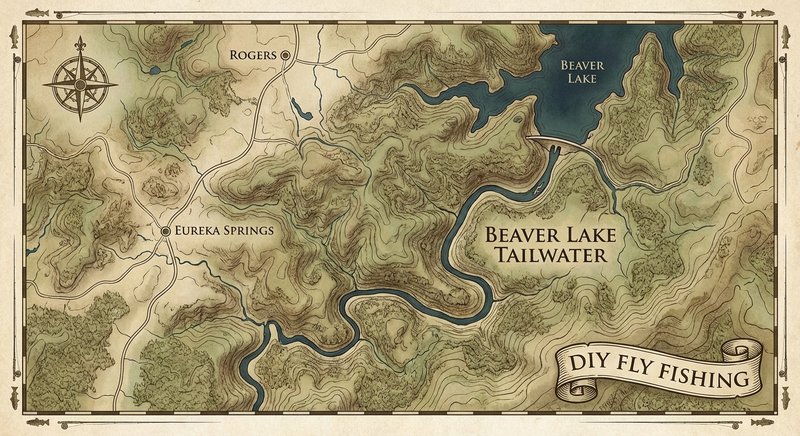
Beaver Lake Tailwater
Fly fishing in Arkansas · Beginner · Best seasons: Spring, Summer, Fall, Winter
Target Species
Rainbow Trout, Brown Trout
About This Water
Excellent trout fishing below Beaver Dam. Rainbow and brown trout in clear water.
Fishing Recommendations
As an expert guide who has spent years navigating the nuances of the Ozark tailwaters, I can tell you that the Beaver Lake Tailwater (the upper reaches of the White River) is a unique gem. While it is the shortest section of the White River tailwater system—running roughly 8 miles from Beaver Dam to the headwaters of Table Rock Lake—it offers some of the most technical and rewarding trout fishing in Arkansas.
🎣 Location Overview
The Beaver Tailwater is characterized by its cold, nutrient-rich water released from the bottom of Beaver Dam. This is a "boutique" tailwater compared to the massive Bull Shoals section of the White. It is narrower, more intimate, and incredibly scenic, flanked by limestone bluffs and hardwood forests.
What makes it special is the water clarity. It is often gin-clear, requiring light tippets and stealthy approaches. The river alternates between shallow gravel bars, deep bluff pools, and long, slow-moving glides. It is primarily a wade-fisherman's paradise during low flow, but becomes a productive drift-boat fishery when the turbines are spinning.
🐟 Target Species & Behavior
- Rainbow Trout: The bread and butter of this river. They are heavily stocked but also include a healthy population of "holdovers" that have become acclimated to the river’s natural food sources. They tend to congregate in the faster oxygenated riffles and at the heads of deep pools.
- Brown Trout: This is where the trophies live. The tailwater holds some massive, weary Browns. They are highly predatory and secretive, often holding under sunken timber, undercut banks, or in the darkest depths of the bluff holes. During the fall spawn, they become more aggressive and visible.
- Behavior: Due to the clear water, these fish are "line shy." They have a doctorate in identifying poor drifts. They feed primarily on midges, sowbugs, and scuds, which are the caloric engines of this river.
📅 Best Times to Fish
Optimal Seasons
- Winter (Dec–Feb): This is prime time for midge fishing and chasing big Browns. The "shad kill" often occurs during extreme cold snaps when shad from Beaver Lake are sucked through the turbines, triggering a feeding frenzy.
- Spring (March–May): Excellent for consistent nymphing. Caddis hatches begin to appear as the weather warms.
- Summer (June–Aug): While the air is hot, the water stays 50–55°F. This is Terrestrial Season. High sun makes for great sight-fishing with hoppers and ants.
- Fall (Sept–Nov): The Brown Trout spawn occurs. The fish are beautiful, aggressive, and active. Note: Please stay off active spawning beds (redds).
Prime Windows
- The "Power Off" Window: Fishing is generally best when the Southwest Power Administration (SWPA) is not generating electricity. Low water allows for easy wading.
- Cloudy Days: For Brown Trout, overcast skies are your best friend. It brings them out of the deep holes to hunt in shallower water.
🪰 Recommended Flies & Techniques
Top Fly Patterns
- Midges: Zebra Midges (size 18–22) in black, red, or "root beer." Ruby Midges and WD-40s.
- Scuds & Sowbugs: Ray Charles (grey or tan), V-Rib Sowbugs (size 16–18). These are the primary food source 365 days a year.
- Attractors: Eggs (pink or orange) and San Juan Worms—especially effective after a rain or during higher water.
- Streamers: White Wooly Buggers or Shad Spankers (to mimic shad), and large articulated patterns (Drunk & Disorderly) for trophy Browns.
- Dry Flies: Parachute Adams, Elk Hair Caddis, and Fat Albert or Foam Hoppers in late summer.
Effective Techniques
- Sight Nymphing: In the clear glides, find a fish, use a tiny yarn indicator or "high-stick" without one, and drift a midge or sowbug directly to their nose.
- The "Shad Kill" Swing: When shad are coming through the dam, use a white streamer on a sink-tip line. Dead-drift it, then give it erratic strips to mimic a dying fish.
- 6X and 7X Tippet: You will rarely catch fish on 4X here. Fluorocarbon is a must.
💡 Pro Tips & Local Knowledge
- The "Parker Bend" Area: This is one of the most famous stretches. It has great gravel bars for wading and holds a high concentration of fish.
- The Dam Site: The first half-mile below the dam is catch-and-release only (Special Regulation). The fish here are educated but numerous.
- Watch the Horn: Before they start generating water, a loud siren sounds from the dam. If you hear it, move to the bank immediately. The water can rise several feet in minutes.
- The "Slow Drag": If a standard dead-drift isn't working, give your nymph a tiny, slow lift at the end of the drift. This mimics an emerging insect and often triggers a strike.
⚠️ Important Information
Access Points
- Beaver Dam Site Park: Directly below the dam. Excellent wading.
- Parker Bend: Mid-river access with a good boat ramp and wading shoals.
- Spider Creek: Near the lower end of the tailwater, great for kayak launching and wade access.
Regulations & Permits
- License: You need an Arkansas Fishing License AND a Trout Permit.
- Special Regulations: The area from Beaver Dam to the boundary signs at Parker Bend is a catch-and-release area for all trout, and it is Barbless Hook Only. Always check the latest AGFC (Arkansas Game and Fish Commission) guidebook before heading out.
- Generation Schedule: Call the projected generation recording at (866) 493-3563 or check the "SWPA Generation" app. This is the most important step for safety and success.
Guide’s Final Word: The Beaver Tailwater is a "thinking man's" river. Scale down your flies, lengthen your leaders, and move slowly. The rewards are some of the most beautiful trout in the Ozarks. Tight lines!
Bug Hatches & Matching Flies
| Hatch | Type | Peak months | Time of day | Hook sizes | Matching flies |
|---|---|---|---|---|---|
| Midges Chironomidae | midge | January, February, March, December | All Day | #18-24 | Zebra Midge #18-22, Griffith's Gnat #20-24, WD-40 #20-22 |
| Blue Winged Olive Baetis | mayfly | March, April, October, November | Late Morning/Afternoon | #18-22 | RS2 #20-22, Parachute Adams #18-22, Pheasant Tail Nymph #18-20 |
| Sulphurs Ephemerella invaria | mayfly | May, June, July | Late Afternoon/Evening | #14-18 | Sulphur Parachute #16-18, Sulphur Cripple #16-18, Split Case Sulphur #16-18 |
| Tan Caddis Hydropsyche | caddis | April, May, June | Evening | #14-18 | Elk Hair Caddis #14-18, Soft Hackle Hare's Ear #14-16, LaFontaine's Deep Sparkle Pupa #14-16 |
| Grannom Caddis Brachycentrus | caddis | March, April | Afternoon | #12-16 | Peacock Caddis #14-16, Holy Grail #14-16 |
| Terrestrials Formicidae/Gryllidae | terrestrial | July, August, September | All Day | #10-16 | Fat Albert #10-14, Black Foam Ant #16-18, Chernobyl Ant #10-12 |
| Crane Fly Tipulidae | midge | August, September, October | Morning/Evening | #10-14 | Daddy Long Legs #10-12, Crane Fly Larva #10-12 |
| Light Cahill Stenonema | mayfly | June, July | Evening | #12-16 | Light Cahill #14-16, Cream Usual #14-16 |