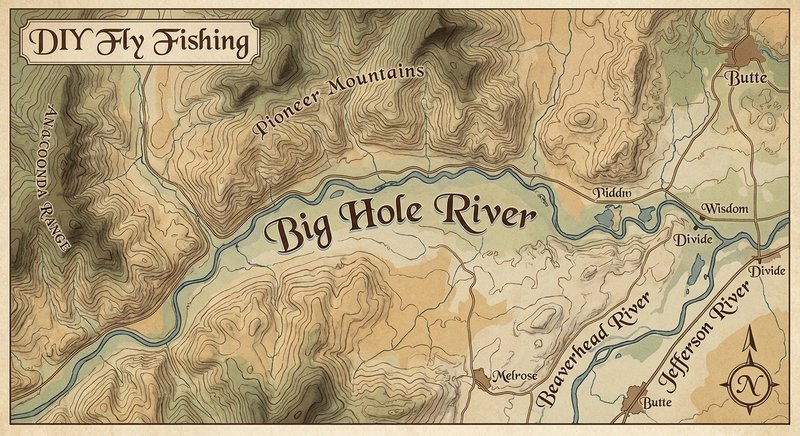
Big Hole River
Fly fishing in Montana · Intermediate · Best seasons: Summer, Fall
Target Species
Brown Trout, Rainbow Trout, Arctic Grayling
About This Water
Home to the last river-dwelling Arctic grayling population in lower 48. Excellent brown and rainbow fishing.
Fishing Recommendations
The Big Hole River is a legendary "freestone" gem of Southwest Montana. Flowing over 150 miles through wide-open cattle country and narrow rocky canyons, it is one of the last strongholds of the native Fluvial Arctic Grayling in the lower 48. Unlike its dam-controlled neighbors (the Beaverhead or the Madison), the Big Hole is wild and untamed, meaning its character changes dramatically with the snowmelt and the seasons.
🎣 Location Overview
The Big Hole is a classic river of the American West. It begins high in the Beaverhead Mountains and flows in a "C" shape, passing through the high-altitude Big Hole Valley (known as the "Land of 10,000 Haystacks") before carving through a dramatic canyon and eventually joining the Beaverhead to form the Jefferson.
What makes it special is its diversity of water. In a single day, you can fish high-mountain meadows, technical pocket water, deep canyon pools, and classic riffle-run-pool sequences. It is a "tea-colored" river due to the tannins from the high-country willows, which gives the water a distinct golden hue and allows for stealthier approaches than crystal-clear spring creeks.
🐟 Target Species & Behavior
- Brown Trout: The stars of the lower and middle river. They are notoriously predatory here. In the fall, they become aggressive and territorial. Look for them in "trashy" water—tight to the undercut banks, under overhanging willows, and in deep woody debris.
- Rainbow Trout: Found throughout the system but most prevalent in the canyon stretches. They prefer the faster, highly oxygenated water at the heads of riffles and in the "bubbles" behind large boulders.
- Arctic Grayling: These are the "Sailfish of the Rockies." They are primarily found in the upper river around Wisdom and Melrose. They have small mouths and are very opportunistic surface feeders. Look for them in slower, steadier currents and silty-bottomed pools.
- Brook Trout: Plentiful in the upper reaches and tributaries; they are small but stunningly colored and eager to rise to a dry fly.
📅 Best Times to Fish
Summer (Late June – August)
- The Salmonfly Hatch: Usually occurs mid-to-late June. It is a spectacle of massive bugs and explosive strikes, though the river can be high and unruly.
- Golden Stones & Caddis: July is the prime month for dry fly enthusiasts.
- Tricos & Terrestrials: August brings technical Trico hatches in the morning and hopper fishing in the heat of the afternoon.
Fall (September – October)
- The Brown Trout Pre-Spawn: This is "Streamer Season." As the cottonwoods turn yellow, the big Browns get aggressive.
- Mahogany Duns & Blue Winged Olives (BWO): Look for these on cloudy, drizzly days in late September and October.
- Time of Day: In summer, be on the water at dawn to beat the heat. In fall, wait for the water to warm slightly; 10:00 AM to 4:00 PM is the sweet spot.
🪰 Recommended Flies & Techniques
Dry Flies
- Salmonflies: Rogue River Stone (Size 4-6), Cat’s Whisker.
- Attractors: Chubby Chernobyl (Gold, Tan, Purple), Royal Wulff (for the upper river).
- Terrestrials: Morrish Hopper, Panty Dropper Hopper, and various ant/beetle patterns in August.
- Mayflies: Parachute Adams (14-20), Purple Haze, Sparkle Dun.
Nymphing
- The Big Hole "Standard": Pat’s Rubber Legs (Black/Brown) is the king of nymphs here.
- Droppers: Prince Nymph, Pheasant Tail, and the Zebra Midge (especially for Grayling).
- Technique: High-sticking in the canyon pocket water or using a strike indicator in the long runs of the upper valley.
Streamers
- Patterns: Sex Dungeon (Yellow or Olive), Sparkle Minnow, and the JJ Special (a local favorite).
- Technique: "Pounding the banks." Cast as tight to the willows as possible and strip aggressively.
💡 Pro Tips & Local Knowledge
- The "Melrose" Stretch: This is the most famous section for a reason. It offers classic Big Hole scenery and high fish counts. However, if you want solitude, head to the North Fork or the extreme upper reaches near Wisdom.
- Fear the Wind: The Big Hole Valley is high and exposed. If the wind picks up, don't give up on dries—switch to a low-profile beetle or a heavy streamer.
- Grayling Care: If you hook a Grayling, handle it with extreme care. They are fragile and a precious part of the ecosystem. Keep them in the water and use barbless hooks.
- The "Big Hole Twitch": When fishing hoppers, don't just let them drift dead. Give the rod tip a tiny wiggle to make the legs of the fly kick. Big Browns often react to the movement.
⚠️ Important Information
- Hoot Owl Restrictions: Because the Big Hole is a freestone river, it can get low and warm in late July and August. The state often implements "Hoot Owl" rules, which close fishing from 2:00 PM to midnight to protect the fish. Check the FWP website before you go.
- Float Permits: If you are floating, be aware of "Sector" rules. On certain days, some sections are closed to commercial outfitters to allow DIY anglers more space.
- Wade Access: Montana has excellent stream access laws. You can fish anywhere below the high-water mark, but you must enter the river from a legal access point (bridges or FAS sites).
- Bear Safety: This is bear country. While Grizzly sightings are rarer here than in the Madison Valley, they are present. Carry bear spray and know how to use it.
Guide’s Final Word: The Big Hole is a "moody" river. It can give you the best day of your life one day and be completely shut down the next. Respect the water, watch the flows (USGS gauges are your best friend), and always have a box of Purple Hazes ready.
Bug Hatches & Matching Flies
| Hatch | Type | Peak months | Time of day | Hook sizes | Matching flies |
|---|---|---|---|---|---|
| Salmonfly Pteronarcys californica | stonefly | June | All Day | #4-8 | Rogue River Stone #4-6, Pats Rubber Legs #4-8, Cat Puke #4-8 |
| Golden Stonefly Hesperoperla pacifica | stonefly | June, July | Morning/Afternoon | #8-12 | Chubby Chernobyl (Gold) #8-12, Golden Twenty Incher #8-12 |
| Mother's Day Caddis Brachycentrus | caddis | May | Afternoon/Evening | #14-16 | Elk Hair Caddis #14-16, Peacock Soft Hackle #14-16, LaFontaine's Deep Sparkle Pupa #14-16 |
| Pale Morning Dun (PMD) Ephemerella excrucians | mayfly | June, July, August | Late Morning/Afternoon | #14-18 | Rusty Spinner #16-18, PMD Sparkle Dun #14-18, Pheasant Tail #14-18 |
| Skwala Stonefly Skwala americana | stonefly | April, May | Afternoon | #8-12 | Skwala Stone #10-12, Girdle Bug #10-12 |
| Blue Winged Olive (BWO) Baetis | mayfly | April, May, September, October | Late Morning/Afternoon | #16-22 | RS2 #18-22, Parachute Adams #16-22, BWO CDC Emerger #18-20 |
| Trico Tricorythodes | mayfly | August, September | Early Morning | #20-24 | Trico Spinner #20-24, Sunken Trico Spinner #20-22 |
| Spruce Moth Choristoneura occidentalis | terrestrial | August | Morning/Afternoon | #12-14 | Spruce Moth Dry #12-14, Tan Elk Hair Caddis #12-14 |
| Yellow Sally Isoperla | stonefly | July, August | Afternoon/Evening | #14-16 | Yellow Sally Stimulator #14-16, Iron Lotus #14-16 |
| Midges Chironomidae | midge | March, April, October, November | All Day | #18-24 | Zebra Midge #18-22, Griffith's Gnat #18-22, Morgan's Midge #20-22 |