Flathead River
Fly fishing in Montana · Intermediate · Best seasons: Summer, Fall
Target Species
Cutthroat Trout, Bull Trout, Rainbow Trout
About This Water
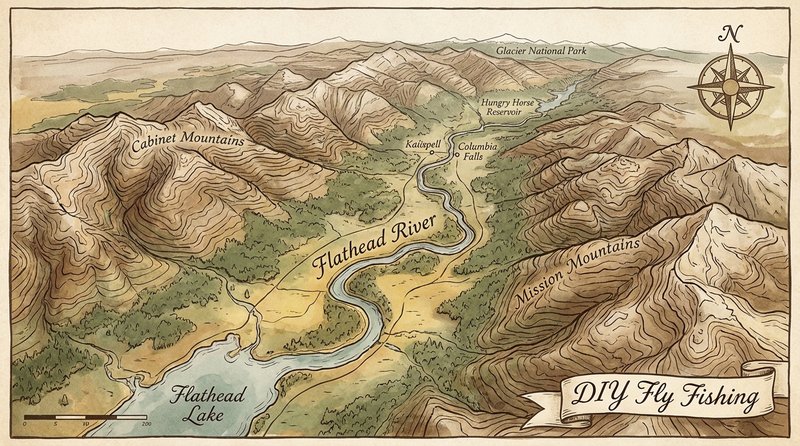
Three forks combine near Kalispell. Native westslope cutthroat and bull trout in glacier-fed waters.
Fishing Recommendations
Welcome to the Gateway of Glacier. As a guide in Western Montana, I consider the Flathead River system to be one of the last truly wild strongholds for native trout in the Lower 48. Whether you are fishing the Main Stem near Kalispell or the remote, wild forks (North, Middle, and South), you are stepping into a landscape defined by gin-clear water, rugged peaks, and aggressive native fish.
Here is your comprehensive guide to fly fishing the Flathead River.
🎣 Location Overview
The Flathead River is a sprawling network of glacial-fed water. The North Fork forms the border of Glacier National Park; the Middle Fork is a designated Wild and Scenic River known for its whitewater; the South Fork flows through the legendary Bob Marshall Wilderness; and the Main Stem is a broad, powerful valley river.
What makes the Flathead special is its clarity and sterilization. Because the water is so cold and nutrient-poor (oligotrophic), the fish are opportunistic. They don’t have the luxury of being picky—if something looks like food, they hit it. Anglers love it for the dry-fly action, the lack of crowds compared to the Madison or Yellowstone, and the sheer majesty of the surrounding mountains.
🐟 Target Species & Behavior
Westslope Cutthroat Trout
The crown jewel of the Flathead. These are native, stunningly colorful, and "honest" fish.
- Behavior: They are surface-oriented. They hold in "soft" water—seams, foam lines, and behind large boulders.
- Feeding: They love terrestrial patterns and high-floating attractors. They will often rise from deep water to smash a dry fly.
Bull Trout
The apex predator. These are native char that grow to massive sizes (24–35+ inches).
- Behavior: They are migratory and highly protected. They hold in deep, dark pools or at the mouths of tributaries.
- Feeding: They eat other fish. To catch them, you need heavy sink tips and massive streamers (8–10 inches long). Note: Targeting Bull Trout is strictly regulated (see "Important Information").
Rainbow Trout
Mostly found in the Main Stem and lower reaches of the forks.
- Behavior: Harder fighting and more likely to hold in faster, oxygenated "riffle" water compared to the Cutthroat.
📅 Best Times to Fish
Summer (July – August)
This is the prime window. The "runoff" usually subsides by early July.
- Conditions: Clear water and consistent hatches.
- Time of Day: On the Flathead, you don't need to be out at 5:00 AM. The water is cold; wait for the sun to hit the water (10:00 AM – 4:00 PM) to get the bugs moving and the fish active.
Fall (September – October)
My personal favorite time. The crowds vanish, and the deciduous trees turn gold.
- Conditions: Lower water levels make the river more wadeable.
- Time of Day: Mid-day becomes the peak. Look for Hecuba (Great Red Quill) hatches in late September. This is also when the big Bull Trout and some Rainbows move significantly.
🪰 Recommended Flies & Techniques
Dry Fly (The Primary Method)
Because the water is so clear, visibility is key.
- Patterns:
- Attractors: Royal Wulff, H&L Variant, Purple Haze (#12-16).
- Terrestrials: Chernobyl Ants, Pink Pookas, Amy’s Ant, and Foam Grasshoppers (#8-12).
- Mayflies: Parachute Adams, Sparkle Duns.
- Technique: "Splat and Drift." Sometimes a hard landing with a foam bug attracts attention.
Nymphing
When the fish aren't rising, go deep in the walking-speed water.
- Patterns: Pat’s Rubber Legs (Stonefly nymph), Prince Nymphs, and Bead-head Pheasant Tails.
- Technique: Use a strike indicator and enough weight to get near the bottom of the deep emerald pools.
Streamers
For the "Big Game" hunters.
- Patterns: Sex Dungeon, Galloup’s Dungeon, or any large articulated pattern in White, Olive, or Black.
- Technique: Swing them through deep holes or strip them aggressively off the cut banks.
💡 Pro Tips & Local Knowledge
- Look for the "Blue Water": On the Flathead, the fish don't always hold where you think. Because the water is so clear, they feel vulnerable in the shallows. Look for the "drop-off" where the water turns from turquoise to deep blue.
- The "Slow Motion" Rise: Cutthroat take flies differently than Rainbows. They often follow the fly for several feet and sip it slowly. Wait one second after the take before setting the hook, or you’ll pull it right out of their mouths.
- The South Fork Hike-In: If you want world-class fishing, hike into the South Fork above Hungry Horse Reservoir. It is arguably the best Cutthroat fishing in the world.
- Rowing the Middle Fork: If you are floating, be prepared. The Middle Fork has Class II-IV rapids. If you aren't an expert oarsman, hire a guide.
⚠️ Important Information
Access
- Main Stem: Numerous FWP (Fish, Wildlife & Parks) access sites like Pressentine or Old Steel Bridge.
- Forks: Much of the North and Middle Fork is bordered by Glacier National Park (River Left) and National Forest (River Right). Use established USFS access points.
Regulations & Permits
- Bull Trout: You cannot intentionally target Bull Trout in the North and Middle Forks. In the South Fork (above the reservoir), you need a specific "Bull Trout Catch and Release" permit. Always check the current Montana FWP Regulations.
- Westslope Cutthroat: Most of the river is Catch and Release only for native trout. Handle with care and keep them in the water.
- National Park: If you step foot on the Glacier National Park side to fish, you must adhere to Park-specific regulations (though no additional fee is required for fishing if you have a MT license, specific rules on felt soles and lead apply).
Bear Safety
This is Grizzly Country. Always carry bear spray on your person (not in your pack) and know how to use it, especially when fishing the brushy banks of the North and Middle Forks.
Bug Hatches & Matching Flies
| Hatch | Type | Peak months | Time of day | Hook sizes | Matching flies |
|---|---|---|---|---|---|
| Skwala Stonefly Skwala americana | stonefly | March, April | Midday | #8-12 | Skwala Stone #10-12, Pat's Rubber Leg #8-12, Bullet Head Skwala #10-12 |
| Western March Brown Rhithrogena morrisoni | mayfly | April, May | Afternoon | #12-14 | March Brown Western #12-14, Pheasant Tail #12-14, March Brown Emerger #14 |
| Blue-Winged Olive Baetis spp. | mayfly | April, May, September, October | Afternoon | #16-20 | RS2 #18-20, Parachute Adams #16-20, BWO Sparkle Dun #18-20 |
| Salmonfly Pteronarcys californica | stonefly | June, July | All Day | #2-6 | Chubby Chernobyl #4-8, Fluttering Salmonfly #4-6, Pat's Rubber Leg (Orange/Black) #4-8 |
| Golden Stonefly Hesperoperla pacifica | stonefly | July | All Day | #6-10 | Golden Chubby #8-10, Yaz's Golden Stone #8-12, Twenty Incher #8-12 |
| Pale Morning Dun Ephemerella excrucians | mayfly | July, August | Morning/Afternoon | #14-18 | PMD Sparkle Dun #16-18, Frenchie #14-16, PMD Cripple #16 |
| Tan Caddis Hydropsyche spp. | caddis | July, August, September | Evening | #14-18 | Elk Hair Caddis #14-16, LaFontaine Sparkle Pupa #14-18, Goddard Caddis #14-16 |
| Terrestrials Orthoptera/Formicidae | terrestrial | August, September | Midday/Afternoon | #8-16 | Morrish Hopper #8-12, Cinnamon Ant #14-16, Black Beetle #12-14 |
| Spruce Moth Choristoneura occidentalis | terrestrial | August | Morning/Afternoon | #12-14 | Spruce Moth Dry #12-14, Tan Elk Hair Caddis #12-14 |