Blue River
Fly fishing in Colorado · Advanced · Best seasons: Spring, Summer, Fall
Target Species
Rainbow Trout, Brown Trout
About This Water
Below Dillon Reservoir, offering technical tailwater fishing. Known for large trout and challenging conditions.
Fishing Recommendations
The Blue River is a crown jewel of Colorado fly fishing, offering a unique blend of high-alpine scenery, technical tailwater challenges, and "urban" fishing that produces trophy-sized trout. As a Gold Medal water, it demands respect, precision, and a bit of local savvy.
🎣 Location Overview
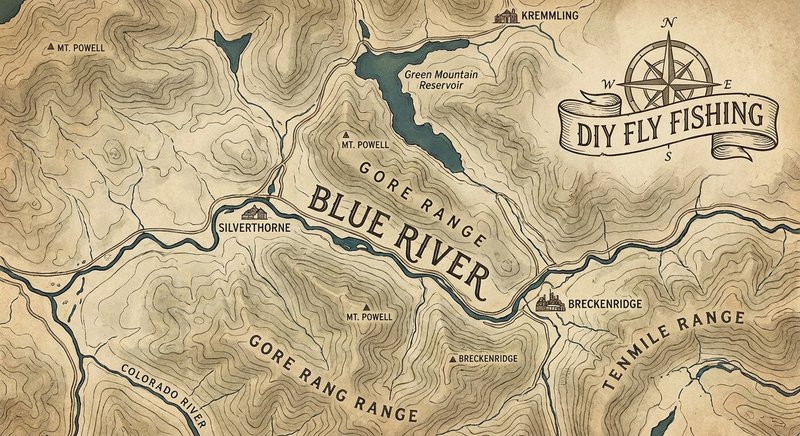
The Blue River originates high in the Tenmile Range, but its most famous stretch is the Silverthorne Tailwater, flowing directly from the bottom of Dillon Reservoir.
What makes the Blue special is its accessibility and the sheer size of the fish found in an "urban" setting—you’ll often find yourself casting under interstate overpasses or behind designer outlet malls while sight-fishing for 20-inch Rainbows. Below Silverthorne, the river meanders through private ranches and public access points before dropping into a rugged, scenic canyon below Green Mountain Reservoir. It is characterized by crystal-clear water, technical currents, and a heavy reliance on the "Mysis Shrimp" that flush from the dam.
🐟 Target Species & Behavior
- Rainbow Trout: These are the stars of the Silverthorne stretch. Because of the Mysis shrimp diet, these fish grow exceptionally thick and can reach "football" proportions. They are highly educated and will inspect your fly with a PhD-level scrutiny.
- Brown Trout: More prevalent as you move downstream away from the dam. They are opportunistic and aggressive, especially in the fall. They tend to hold near undercut banks, large boulders, and the deeper "buckets" in the center of the river.
- Kokanee Salmon: In late summer and fall (August–October), Kokanee migrate up from Green Mountain Reservoir. While they aren't the primary target for most fly anglers, their presence provides a massive egg-feeding window for the resident trout.
📅 Best Times to Fish
- Spring (March – May): This is "Midge Season." Before the runoff begins, the water remains clear and the fish are hungry. Mid-day hatches of Blue Winged Olives (BWO) can provide excellent dry fly action on warmer days.
- Summer (Late June – August): Post-runoff is prime time. This is the window for Pale Morning Dines (PMDs), Caddis, and eventually terrestrials (grasshoppers/ants).
- Fall (September – November): My personal favorite. The Brown trout are spawning, the Kokanee are running, and the BWO hatches return. The crowds thin out, and the fish are aggressive.
- Prime Window: 10:00 AM to 3:00 PM is the "Golden Window" for hatches, though early morning is best if you're hunting big Browns with streamers.
🪰 Recommended Flies & Techniques
Top Fly Patterns
- Tailwater Specialties: Craven’s Mysis (#18-22), Bill’s Mysis (#18-20). These are essential near the dam.
- Nymphs: RS2 (Grey/Black, #20-24), Juju Baetis (#20-22), Rainbow Warriors (#18-22), and Pheasant Tails (#18-22).
- Dries: Parachute Adams (#18-22), Elk Hair Caddis (#16-18), and Hippie Stompers (#14-16) for prospecting.
- Attractors/Eggs: Glo-bugs or Otter’s Soft Milking Eggs (in pink or orange) during the fall run.
Effective Techniques
- Sight Nymphing: In the clear water of Silverthorne, don't just blind cast. Find a fish, observe its feeding lane, and time your drift so the fly reaches its mouth level.
- The "Micro" Rig: Use 6X or even 7X fluorocarbon tippet. The fish are leader-shy. Small split shot and a yarn indicator (which lands softer than plastic) are often necessary.
- Streamer Stripping: In the lower canyon stretches, a White or Olive Wooly Bugger or a Sparkle Minnow can entice territorial strikes from large Browns.
💡 Pro Tips & Local Knowledge
- The Bridge Strategy: In Silverthorne, the fish love the shade and structure provided by the bridges. However, they also see a lot of flies there. Try fishing the "transition zones"—the shallow riffles just above or below the deep bridge holes.
- Check the Flows: The Blue is a tailwater. Check the CFS (cubic feet per second) before you go. Between 100–300 CFS is the "sweet spot" for wading. If it's over 500, wading becomes dangerous and the fish move to the very edges of the bank.
- The "Secret" Lower Blue: If the mall area is too crowded, head north on Hwy 9 toward Green Mountain Reservoir. There are several public access points (labeled with signs) that offer a more traditional "wilderness" feel with less pressured fish.
- Stealth Matters: Wear earthy colors (tans/greys). Because the water is so clear, if you can see the fish, they have likely already seen you. Stay low and move slowly.
⚠️ Important Information
- Access: The most popular access is behind the Outlets at Silverthorne. Parking is ample. For the lower river, look for BLM and CPW (Colorado Parks and Wildlife) leased access points along Highway 9.
- Regulations:
- The stretch from Dillon Dam to the north city limits of Silverthorne is Catch and Release only.
- Fishing with artificial flies and lures only (no bait).
- A valid Colorado Fishing License is required.
- Respect the Redds: In the fall (Browns) and spring (Rainbows), watch out for "redds"—clean gravel patches where fish spawn. Please do not walk on them or fish for trout actively sitting on a redd.
- Safety: The rocks in the Blue are notoriously slippery. Felt soles or studs are highly recommended.
The Blue River is a "chess match" river. It can be frustrating one hour and reward you with the fish of a lifetime the next. Stay patient, go small on your flies, and enjoy the view!
Bug Hatches & Matching Flies
| Hatch | Type | Peak months | Time of day | Hook sizes | Matching flies |
|---|---|---|---|---|---|
| Midges Chironomidae | midge | January, February, March, April | All Day | #18-24 | Black Beauty #20-24, Griffith's Gnat #18-22, Top Secret Midge #20-24 |
| Blue-Winged Olive Baetis | mayfly | April, May, September, October | Late Morning/Afternoon | #18-22 | JujuBaetis #18-22, RS2 #20-22, Parachute Adams #18-22 |
| Pale Morning Dun Ephemerella excrucians | mayfly | July, August | Late Morning/Early Afternoon | #16-18 | Pheasant Tail #16-18, PMD Sparkle Dun #16-18, WD-40 #18-20 |
| American Grannom Brachycentrus occidentalis | caddis | May | Afternoon/Evening | #14-18 | Buckskin #14-16, Elk Hair Caddis #14-18, LaFontaine's Deep Pupa #16-18 |
| Golden Stonefly Hesperoperla pacifica | stonefly | June, July | Morning/Evening | #8-12 | Pat's Rubber Leg #8-12, Amy's Ant #10-12, 20 Incher #10-14 |
| Trico Tricorythodes | mayfly | August, September | Early Morning | #20-24 | Trico Spinner #20-24, Sunray Trico #22-24 |
| Yellow Sally Isoperla | stonefly | July, August | Afternoon/Evening | #14-16 | Yellow Sally Dry #14-16, Iron Sally #14-16 |
| Terrestrials Orthoptera/Formicidae | terrestrial | August, September | Afternoon | #10-16 | Dave's Hopper #10-14, Black Foam Ant #14-18, Cinnamon Ant #14-16 |