Conejos River
Fly fishing in Colorado · Intermediate · Best seasons: Summer, Fall
Target Species
Brown Trout, Rainbow Trout
About This Water
Southern Colorado gem with wild brown and rainbow trout. Remote fishing in scenic San Juan wilderness.
Fishing Recommendations
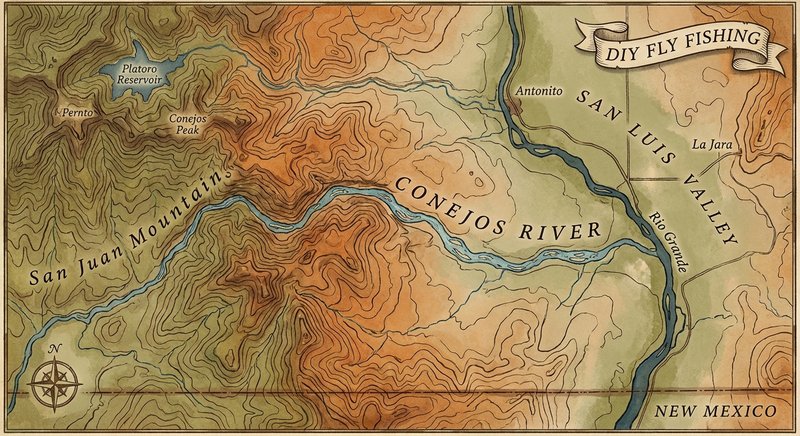
The Conejos River is arguably one of Colorado’s best-kept secrets. Tucked away in the South-Central part of the state near the New Mexico border, it is the largest tributary of the Rio Grande. For anglers who find the South Platte or the Fryingpan too crowded, the Conejos offers a rugged, remote, and incredibly diverse fly fishing experience.
🎣 Location Overview
The Conejos is a river of many personalities. From its headwaters near the Platoro Reservoir at 10,000 feet to its confluence with the Rio Grande, it offers over 60 miles of fishable water.
What makes it special is the diversity of water types:
- The Upper River: High-gradient, pocket water, and classic alpine scenery.
- The Pinnacles: Rugged, steep canyon water for the adventurous angler.
- The Meadows: Gentle, winding "S" curves through high-altitude hay meadows, perfect for technical dry fly fishing.
- The Tailwater: The stretch immediately below Platoro Reservoir offers cold, consistent flows that produce hefty, picky trout.
Anglers love the Conejos because it feels "wild." You are more likely to see an elk or a bald eagle than another fisherman on many stretches.
🐟 Target Species & Behavior
The Conejos is primarily a Brown Trout and Rainbow Trout fishery, with the occasional Snake River Cutthroat or Brook Trout in the higher reaches.
- Brown Trout: These are the stars of the show. They are wild, aggressive, and can reach impressive sizes (20+ inches). They hold tight to the undercut banks in the meadow sections and behind large boulders in the canyon stretches.
- Rainbow Trout: Often found in the faster riffles and at the heads of deep pools. The state stocks some sections, but there are plenty of wild, hard-fighting rainbows throughout.
- Behavior: During the summer, these fish are "upward looking" due to the massive stonefly and hopper populations. In the fall, the Browns become highly aggressive and territorial as they prepare for the spawn.
📅 Best Times to Fish
While you can fish the Conejos from late spring through early winter, the windows you requested are the "Golden Eras" of this river.
Summer (Late June – August)
- The Draw: The legendary Salmonfly Hatch. This occurs usually in late June or early July. It is a spectacle of massive orange bugs and explosive surface takes.
- Conditions: Post-runoff. The water clears and stabilizes.
- Time of Day: Early morning for nymphing; 10:00 AM – 4:00 PM for peak hatch activity and dry flies.
Fall (September – October)
- The Draw: The Brown Trout spawn and the Autumn Colors. The aspens turn gold, the crowds vanish, and the big Browns become predatory.
- Conditions: Lower, crystal-clear water.
- Time of Day: Mid-day (11:00 AM – 3:00 PM) is the "sweet spot" as the water warms slightly, triggering bug activity.
🪰 Recommended Flies & Techniques
Dry Flies
- Salmonflies: Rogue River Stone (Size 4-8), Chubby Chernobyl (Orange/Black).
- Drakes: Green Drake Hairwing or Fanwing (Size 10-12) for the July/August evening hatches.
- Terrestrials: Morrish Hopper, Amy’s Ant, and Foam Beetles (Size 10-14).
- Caddis/Mayflies: Elk Hair Caddis (Tan/Olive), Parachute Adams, and PMD Sparkle Duns.
Nymphs
- Attractors: Pat’s Rubber Legs (Coffee/Black) is a year-round staple here.
- Droppers: Prince Nymph, Pheasant Tail, and RS2 (Grey/Olive) for the technical meadow sections.
- The "Perdigon": In the faster canyon water, heavy tungsten Perdigons help you get deep quickly.
Streamers
- Patterns: Sex Dungeon (Olive/Black), Wooly Bugger, and the Autumn Splendor.
- Technique: "Pounding the banks" from a raft or wading the deep holes in the Pinnacles.
💡 Pro Tips & Local Knowledge
- The "Stealth" Factor: In the meadow sections (like the S-Curves near Spectacle Lake), the water is glassy and the banks are vibration-sensitive. Stay low, wear drab clothing, and make long casts. If you can see the fish, they’ve likely already seen you.
- The Canyon Secret: Many anglers avoid the "Pinnacles" because of the hike. If you are physically fit, hike down into the canyon. The fish there see very little pressure and are much more willing to rise to a large dry fly even when a hatch isn't occurring.
- The Hopper-Copper-Dropper: This is the quintessential Conejos rig. Use a buoyant Hopper (like a Chubby), a Pat's Rubber Leg as the first dropper, and a small bead-head nymph as the second.
- Watch the Flows: The river is highly dependent on releases from Platoro Reservoir. Always check the USGS gauges before heading out; a sudden spike in flow can turn the river muddy.
⚠️ Important Information
- Access: Much of the river is bordered by the Rio Grande National Forest (public), but there are significant stretches of private land, especially near the town of Mogote. Look for "Public Access" signs and use an app like OnX Maps to ensure you aren't trespassing.
- Regulations:
- Wild Trout Section: From the South Fork confluence upstream to the Menkhaven resort, there are specific "Artificial Fly and Lure Only" regulations.
- Keep/Release: Most of the upper river is catch-and-release or has highly restricted bag limits. Always check the current Colorado Parks & Wildlife (CPW) brochure for the specific stretch you are fishing.
- Safety: This is high-country wilderness. Carry bear spray (it's grizzly-free but heavy with black bears), stay hydrated, and be prepared for sudden afternoon thunderstorms that can drop temperatures by 30 degrees in minutes.
- Supplies: The town of Antonito is your last stop for gas and basic snacks. For specialized gear, the Conejos River Anglers fly shop is the local authority and a must-visit for up-to-the-minute hatch reports.
Bug Hatches & Matching Flies
| Hatch | Type | Peak months | Time of day | Hook sizes | Matching flies |
|---|---|---|---|---|---|
| Salmonfly Pteronarcys californica | stonefly | June, July | All Day | #4-8 | Rogue River Stone #4-8, Pats Rubber Legs #4-8, Chubby Chernobyl (Orange) #6-10 |
| Green Drake Drunella doddsi | mayfly | July | Afternoon | #10-12 | Hairwing Green Drake #10-12, Drake Cripple #10-12, 20 Incher Stone #10-14 |
| Blue Winged Olive Baetis spp. | mayfly | April, May, September, October | Late Morning/Afternoon | #18-22 | Parachute Adams #18-22, RS2 #18-22, Pheasant Tail #18-20 |
| Pale Morning Dun Ephemerella excrucians | mayfly | July, August | Late Morning/Afternoon | #14-18 | PMD Sparkle Dun #16-18, Barr's PMD Emerger #16-18, Frenchie #14-16 |
| Golden Stonefly Hesperoperla pacifica | stonefly | June, July | Morning/Evening | #8-12 | Goldie Snatcher #8-12, Yannick's Golden Stone #10-12, Iron Lotus #12-14 |
| Mother's Day Caddis Brachycentrus | caddis | May | Afternoon/Evening | #14-16 | Peacock Caddis #14-16, Graphic Caddis #14-16, Soft Hackle Hare's Ear #14-16 |
| Spotted Sedge Hydropsyche spp. | caddis | July, August | Evening | #14-18 | Elk Hair Caddis (Tan) #14-18, LaFontaine's Deep Sparkle Pupa #14-16, Iris Caddis #16-18 |
| Trico Tricorythodes | mayfly | August, September | Early Morning | #20-24 | Trico Spinner #20-24, WD-40 #20-22, Sunken Trico Spinner #20-22 |
| Hopper/Ant/Beetle Formicidae/Coleoptera/Acrididae | terrestrial | August, September | All Day | #10-16 | Amy's Ant #12-14, Parachute Hopper #10-14, Black Foam Beetle #14-16 |