Dolores River
Fly fishing in Colorado · Intermediate · Best seasons: Spring, Summer, Fall
Target Species
Rainbow Trout, Brown Trout
About This Water
Below McPhee Reservoir offers excellent tailwater fishing. Wild rainbow and brown trout in southwestern Colorado.
Fishing Recommendations
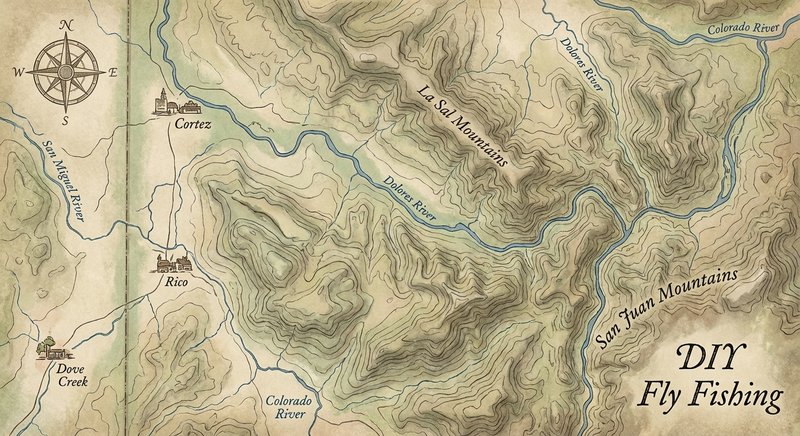
The Dolores River in Southwest Colorado is a river of two personalities: the high-alpine, freestone "Upper Dolores" near the town of Rico, and the dramatic, red-rock canyon "Lower Dolores" tailwater below McPhee Reservoir. It is often cited as one of the most beautiful rivers in the American West, offering a mix of technical tailwater fishing and classic mountain stream action.
🎣 Location Overview
The Dolores is special because of its isolation and its landscape. While many Colorado rivers flow through wide valleys or along major highways, the Dolores cuts through deep sandstone canyons and dense National Forest.
- The Upper Dolores: A high-altitude freestone river flowing through alpine meadows and pine forests. It is classic pocket water—fast, cold, and oxygenated.
- The Lower Dolores: A tailwater section below McPhee Reservoir. It flows through a desert canyon reminiscent of the Grand Canyon. It is famous for its "boom or bust" cycles based on water releases, but when the flows are right (above 60 CFS), it offers world-class technical trout fishing in a prehistoric setting.
🐟 Target Species & Behavior
The Dolores is primarily a Brown and Rainbow Trout fishery.
- Brown Trout: These are the kings of the Lower Dolores. They utilize the undercut banks and deep sandstone ledges. They are notoriously wary and often require long, light leaders. In the fall, they become aggressive and will chase large streamers.
- Rainbow Trout: More prevalent in the Upper Dolores and the faster riffles of the tailwater. They are opportunistic feeders but, in the lower section, can become very selective during a hatch.
- Behavior: Due to the clear water, fish are "spooky." In the tailwater, they hold in "thin" water—shallow glides that look empty until you see a snout break the surface. In the upper river, they hold in classic eddies and behind boulders.
📅 Best Times to Fish
- Spring (Late March – May): On the Lower Dolores, this is "Midge and BWO Season." If McPhee Reservoir spills (high snowpack years), the river can see flows over 1,000 CFS, which is great for boaters but tough for waders.
- Summer (July – August): This is the prime window for the Upper Dolores after runoff subsides. On the Lower Dolores, this is terrestrial season. Think Hoppers, Ants, and Beetles against the canyon walls.
- Fall (September – October): Arguably the best time. The crowds disappear, the Cottonwoods turn gold, and the Brown Trout prepare to spawn. Blue-Winged Olives (BWO) hatch consistently on cloudy afternoons.
- Prime Window: 10:00 AM to 4:00 PM is the sweet spot for insect activity.
🪰 Recommended Flies & Techniques
Dry Flies
- Lower Dolores: RS2 (Grey/Olive #20-24), Parachute Adams (#18-22), CDC BWO (#20), and Chubby Chernobyls (#10-12) for hopper-dropper rigs.
- Upper Dolores: Royal Wulff (#14-16), Stimulators (#12-14), and Elk Hair Caddis (#14-18).
Nymphs
- Tailwater Must-Haves: Zebra Midges (Black/Red #20-22), Pheasant Tails (#18-20), and JujuBaetis.
- General: Pat’s Rubber Legs (Stonefly) in the deeper runs of the Upper Dolores.
Streamers
- Patterns: Wooly Buggers (Olive/Black), Autumn Splendor, or Sculpzilla.
- Technique: "Pounding the banks" from a raft or swinging through deep pools in the fall.
Presentation Tips
On the Lower Dolores, stealth is mandatory. Use 5x or 6x fluorocarbon tippet. Downstream drifts are often more effective than upstream casts to avoid lining the fish in the glassy glides.
💡 Pro Tips & Local Knowledge
- The "Spill" Intel: The Lower Dolores depends entirely on the "spill" from McPhee Dam. Check the Bureau of Reclamation website for flow data. If flows are below 40 CFS, the fishing is extremely difficult and hard on the fish; 60–100 CFS is the "sweet spot" for wading.
- Focus Areas:
- The Bradfield Bridge: The most popular access point for the tailwater.
- The Snaggletooth Stretch: Great for those willing to hike; the further you walk from the road, the better the fishing gets.
- Bear Creek: A major tributary to the Upper Dolores that offers excellent small-stream fishing for those wanting a backcountry experience.
- Match the Rocks: The rocks in the Dolores are often covered in a dark periphyton. Darker-colored nymphs (dark olive/black) tend to outperform bright flashy ones.
⚠️ Important Information
- Regulations: The stretch from McPhee Dam downstream to Bradfield Bridge is Catch and Release only for all trout. Tackle is restricted to artificial flies and lures. Always check current Colorado Parks and Wildlife (CPW) regulations.
- Access: Much of the Lower Dolores is BLM land, but there are pockets of private property. Use an app like OnX to ensure you are on public ground.
- Safety: The Lower Dolores is remote. Cell service is non-existent in the canyon. Carry a spare tire and plenty of water—it gets hot in the desert.
- Wildlife: This is mountain lion and rattlesnake country. Watch your step when hiking through the brush along the canyon floor.
The Dolores is a "bucket list" river not just for the fish, but for the soul. Respect the low flows, stay stealthy, and enjoy one of the most scenic canyons in the lower 48.
Bug Hatches & Matching Flies
| Hatch | Type | Peak months | Time of day | Hook sizes | Matching flies |
|---|---|---|---|---|---|
| Midges Chironomidae | midge | February, March, April | Morning/Late Afternoon | #18-24 | Zebra Midge #18-22, Griffith's Gnat #20-24, Morgan's Midge #20-22 |
| Blue-Winged Olive Baetis | mayfly | April, May, September, October | Mid-day/Afternoon | #18-22 | RS2 #20-22, Parachute Adams #18-22, Baetis Barr Emerger #18-20 |
| Pale Morning Dun Ephemerella excrucians | mayfly | June, July | Late Morning/Early Afternoon | #16-18 | PMD Sparkle Dun #16-18, Pheasant Tail #16-18, PMD Cripple #16-18 |
| Caddis Brachycentrus & Hydropsyche | caddis | May, June, July | Late Afternoon/Evening | #14-18 | Elk Hair Caddis #14-18, Peeping Caddis #14-16, LaFontaine's Deep Sparkle Pupa #14-18 |
| Golden Stonefly Hesperoperla pacifica | stonefly | June, July | Morning/Evening | #8-12 | Pat's Rubber Legs #8-12, Chubby Chernobyl #10-12, Cat Puke #10 |
| Yellow Sally Isoperla | stonefly | June, July | Afternoon/Evening | #14-16 | Yellow Stimulator #14-16, Little Yellow Sloan #14-16 |
| Tricos Tricorythodes | mayfly | August, September | Early Morning | #20-24 | Trico Spinner #22-24, Sunken Trico Spinner #20-22 |
| Grasshoppers Acrididae | terrestrial | August, September | Mid-day/Afternoon | #8-12 | Amy's Ant #10-12, Morrish Hopper #8-12, Joe's Hopper #10-14 |