East River
Fly fishing in Colorado · Intermediate · Best seasons: Summer, Fall
Target Species
Brown Trout, Rainbow Trout
About This Water
Crested Butte area stream with excellent brown and rainbow trout. Beautiful Gothic Valley setting.
Fishing Recommendations
🎣 Fly Fishing Guide: The East River, Colorado
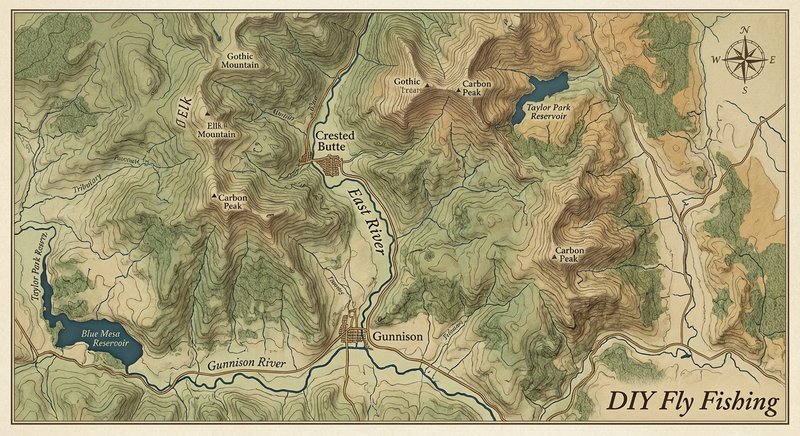
The East River is one of the gems of the Gunnison Valley. Born near the town of Gothic and flowing south past Crested Butte to its confluence with the Taylor River (where they form the Gunnison), the East is a classic high-country freestone-style river with a twist. While it features pocket water and riffles, its lower sections meander through hay meadows, offering sophisticated "spring creek" style technicality.
What makes it special is the biomass. The East is incredibly fertile for a high-altitude river, leading to fat, healthy trout and some of the most prolific hatches in the state.
🐟 Target Species & Behavior
The East River is primarily a Brown and Rainbow Trout fishery, with the occasional Cutthroat or Brookie appearing in the upper reaches.
- Brown Trout: These are the kings of the East. They are notoriously predatory and opportunistic. During the summer, they tuck into undercut banks and deep foam lines. In the fall, they become aggressive and territorial as they prepare to spawn.
- Rainbow Trout: Found primarily in the swifter riffles and at the heads of deep pools. They are hard-fighters and often the first to key into heavy stonefly or caddis hatches.
- The Kokanee Run: A unique feature of the East is the fall run of Kokanee Salmon from Blue Mesa Reservoir. While you aren't targeting them for "trout tactics," their presence changes everything for the resident Browns, who gorge on salmon eggs.
📅 Best Times to Fish
Summer (July – August)
This is prime time. Once the heavy runoff subsides (usually by early July), the river comes alive.
- Windows: 9:00 AM to 1:00 PM for hatches; late evening for "spinner falls" and caddis activity.
- Conditions: Clear water and steady flows. This is the peak of dry fly season.
Fall (September – October)
Many locals consider this the best season. The crowds thin out, and the scenery is spectacular with the changing aspens.
- Windows: 11:00 AM to 4:00 PM. As the water cools, the fish wait for the sun to warm the river before feeding heavily.
- Conditions: Low, crystal-clear water. This requires a stealthy approach and longer leaders.
🪰 Recommended Flies & Techniques
Top Fly Patterns
- Dry Flies:
- Green Drake: (Size 10-12) A legendary hatch on the East in July.
- Parachute Adams: (Size 14-20) The ultimate searcher pattern.
- Puterbaugh Caddis: (Size 14-16) Excellent for evening activity.
- Amy's Ant or Chubby Chernobyl: (Size 8-12) Great for "Hopper-Dropper" rigs in August.
- Nymphs:
- Pat’s Rubber Legs: (Size 8-12) Represents the heavy Golden Stonefly population.
- Pheasant Tail / Frenchie: (Size 16-20) Essential for the East's prolific mayfly life.
- Flashback Hare's Ear: (Size 14-18).
- Streamers:
- Sculpzilla or Gold Beadhead Wooly Buggers: In olive, black, or ginger to mimic the high sculpin population.
Techniques
- Dry Fly: Use a 9ft 5wt rod with a 9ft 5X leader. Focus on "dead drifts" along the undercut banks.
- Nymphing: A standard two-fly indicator rig works best in the riffles. Use a heavy stonefly nymph as your "anchor" and a small mayfly or midge behind it.
- The "Salmon Egg" Strategy: In late September and October, fishing an egg pattern (Glo-bug or beads) behind a heavy nymph is incredibly effective due to the Kokanee run.
💡 Pro Tips & Local Knowledge
- Mind the "Roaring Judas": The East has several sections with very tight, brushy banks. Roll casting is a mandatory skill here. If you can’t roll cast 20–30 feet, you’ll spend half your day untangling flies from willow bushes.
- The Green Drake Window: The Green Drake hatch "crawls" up the river. It starts near the Roaring Judy Hatchery and moves north toward Gothic. Check with local shops (like those in Crested Butte) to see exactly where the "leading edge" of the hatch is currently located.
- The Stealth Factor: Because the East can be very clear, avoid "lining" the fish. Cast at an angle upstream rather than standing directly over a hole. Wear earthy colors (tans/greens) to blend into the willows.
- The Roaring Judy Stretch: The public water near the Roaring Judy Fish Hatchery is the most popular spot. For bigger fish, walk as far away from the parking lots as possible. The pressure drops significantly once you're a half-mile in.
⚠️ Important Information
Access
- Public Access: Much of the East River flows through private ranch land. The most reliable public access is the Roaring Judy State Wildlife Area (SWA). There are also pockets of National Forest access further upstream near Gothic.
- Private Water: Respect "No Trespassing" signs. In Colorado, the riverbed is private property; you cannot wade on private land even if you stay in the water.
Regulations
- Roaring Judy SWA: From the Roaring Judy Hatchery downstream to the confluence with the Taylor: Artificial Flies and Lures Only.
- Bag Limits: Most of the managed stretches are Catch and Release or have very specific bag limits. Always check the current Colorado Parks and Wildlife (CPW) brochure before heading out.
- Permits: A valid Colorado Fishing License and a Habitat Stamp are required. Note that a SWA access permit may be required to park at Roaring Judy if you don't have a fishing license.
Safety
- Moose: The East River valley is prime moose habitat. They are aggressive and do not fear humans. If you see one, give it a very wide berth—they are more dangerous than bears in this region.
Bug Hatches & Matching Flies
| Hatch | Type | Peak months | Time of day | Hook sizes | Matching flies |
|---|---|---|---|---|---|
| Western Green Drake Drunella doddsii | mayfly | July, August | Afternoon | #10-12 | Colorado Green Drake #10-12, Hair Wing Green Drake #10-12, Quigley's Green Drake Emerger #10-12 |
| Blue Winged Olive (BWO) Baetis spp. | mayfly | April, May, September, October | Late Morning/Afternoon | #18-22 | RS2 #20-22, Parachute Adams #18-22, Pheasant Tail #18-20 |
| Pale Morning Dun (PMD) Ephemerella excrucians | mayfly | July, August | Late Morning/Afternoon | #14-18 | PMD Sparkle Dun #16-18, Barr's PMD Emerger #16-18, Frenchie #14-16 |
| Golden Stonefly Hesperoperla pacifica | stonefly | June, July | Morning/Afternoon | #8-12 | Pat's Rubber Leg #8-12, Chubby Chernobyl (Gold) #8-12, 20-Incher Stone #10-12 |
| Brachycentrus (Grannom) Caddis Brachycentrus occidentalis | caddis | May, June, July | Evening | #14-16 | Elk Hair Caddis #14-16, LaFontaine's Deep Sparkle Pupa #14-16, Peacock Caddis #16 |
| Yellow Sally Isoperla spp. | stonefly | July, August | Afternoon/Evening | #14-16 | Yellow Sally Stimulator #14-16, Iron Sally #14-16, Puterbaugh's Yellow Sally #16 |
| Trico Tricorythodes spp. | mayfly | August, September | Early Morning | #20-24 | Trico Spinner #22-24, Drowned Trico #20-22 |
| Midges Chironomidae | midge | January, February, March, December | All Day | #18-26 | Zebra Midge #18-22, Griffith's Gnat #20-24, Top Secret Midge #20-24 |