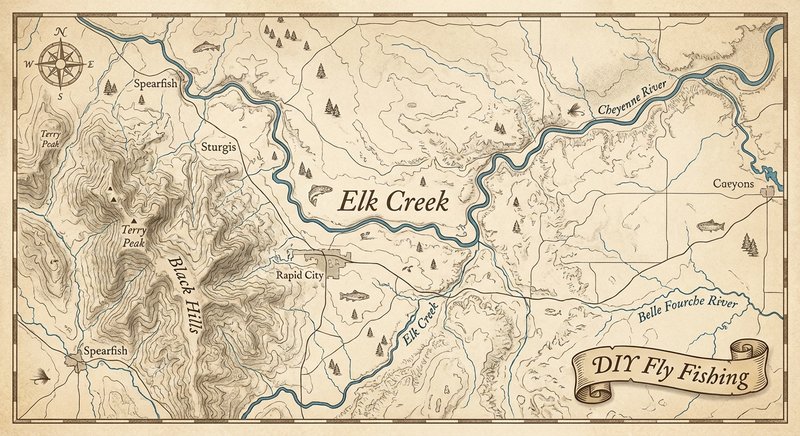
Elk Creek
Fly fishing in South Dakota · intermediate · Best seasons: spring, summer, fall
Target Species
Brown Trout
About This Water
Black Hills stream with wild brown trout. Good public access through forest.
Fishing Recommendations
As an expert guide in the Black Hills of South Dakota, I can tell you that Elk Creek is one of the region's most rewarding "under the radar" fisheries. While the nearby Rapid Creek and Spearfish Creek get the lion's share of the glory, Elk Creek offers a more rugged, intimate, and technical experience for the angler who values wild fish over easy access.
Here is your comprehensive guide to fly fishing Elk Creek.
🎣 Location Overview
Elk Creek is a classic Black Hills freestone stream that flows from the high limestone plateaus down through a dramatic, steep-walled canyon before hitting the prairie near Piedmont.
What makes it special is the Elk Creek Canyon. This section is wild, rugged, and requires a bit of a hike to access, which naturally thins out the crowds. The water is characterized by "pocket water," deep plunge pools, and long, glassy glides. It is an intimate stream—rarely more than 20 feet wide—where stealth and precise casting are more important than long-distance bombing.
🐟 Target Species & Behavior
The primary target here is the Wild Brown Trout. Unlike stocked fish, these Browns are savvy, spooky, and incredibly beautiful, often displaying vibrant buttery hues and deep red spots.
- Behavior: These fish are highly opportunistic but extremely "line shy." In the crystal-clear water of the canyon, they can see you long before you see them.
- Holding Water: They favor the "cushion" in front of boulders, the deep undercut banks, and the tail-outs of pools during evening hatches.
- Diet: Their diet consists heavily of Baetis (BWO), Caddis, and an abundance of terrestrial life (ants, beetles, and hoppers) during the warmer months.
📅 Best Times to Fish
Seasons
- Spring (April – early June): Excellent fishing before the heat sets in. Look for Blue Winged Olive hatches on overcast days. This is when the largest Browns are often caught on streamers as they shake off the winter lethargy.
- Summer (July – August): This is Terrestrial Season. While water levels can drop, the fishing remains excellent if you focus on the oxygenated riffles and use grasshopper patterns.
- Fall (September – October): My personal favorite. The Browns become aggressive as they prepare for the spawn. The colors in the canyon are spectacular, and the fish hit streamers and large nymphs with territorial aggression.
Time of Day
- Summer: Early morning (dawn to 10:00 AM) and "the magic hour" (last 90 minutes of light).
- Spring/Fall: Mid-day (11:00 AM to 3:00 PM) when the water temperatures peak.
🪰 Recommended Flies & Techniques
Top Fly Patterns
- Dries: Parachute Adams (#16-20), Elk Hair Caddis (Tan/Olive, #14-18), Trico (#20-22).
- Terrestrials: Dave’s Hopper (#10-12), Fat Albert (#12), Cinnamon Ants (#16), and Foam Beetles.
- Nymphs: Bead-head Pheasant Tail (#16-18), Zebra Midge (Red or Black, #18-22), and the "Pats Rubber Legs" for high-water spring days.
- Streamers: Small Wooly Buggers (Olive or Black, #8-12) or the "Thin Mint."
Effective Techniques
- Dry-Dropper: This is the bread and butter of Elk Creek. Use a high-visibility hopper or foam dry fly as your indicator and hang a small Pheasant Tail or Midge 18–24 inches below it.
- Stealth Nymphing: If the fish aren't rising, use a "European style" or tight-line nymphing technique in the deeper plunge pools.
- The "Creeper" Approach: Because the water is clear, I recommend kneeling while casting to stay below the fish's line of sight.
💡 Pro Tips & Local Knowledge
- The "Canyon Reach": Focus your efforts on the stretch within the Black Hills National Forest boundaries. Access via Runkle Road or the Elk Creek Trailhead. The further you hike from the trailhead, the better the fishing gets.
- Dress for Success: Wear earthy tones (olive, tan, or camo). Bright white shirts or hats will flash like a beacon and spook every fish in a 20-foot radius.
- Watch the Gauge: Elk Creek is a freestone stream and is susceptible to "blowing out" after heavy rains. Check local USGS gauges; if the flow is spiking rapidly, head to the tailwaters of Rapid Creek instead.
- Light Tackle: A 7.5-foot to 9-foot 3-weight or 4-weight rod is perfect. You don't need heavy gear here; you need delicacy.
⚠️ Important Information
- Access: Much of the lower creek near the I-90 corridor is private property. Always look for "National Forest" boundary signs. Respect "No Trespassing" signs—local landowners are protective of their sections.
- Regulations: A South Dakota fishing license is required. Most of Elk Creek follows general state regulations, but always check the current South Dakota Game, Fish & Parks (SDGFP) handbook for any "Special Management" updates.
- Safety: The canyon is home to Prairie Rattlesnakes, especially on the rocky, sun-drenched slopes. Keep your eyes open and watch where you step. Cell service is non-existent in the depths of the canyon—tell someone where you are going.
- Leave No Trace: This is a fragile ecosystem. Pack out what you pack in and handle these wild Browns with wet hands and minimal air time.
Enjoy the solitude of Elk Creek—it’s one of the last places in the Hills where you can truly get a stretch of water all to yourself. Tight lines!
Bug Hatches & Matching Flies
| Hatch | Type | Peak months | Time of day | Hook sizes | Matching flies |
|---|---|---|---|---|---|
| Blue Winged Olive Baetis spp. | mayfly | April, May, September, October | Midday | #18-22 | Parachute Adams #18-22, RS2 #20-22, Pheasant Tail #18-20 |
| Pale Morning Dun Ephemerella excrucians | mayfly | June, July | Late Morning/Early Afternoon | #14-18 | PMD Sparkle Dun #16-18, Frenchie #14-16, Trigger Finger PMD #16 |
| Little Black Stonefly Capniidae family | stonefly | February, March, April | Midday | #14-18 | Early Girl Stonefly #16, Prince Nymph #14-16, Zebra Midge #18-20 |
| Tan Caddis Hydropsyche spp. | caddis | May, June, July | Evening | #14-18 | Elk Hair Caddis #14-18, LaFontaine's Deep Sparkle Pupa #14-16, Holy Grail #16 |
| Trico Tricorythodes | mayfly | August, September | Early Morning | #20-24 | Trico Spinner #20-24, Drowned Trico #22 |
| Grasshoppers Orthoptera | terrestrial | July, August, September | Afternoon | #8-14 | Dave's Hopper #10-12, Morrish Hopper #12-14, Amy's Ant #12 |
| Yellow Sally Isoperla spp. | stonefly | June, July | Afternoon/Evening | #14-16 | Yellow Stimulator #14-16, Iron Lotus #16 |
| Midges Chironomidae | midge | January, February, December | Midday | #18-26 | Griffith's Gnat #20-22, Zebra Midge #18-24, Top Secret Midge #22 |
| Cinnamon Ant Formicidae | terrestrial | July, August | All Day | #14-18 | Transparant #16, Carpenter Ant #14 |