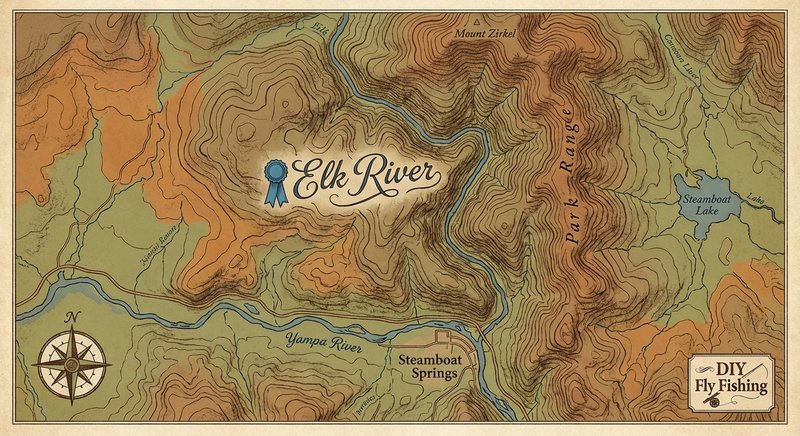
Elk River
Fly fishing in Colorado · Intermediate · Best seasons: Summer, Fall
Target Species
Cutthroat Trout, Rainbow Trout, Brown Trout
About This Water
Near Steamboat Springs with native Colorado River cutthroat. Beautiful ranch country fishing in Routt County.
Fishing Recommendations
🎣 Elk River, Colorado: An Expert Guide
The Elk River is one of the true gems of Northwest Colorado. A primary tributary to the Yampa River, the Elk is a quintessential freestone river that flows through the stunning Clark valley, north of Steamboat Springs. Unlike the tailwater sections of the nearby Yampa, the Elk is wild, rugged, and highly dependent on snowpack. It offers a classic Western fly fishing experience: crystal-clear water, aggressive fish, and breathtaking scenery beneath the peaks of the Zirkel Wilderness.
🎣 Location Overview
The Elk River is celebrated for its "pocket water" and classic riffle-run-pool sequences. It is a high-gradient freestone river, meaning it is fast-moving, cold, and oxygen-rich.
What makes it special is its wild character. Because there are no dams to regulate the flow, the river's personality changes monthly. In June, it’s a raging torrent; by August, it’s a technical dry-fly paradise. The upper reaches flow through the Routt National Forest, while the lower sections meander through lush private hay meadows. Anglers love it because the fish are generally less "educated" than those on the Fryingpan or Cheesman Canyon, yet they still provide a stout challenge in a pristine environment.
🐟 Target Species & Behavior
The Elk is home to a healthy mix of salmonids, often providing the opportunity for a "Colorado Grand Slam."
- Cutthroat Trout (Snake River & Colorado River strains): Primarily found in the upper reaches and higher tributaries. They are opportunistic feeders and will often rise to a well-placed dry fly even when no hatch is present.
- Rainbow Trout: These are the powerhouse of the river. They hold in the faster oxygenated riffles and at the "heads" of deep pools. They are known for acrobatic fights.
- Brown Trout: The "kings" of the lower Elk. They prefer the slower, deeper undercut banks and the "tails" of pools. They become highly aggressive in the fall.
- Mountain Whitefish: Often overlooked, but the Elk has a massive population. They congregate in deep, slow holes and are a great way to keep the rod bent during slow periods.
📅 Best Times to Fish
Summer (Late June – August)
- The Window: Fishing usually begins in late June as the spring runoff recedes and the water clears (look for flows under 1,000 cfs).
- Why: This is the prime time for dry fly fishing. The legendary Stonefly (Salmonfly) hatch occurs as the water drops, followed by prolific Caddis and Drake hatches.
- Time of Day: Early morning for nymphing; mid-morning to late afternoon for dry flies.
Fall (September – October)
- The Window: This is many guides' favorite time. The crowds vanish, and the scenery turns gold.
- Why: Brown trout begin their pre-spawn aggression. Water levels are low and technical, requiring stealthy approaches.
- Time of Day: 10:00 AM to 4:00 PM. The "Blue Winged Olive" (BWO) hatches on overcast days are world-class.
🪰 Recommended Flies & Techniques
Top Fly Patterns
- Dries:
- Chubby Chernobyl (Size 8-12, Gold or Royal) - The ultimate indicator fly.
- Elk Hair Caddis (Size 14-18, Tan or Olive) - A staple on its namesake river.
- Parachute Adams (Size 14-20) - Covers almost any mayfly hatch.
- Amy’s Ant (Size 10-14) - Great terrestrial for late summer.
- Nymphs:
- Pat’s Rubber Legs (Size 8-12, Brown/Black) - Essential for imitating the Stoneflies.
- Prince Nymph (Size 12-16) - Works exceptionally well in the fast riffles.
- Pheasant Tail (Size 16-20) - Standard fare for the BWO and PMD hatches.
- Streamers:
- Sculpzilla (Size 4-8, Olive) - Brown trout love sculpins in the Elk.
- Black Wooly Bugger - Never leave home without it.
Effective Techniques
- Dry-Dropper: This is the most effective way to fish the Elk. Use a high-visibility buoyant dry (like a Chubby) and hang a weighted nymph 2–3 feet below it.
- Pocket Water Picking: Don't just cast into the big pools. Cast into the small pockets of calm water behind large boulders. Fish often sit right in the "cushion" in front of the rock or the "seam" just behind it.
- The Swing: During a caddis hatch, "swinging" an emerging caddis pattern through the tail-outs can be deadly.
💡 Pro Tips & Local Knowledge
- Upper vs. Lower: If you want solitude and smaller, hungrier fish, head north of Clark into the Seedhouse Road area (National Forest). If you want trophy-sized fish, focus on the public access points closer to the confluence with the Yampa, but be prepared for more technical fishing.
- The "Elk River Twitch": When fishing caddis, give your fly a very slight twitch. The Elk is a fast river, and natural insects often skitter across the surface.
- Respect Private Property: The Elk is a "checkerboard" of public and private land. In Colorado, the riverbed is private even if the water is public. Do not anchor or wade on private land without permission. Use a mapping app like OnX Hunt to stay legal.
- Temperature Watch: In late July and August, the lower Elk can get warm. If water temps hit 67°F, head further upstream to higher elevations or stop fishing to protect the trout.
⚠️ Important Information
- Access: Key public access points include the Christina State Wildlife Area (SWA) and several access points along Seedhouse Road in the National Forest.
- Regulations:
- Check current Colorado Parks and Wildlife (CPW) regulations annually.
- Most of the Elk is under standard Colorado regulations, but certain sections near the Yampa confluence may have specific gear restrictions (Artificial Fly and Lure only).
- Permits: A valid Colorado Fishing License is required for everyone 16 and older. If you enter a State Wildlife Area, you must have a valid hunting or fishing license.
- Wildlife: This is moose and bear country. Keep your distance, especially from moose, which are common in the willow thickets along the river. Stay "Bear Aware" if camping in the Zirkel Wilderness.
Bug Hatches & Matching Flies
| Hatch | Type | Peak months | Time of day | Hook sizes | Matching flies |
|---|---|---|---|---|---|
| Blue Winged Olive Baetis spp. | mayfly | April, May, September, October | Afternoon | #18-22 | RS2 #18-22, Parachute Adams #18-22, Pheasant Tail #18-22 |
| Midges Chironomidae | midge | February, March, April | All day | #20-24 | Zebra Midge #18-22, Griffith's Gnat #20-22, Top Secret Midge #20-24 |
| Golden Stonefly Hesperoperla pacifica | stonefly | June, July | Morning/Afternoon | #8-12 | Pat's Rubber Leg #8-12, Chubby Chernobyl #10-12, Golden Rogue Stone #8-10 |
| Green Drake Drunella doddsi | mayfly | July | Late Afternoon/Evening | #10-12 | Drake Cripple #10-12, Green Drake Sparkle Dun #10-12, Hares Ear #10-12 |
| Pale Morning Dun Ephemerella excrucians | mayfly | July, August | Late Morning/Early Afternoon | #16-18 | PMD Sparkle Dun #16-18, Frenchie #16-18, Barr's PMD Emerger #16-18 |
| Spotted Sedge / Caddis Hydropsyche | caddis | June, July, August | Evening | #14-18 | Elk Hair Caddis #14-18, Holy Grail #14-16, Caddis Pupa #14-18 |
| Yellow Sally Isoperla spp. | stonefly | July, August | Afternoon/Evening | #14-16 | Yellow Sally Foam #14-16, Iron Sally #14-16, Stimulator #14-16 |
| Grasshoppers Orthoptera | terrestrial | August, September | Mid-day | #8-12 | Morrish Hopper #8-12, Amy's Ant #10-12, Parachute Hopper #10-12 |