Fraser River
Fly fishing in Colorado · Beginner · Best seasons: Summer, Fall
Target Species
Rainbow Trout, Brown Trout
About This Water
Near Winter Park, offering good fishing in scenic mountain meadows. Recovering fishery with improving populations.
Fishing Recommendations
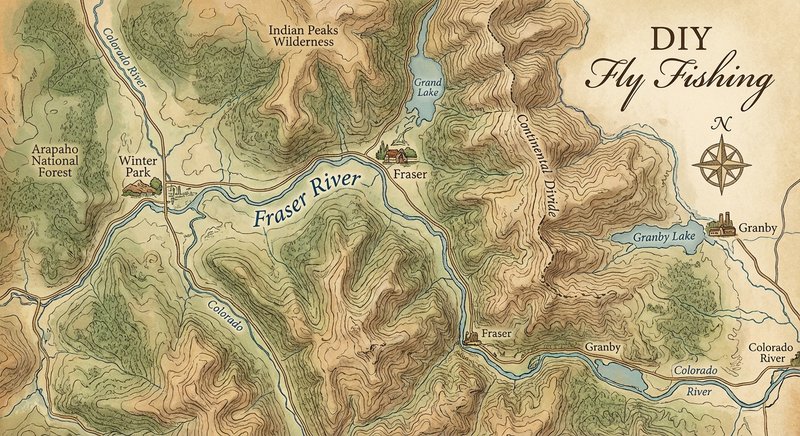
The Fraser River is one of Colorado’s "sleeper" gems. While many anglers rush past it on their way to the mighty Colorado River or the technical waters of the Blue, the Fraser offers a more intimate, classic meadow-stream experience. Flowing through the high-altitude Fraser Valley near Winter Park and Tabernash, it is a river of character—ranging from tumbling pocket water to slow, winding "S" curves.
🎣 Location Overview
The Fraser River is a major tributary of the Colorado River, beginning high on Berthoud Pass. What makes it special is its diversity. The upper reaches near Winter Park are characterized by classic freestone features—riffles, runs, and pocket water. As it moves toward Tabernash and Granby, it transitions into a high-alpine meadow stream with deep under-cut banks and glassy tailouts.
Anglers love the Fraser because it feels approachable yet challenging. It is a "technical" river in terms of presentation, but it isn't as crowded as the nearby tailwaters. The scenery is quintessential Colorado: jagged peaks of the Continental Divide framing lush willow-lined banks.
🐟 Target Species & Behavior
The Fraser is home to a healthy population of Wild Brown Trout and Rainbow Trout, with the occasional Brookie in the higher elevations.
- Brown Trout: These are the kings of the Fraser. They are notoriously spooky and favor the deep undercut banks and the "dark water" beneath overhanging willows. In the fall, they become aggressive as they prepare for the spawn.
- Rainbow Trout: Found more frequently in the faster riffles and well-oxygenated bubble lines at the heads of pools. They tend to be less "structure-oriented" than the browns but are hard fighters.
- Feeding Habits: The fish here are opportunistic but wary. They key in on heavy hatches of Midges, Baetis, and Caddis. In late summer, they become "terrestrial-obsessed," looking for grasshoppers and ants falling from the meadow grass.
📅 Best Times to Fish
While you can fish the Fraser year-round, the windows you requested are truly the "Golden Era" for this river.
- Summer (Late June – August):
- The Window: Post-runoff (usually late June) through August.
- Conditions: Water temperatures are ideal. Morning sessions (8:00 AM – 11:00 AM) are great for nymphing, while evenings (6:00 PM – Dark) offer legendary dry fly action.
- Fall (September – October):
- The Window: This is many guides' favorite time. The crowds thin out, and the aspens turn gold.
- Conditions: Low, crystal-clear water. The Brown Trout become territorial and aggressive. This is the best time for streamers or delicate BWO (Blue Winged Olive) dry fly fishing on cloudy days.
🪰 Recommended Flies & Techniques
Top Fly Patterns
- Dries: Parachute Adams (#14-20), Elk Hair Caddis (#14-18), Amy’s Ant (#10-12), and Puterbaugh Foam Caddis. For fall, use CDC BWO Sparkle Duns (#18-22).
- Nymphs: Pat’s Rubber Legs (#10-14), Pheasant Tail (#16-20), Zebra Midge (#18-22), and RS2s (Grey or Olive, #18-22).
- Streamers: Gold or Black Slumpbusters, Wooly Buggers, and the Near Nuff Sculpin.
Effective Techniques
- Dry-Dropper: This is the bread and butter of the Fraser. Use a buoyant terrestrial (like a Hopper or Amy’s Ant) with a small bead-head nymph (like a Pheasant Tail) 18-24 inches below it.
- Euro Nymphing: The pocket water sections near Winter Park are perfect for tight-line nymphing through the fast chutes.
- Streamer Stripping: In the fall, cast streamers tight against the undercut banks and "strip-pause" them back to the center of the channel.
💡 Pro Tips & Local Knowledge
- The "Shadow" Factor: Because the water is so clear and the river isn't huge, fish are extremely sensitive to shadows. Always approach a hole from downstream and stay low. If you see the fish, they’ve likely already seen you.
- Focus on the Canyon: The "Canyon" stretch between Tabernash and Granby offers some of the most dramatic water, but it requires some hiking. The fish here see fewer flies than those right next to the town parks.
- The "Fraser Flicker": When fishing the meadow sections, the wind often blows. Instead of fighting it, use a shorter leader (7.5ft) to help turn over your terrestrials into the wind to get that "splat" that attracts big browns.
- Water Levels: Keep an eye on the USGS gauge. The Fraser is heavily diverted for Denver’s water use. If flows drop below 40-50 CFS in the summer, the fish get stressed; look for deeper, faster water where oxygen levels are higher.
⚠️ Important Information
- Access: Much of the Fraser runs through private land. However, there are excellent public stretches:
- Fraser Canyon: Public access managed by the BLM/Forest Service.
- Cozen Open Space: Great access near the town of Fraser.
- Kaibab Park: Good family access in Granby.
- Always check the "Fishing Close to Home" maps or local fly shop maps to ensure you aren't trespassing.
- Regulations: Standard Colorado fishing regulations apply (valid CO fishing license required). Some sections are Catch and Release only or have restricted bag limits. Check the current CPW (Colorado Parks and Wildlife) brochure before heading out.
- Be Prepared: You are at high altitude (approx. 8,500+ feet). Bring sunblock, plenty of water, and bear spray if you are hiking into the more remote canyon sections. Moose are also very common along the Fraser—give them a wide berth!
Bug Hatches & Matching Flies
| Hatch | Type | Peak months | Time of day | Hook sizes | Matching flies |
|---|---|---|---|---|---|
| Midges Chironomidae | midge | January, February, March, April | Late Morning/Afternoon | #18-24 | Zebra Midge #18-22, Griffith's Gnat #20-22, Top Secret Midge #20-24 |
| Blue Winged Olive Baetis | mayfly | April, May, September, October | Late Morning/Afternoon | #18-22 | JujuBaetis #18-22, RS2 #20-22, Parachute Adams #18-22 |
| Pale Morning Dun Ephemerella excrucians | mayfly | June, July, August | Morning/Early Afternoon | #14-18 | Pheasant Tail #14-18, PMD Sparkle Dun #16-18, Barr's PMD Emerger #16-18 |
| Western Green Drake Drunella doddsi | mayfly | July, August | Afternoon/Evening | #10-14 | Colorado Green Drake #10-12, 20 Incher Stone #10-14, Quigley Hackle Stacker #12 |
| Grannom Caddis Brachycentrus | caddis | May, June | All Day/Evening | #14-16 | Elk Hair Caddis #14-16, LaFontaine's Deep Sparkle Pupa #14-16, Puterbaugh's Foam Caddis #14-16 |
| Golden Stonefly Hesperoperla pacifica | stonefly | June, July | Morning/Afternoon | #8-12 | Pat's Rubber Legs #8-12, Rogue River Stone #10-12, Iron Lotus #12-14 |
| Trico Tricorythodes | mayfly | August, September | Early Morning | #20-24 | Trico Spinner #20-24, Sunken Trico Spinner #20-22, WD-40 #20-22 |
| Grasshoppers Acrididae | terrestrial | August, September | Late Morning/Afternoon | #8-14 | Amy's Ant #10-14, Chubby Chernobyl #8-12, Joe's Hopper #10-14 |