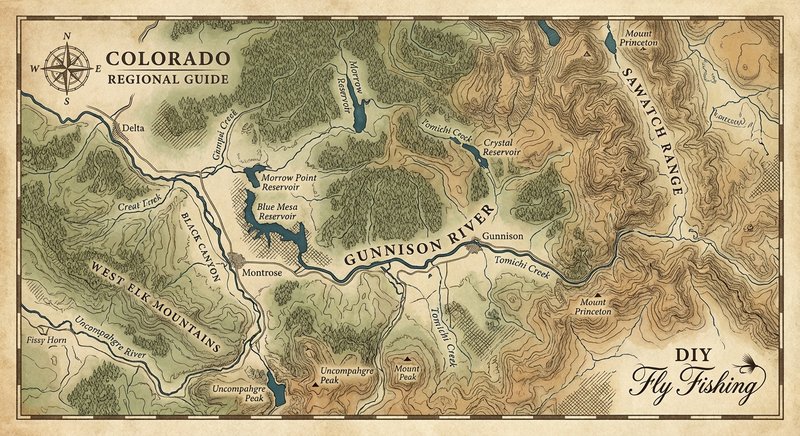
Gunnison River
Fly fishing in Colorado · Advanced · Best seasons: Spring, Summer, Fall
Target Species
Brown Trout, Rainbow Trout
About This Water
The Black Canyon section offers challenging fishing for large brown and rainbow trout in dramatic canyon scenery.
Fishing Recommendations
The Gunnison River, or "The Gunny" as locals call it, is one of the most storied trout fisheries in the American West. Flowing through high-alpine meadows, deep canyons, and desert valleys, it offers a diverse range of water that earns its "Gold Medal" status every single day.
As your guide, here is everything you need to know to tackle this legendary Colorado river.
🎣 Location Overview
The Gunnison is defined by its dramatic geology. It begins at the confluence of the East and Taylor Rivers in Almont and travels through the massive Blue Mesa Reservoir before plunging into the Black Canyon of the Gunnison.
What makes it special is the sheer volume and health of the fish. The river produces massive insects (specifically Salmonflies) which in turn produce massive, powerful trout. Whether you are fishing the "Upper Gunny" near Almont or the remote, rugged wilderness of the "Gunnison Gorge," you are in for a world-class experience. The water is generally cold, clear, and high-volume, requiring sturdy wading and tactical precision.
🐟 Target Species & Behavior
- Brown Trout: The Gunnison is famous for its wild, buttery Browns. They are highly predatory and love structure. Look for them tucked under overhanging willows, behind large boulders in the Black Canyon, or in the deep "buckets" during the heat of the day.
- Rainbow Trout: These fish are the acrobats of the river. They tend to hold in faster water, riffles, and the heads of pools. Thanks to successful management and Whirling Disease resistance, the Rainbow population is thriving.
- Behavior: In the Spring, they are hungry and opportunistic after winter. In Summer, they become "match-the-hatch" specialists. In Fall, the Browns become extremely aggressive as they prepare for the spawn, while the Rainbows follow the Kokanee Salmon (running up from the reservoirs) to gorge on their eggs.
📅 Best Times to Fish
- Spring (April – May): This is the window for Blue Winged Olives (BWO) and Midges. It’s "pre-runoff" fishing. The fish are hungry, and the crowds are thin.
- Summer (Late June – August): This is prime time. The legendary Salmonfly Hatch usually hits in late June or early July (depending on flow). This is the best chance to catch a 20+ inch trout on a dry fly the size of a hotdog.
- Fall (September – October): My personal favorite. The water drops and clears, the Cottonwoods turn gold, and the Brown Trout are on the move. You’ll see hatches of BWOs and Caddis, and the "Egg bite" becomes a factor.
Time of Day: During summer, be on the water at dawn. In spring and fall, wait for the water to warm up—the 10:00 AM to 4:00 PM window is often most productive.
🪰 Recommended Flies & Techniques
Top Fly Patterns
- Dries: Chubby Chernobyl (Orange/Gold, #4-8) for Salmonflies; Parachute Adams (#14-20) for general hatches; Elk Hair Caddis (#14-18); Stimulators (#8-12).
- Nymphs: Pat’s Rubber Legs (Black/Tan, #6-10); Prince Nymph (#12-16); Pheasant Tail (#14-18); Zebra Midge (Black/Red, #18-22).
- Streamers: Wooly Buggers (Olive/Black); Sex Dungeon (White or Yellow) for big canyon Browns.
- Specialty: Glo-Bug (Orange/Pink) in the fall to mimic Salmon eggs.
Techniques
- Nymphing: A two-fly nymph rig under an indicator is the "bread and butter" on the Gunny. Ensure you have enough weight (split shot) to get the flies into the "zone" near the bottom.
- Dry-Dropper: During the summer, use a large hopper or stonefly pattern as your "indicator" and hang a small pheasant tail or caddis pupa 2-3 feet below it.
- Streamer Stripping: In the Fall or on overcast days, pound the banks with streamers. Use a sink-tip line to keep the fly down in the heavy current.
💡 Pro Tips & Local Knowledge
- The "Almont Triangle": The stretch where the East and Taylor meet to form the Gunnison is high-pressured but loaded with fish. Technical, small-fly presentations are key here.
- The Salmonfly "Crawl": During the hatch, the nymphs crawl to the bank to hatch. If you aren't seeing rises, fish a heavy stonefly nymph tight against the rocks along the shoreline.
- Watch the Flows: The Gunnison is dam-controlled (Crystal and Blue Mesa). Check the USGS gauges before you go. A sudden spike in CFS (cubic feet per second) can turn the bite off and make wading dangerous.
- The "Egg" Factor: From late August through October, Kokanee Salmon run up the river. Trout will sit behind the salmon and eat their eggs. Fishing a single egg pattern can be lights-out during this window.
⚠️ Important Information
- Access: Much of the Gunnison is private property. Stick to designated public access points (like the Smith Fork, Pleasure Park, or Almont). The Gunnison Gorge requires a hike down steep trails (Ute, Duncan, or Bobcat), which requires good physical fitness.
- Regulations: Large sections of the Gunnison are Gold Medal Water. This typically means artificial flies and lures only, and strictly enforced catch-and-release for certain species. Always check the current Colorado Parks and Wildlife (CPW) brochure.
- Wading Safety: This is a big, powerful river. A wading staff is highly recommended, especially in the Gorge where the boulders are "slicker than snot."
- Permits: If you plan to fish the Gunnison Gorge National Conservation Area, there is a per-person daily fee payable at the kiosks at the trailheads.
Guide’s Final Word: The Gunnison rewards the persistent angler. It can be a tough river to read because of its power, but once you find the rhythm of the current and the depth of the fish, it offers some of the best trout fishing on the planet. Tight lines!
Bug Hatches & Matching Flies
| Hatch | Type | Peak months | Time of day | Hook sizes | Matching flies |
|---|---|---|---|---|---|
| Salmonfly Pteronarcys californica | stonefly | June, July | All day | #4-8 | Rogue River Stone #4-6, Pat's Rubber Leg #4-8, Chubby Chernobyl #6-8 |
| Green Drake Drunella grandis | mayfly | July, August | Afternoon/Evening | #10-12 | Colorado Green Drake #10-12, Quigley's Green Drake Hackle Stacker #12, 20 Incher #10-12 |
| Blue Winged Olive Baetis spp. | mayfly | March, April, September, October, November | Late Morning/Afternoon | #18-22 | RS2 #18-22, Parachute Adams #18-22, JujuBaetis #18-22 |
| Pale Morning Dun Ephemerella excrucians | mayfly | June, July, August | Late Morning/Early Afternoon | #14-18 | PMD Sparkle Dun #16-18, Pheasant Tail #14-18, Barr's PMD Emerger #16-18 |
| Golden Stonefly Hesperoperla pacifica | stonefly | June, July | All day | #8-12 | Golden Chubby Chernobyl #8-10, Iron Lotus #12-14, Halfback #8-12 |
| Brachycentrus (Grannom) Brachycentrus occidentalis | caddis | May | Late Morning/Afternoon | #14-16 | Peacock Caddis #14-16, Deep Sparkle Pupa #14-16, Elk Hair Caddis #14-16 |
| Midges Chironomidae | midge | January, February, March, December | Late Morning/Midday | #20-26 | Zebra Midge #20-24, Griffith's Gnat #20-22, Top Secret Midge #22-24 |
| Yellow Sally Isoperla spp. | stonefly | July, August | Afternoon/Evening | #14-16 | Yellow Stimulator #14-16, Sallie Girl #16, Yellow Sally Nymph #14-16 |
| Trico Tricorythodes spp. | mayfly | August, September | Early Morning | #20-24 | Trico Spinner #22-24, Drowned Trico Spinner #22-24, Trico Parachute #20-22 |