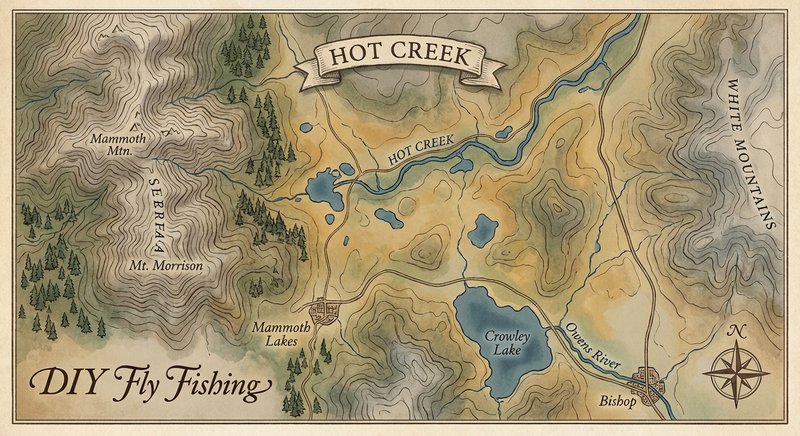
Hot Creek
Fly fishing in California · Advanced · Best seasons: Spring, Summer, Fall
Target Species
Rainbow Trout, Brown Trout
About This Water
A geothermal spring creek in the Eastern Sierra. Crystal-clear water with large, technical trout.
Fishing Recommendations
Welcome to one of the most iconic spring creeks in the American West. As your guide, I’m excited to walk you through Hot Creek, located just outside of Mammoth Lakes, California. This is "PhD water"—a technical, beautiful, and often humbling fishery that rewards patience and precision.
🎣 Location Overview
Hot Creek is a classic spring creek set against the dramatic backdrop of the Eastern Sierra’s peaks. What makes it special is its geological origin: it is fed by thermal springs that keep the water temperatures relatively stable throughout the year, even when the surrounding mountains are buried in snow.
The water is crystal clear, alkaline, and incredibly rich in nutrients, leading to massive weed beds and an astronomical insect count. It’s a small, intimate stream characterized by slow-moving glides, tight bends, and deep "buckets" carved into the weed channels. Anglers love it because it offers true sight-fishing opportunities; you will often see the fish you are casting to, which makes the game of "chess" even more exhilarating.
🐟 Target Species & Behavior
Hot Creek is home to wild Brown Trout and wild Rainbow Trout. You won't find stockies here; these fish are born in the creek and have seen every fly in the Orvis catalog.
- Brown Trout: The masters of stealth. They tend to tuck deep into the undercut banks or under thick mats of Elodea (waterweed). They are most active during low-light conditions or heavy hatches.
- Rainbow Trout: Generally found in the swifter riffles and at the heads of pools. They are opportunistic but wary, often hovering just below the surface to sip midges.
- Behavior: These fish are notoriously "spooky." If they see your shadow or a splashy landing, they will shut down for an hour. They hold in narrow lanes between weed beds, requiring extremely accurate casting.
📅 Best Times to Fish
While the creek is open year-round, the fishing evolves significantly with the seasons.
- Spring (March – May): This is the time for the Baetis (Blue Winged Olive) hatches. Overcast days in April can produce some of the best dry-fly fishing of the year. The fish are hungry after winter and slightly less cautious.
- Summer (June – August): Prime time for dry flies. You’ll see heavy Caddis hatches in the mornings and evenings, and Trico spinners in the mid-morning. Grasshoppers also become a factor in late summer.
- Fall (September – November): My favorite time. The Brown Trout become aggressive as they prepare to spawn. The colors of the canyon change, and the crowds thin out. BWO hatches return in force.
- Best Time of Day: During the heat of summer, early morning and late evening are best. On cooler spring or fall days, the "magic window" is often 10:00 AM to 3:00 PM.
🪰 Recommended Flies & Techniques
Top Fly Patterns
- Dry Flies: Parachute Adams (#18-22), Griffith’s Gnat (#20-24), Elk Hair Caddis (Tan/Olive #16-18), Brooks Sprout Baetis (#18-22), and Thorax Blue Winged Olive (#18-20).
- Nymphs: Zebra Midges (Black, Red, Silver #20-22), RS2 (Grey/Olive #18-22), WD-40 (#20), and Scuds (Orange or Olive #16-18). Note: Scuds are a staple diet here due to the alkaline water.
- Streamers: Small Wooly Buggers or Micro-Leeches (Black or Olive #10-14) can work in the deeper holes during the fall.
Effective Techniques
- Technical Dry Fly: Use a long leader (12–15 feet) tapering down to 6X or 7X fluorocarbon tippet. A drag-free drift is mandatory; even a micro-millimeter of drag will cause a refusal.
- Sight Nymphing: Since indicators can spook fish in this shallow water, many guides use a "dry-dropper" rig or simply sight-nymph with a single weighted fly and no indicator, watching the fish’s mouth for a "white flash" as it takes.
- The "Hot Creek Twitch": When fishing Caddis dries in the evening, a tiny, subtle twitch can sometimes trigger a strike from a trout that has ignored a dozen dead drifts.
💡 Pro Tips & Local Knowledge
- The Stealth Approach: Approach the bank on your knees. If you can see the fish clearly, they can see you. Wear drab clothing (earth tones) to blend into the high-desert sagebrush.
- Manage the Weeds: When you hook a fish, they will immediately dive into the weeds. Keep your rod tip high and apply side pressure to steer them into the open lanes.
- The "Canyon" vs. the "Interpretive Site": The Interpretive Site (top of the public water) is easier to walk but gets more pressure. If you are physically able, hike down into the Canyon section. The water is more varied, and the fish see slightly fewer flies.
- Polarized Glasses are Non-Negotiable: You cannot fish Hot Creek effectively without high-quality amber or copper polarized lenses to cut the surface glare and spot the lanes between the weeds.
⚠️ Important Information
- Access: Access is via Hot Creek Hatchery Road. There are several parking lots for the public section.
- Regulations:
- Catch and Release only.
- Artificial lures/flies only with barbless hooks.
- Check the current California Department of Fish and Wildlife (CDFW) regulations, as they can change seasonally.
- Invasive Species: Hot Creek is known to have New Zealand Mud Snails. Please clean, drain, and dry your wading gear or use a disinfectant solution before moving to other waters like the Upper Owens to prevent the spread of these pests.
- Private Property: Be aware that Hot Creek Ranch is a private resort located upstream and downstream of the public sections. It is strictly dry-fly only and requires a fee/reservation. Ensure you stay within the public boundaries marked by signage.
Tight lines, and remember: at Hot Creek, it’s not about how many fish you catch, but the quality of the one you outsmart!
Bug Hatches & Matching Flies
| Hatch | Type | Peak months | Time of day | Hook sizes | Matching flies |
|---|---|---|---|---|---|
| Midges Chironomidae | midge | January, February, March, April, May, June, July, August, September, October, November, December | All Day | #18-26 | Zebra Midge #18-22, Griffith's Gnat #20-24, Morgan's Midge #20-22 |
| Blue-Winged Olive (BWO) Baetis | mayfly | March, April, September, October, November | Late Morning/Afternoon | #18-22 | RS2 #20-22, Parachute BWO #18-22, Baetis Nymph #18-20 |
| Trico Tricorythodes | mayfly | August, September, October | Early Morning | #20-24 | Trico Spinner #20-24, Trico Nymph #22, Sunken Trico Spinner #20-22 |
| Pale Morning Dun (PMD) Ephemerella | mayfly | June, July, August | Morning/Early Afternoon | #16-18 | PMD Sparkle Dun #16-18, Split Case PMD #16-18, Quigley Cripple #16-18 |
| Little Black Caddis Brachycentrus | caddis | April, May | Afternoon | #16-18 | Mother's Day Caddis #16-18, Peacock Caddis #16-18, Deep Sparkle Pupa #16-18 |
| Spotted Sedge / Cinnamon Caddis Hydropsyche | caddis | June, July, August | Evening | #14-18 | Elk Hair Caddis #14-18, LaFontaine Pupa #16-18 |
| Grasshoppers Acrididae | terrestrial | July, August, September | Late Morning/Afternoon | #10-14 | Hopper Juan #12-14, Parachute Hopper #10-14 |
| Scuds Gammarus | terrestrial | All Months | All Day | #14-18 | Ray Charles #16-18, Scud (Gray or Olive) #14-18 |
| Damselfly Enallagma | terrestrial | June, July, August | Mid-day | #10-14 | Marabou Damsel Nymph #12-14, Adult Damsel #12-14 |
| Micro Caddis Hydroptila | caddis | July, August | Evening | #20-24 | CDC Micro Caddis #20-22, Z-Wing Caddis #20-22 |