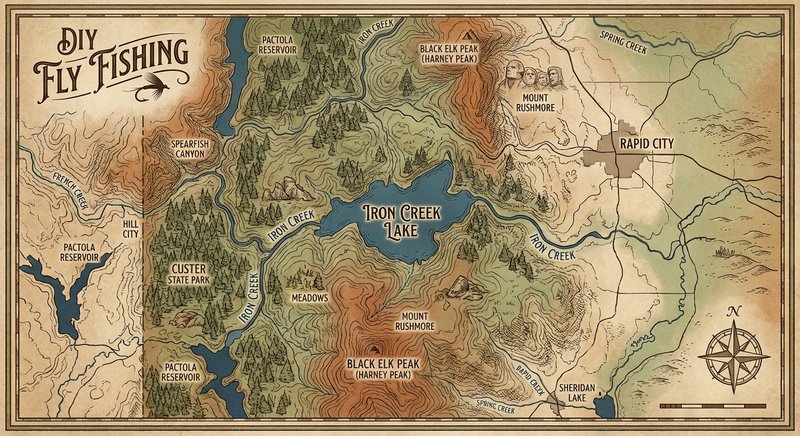
Iron Creek Lake
Fly fishing in South Dakota · intermediate · Best seasons: summer, fall
Target Species
Brook Trout, Rainbow Trout
About This Water
Black Hills lake with brook trout. High elevation mountain lake.
Fishing Recommendations
As an expert guide who has spent years navigating the waters of the Black Hills, I can tell you that Iron Creek Lake is one of the hidden gems of Western South Dakota. Tucked away in the Spearfish Canyon area, this high-elevation lake (approx. 4,500 ft) offers a serene, "alpine-lite" experience without the grueling hike.
Here is your comprehensive guide to fly fishing Iron Creek Lake.
🎣 Location Overview
Iron Creek Lake is a 24-acre reservoir nestled in a steep-sided canyon within the Black Hills National Forest. Unlike the larger, wind-swept reservoirs on the plains, Iron Creek is intimate, sheltered, and surrounded by dense ponderosa pines and birch trees.
What makes it special is the water clarity and temperature. Because it is fed by Iron Creek and sits at a higher elevation, it remains cooler than other Hills lakes during the peak of summer. The shoreline is accessible, but the lake is best experienced by a float tube, kayak, or pontoon boat, allowing you to reach the deeper drop-offs and the spring-fed inlets that hold the biggest fish.
🐟 Target Species & Behavior
The lake is primarily managed for trout, with consistent stocking efforts making it a high-success destination.
- Rainbow Trout: These are the most active residents. They tend to cruise the littoral zones (shallows) in the morning and move toward the center or deeper thermoclines as the sun gets high. They are aggressive feeders and will readily take midges and small scuds.
- Brook Trout: The "jewels" of the lake. The Brookies here often congregate near the inlet where Iron Creek enters the lake. They are more structure-oriented than the Rainbows, often hiding near submerged timber or the shadows cast by the steep canyon walls.
- Feeding Behavior: Expect a diet consisting heavily of Scuds (freshwater shrimp), Midges, and Callibaetis mayflies. Because the lake has a rich silt bottom in areas, there is a significant population of damselfly nymphs that move toward the shore in mid-summer.
📅 Best Times to Fish
While the lake is open year-round, your requested seasons of Summer and Fall are prime.
- Summer (June - August):
- Window: Early morning (6:00 AM – 10:00 AM) and "the magic hour" before sunset.
- Conditions: Look for "Black Hills calm"—when the water is glass. This is when the fish rise to midges. Even in July, the water stays cool enough for active midday fishing if you use sinking lines.
- Fall (September - October):
- Window: All day. As water temperatures drop, fish become more aggressive to bulk up for winter.
- Conditions: This is the best time for Brook Trout. Their colors become incredibly vivid as they prepare to spawn. A crisp, overcast October day can provide some of the best streamer fishing of the year.
🪰 Recommended Flies & Techniques
Top Fly Patterns
- Nymphs/Sub-surface:
- Gold-Ribbed Hare’s Ear (#14-18): A classic that mimics many things in this lake.
- Olive or Orange Scuds (#16-18): Essential. The Black Hills are famous for scuds.
- Damselfly Nymphs (#10-12): Long, olive, and wiggly.
- Zebra Midges (#18-22): Red or black with a silver bead.
- Dry Flies:
- Parachute Adams (#16-20): The ultimate generalist for the evening rise.
- Griffith’s Gnat (#18-22): Perfect for the midge clusters seen at dusk.
- Callibaetis Spinners (#16): For those calm summer mornings.
- Streamers:
- Woolly Bugger (#8-12): Olive, thin-mint, or black.
- Pine Squirrel Leech: In rust or black.
Techniques
- The "Static" Midge Rig: Use a long leader (12–15 ft) with a tiny Zebra Midge 4–6 feet under a small "New Zealand style" wool indicator. Cast it near the weed edges and wait.
- The Slow Strip: Using an intermediate sinking line, cast a damselfly nymph or scud toward the shore and retrieve with very slow, 2-inch tugs.
- Dry-Dropper: In the summer, a size 14 Hopper with a size 16 Scud dropped 2 feet below it is a deadly "searcher" pattern along the banks.
💡 Pro Tips & Local Knowledge
- The Inlet Secret: The western end of the lake, where Iron Creek flows in, is often overlooked. The moving water brings in oxygen and food. If the lake fishing feels slow, focus on the "fan" where the creek enters the still water.
- Canyon Shadows: Because of the steep terrain, parts of the lake fall into shadow much earlier than others. Fish will move into these shadows to feed even when the sun is still out. Follow the shade line.
- Float Tube Advantage: The best fish often hold just out of reach of a standard shore cast. A float tube allows you to kick quietly along the dam breast or the northern rocky bank where the water drops off quickly.
- Watch the Wind: If a breeze picks up, fish the "windward" shore. The waves push microorganisms and insects against that bank, creating a feeding frenzy for the trout.
⚠️ Important Information
- Access: Iron Creek Lake is accessed via Tinton Road (FS 134) or from Spearfish Canyon via FS 222. The roads are gravel and can be washboarded; a vehicle with decent clearance is recommended but not strictly required.
- Regulations:
- A South Dakota fishing license is required.
- Standard Black Hills National Forest regulations apply.
- Electric motors only. Gas motors are prohibited, which keeps the lake quiet and the fish less spooked.
- Permits: There is a small daily parking/use fee at the Iron Creek Lake campground/store area during the peak season.
- Supplies: There is a small seasonal store at the lake (Iron Creek Lake Store) that offers snacks, basic tackle, and boat rentals, but for a full fly selection, stop in Spearfish at a local fly shop before heading up the canyon.
Guide’s Final Word: Bring a light rod—a 3wt or 4wt is perfect for these fish. The fight of a wild-acting Rainbow on a light rod with the canyon walls echoing the silence is what Black Hills fishing is all about. Tight lines!
Bug Hatches & Matching Flies
| Hatch | Type | Peak months | Time of day | Hook sizes | Matching flies |
|---|---|---|---|---|---|
| Midges (Chironomids) Chironomidae | midge | April, May, September, October | All Day | #18-24 | Zebra Midge #18-22, Griffith's Gnat #20-22, Chironomid Pupa #18-20 |
| Speckled Winged Mayfly Callibaetis | mayfly | June, July, August | Morning/Early Afternoon | #12-16 | Callibaetis Spinner #14-16, Pheasant Tail Nymph #12-16, Hare's Ear #14-16 |
| Blue-Winged Olive Baetis | mayfly | April, May, September, October | Late Morning/Afternoon | #18-22 | BWO Sparkle Dun #18-22, RS2 #20-22, Parachute Adams #18-22 |
| Damselfly Enallagma | terrestrial | June, July | Mid-day | #10-14 | Marabou Damsel Nymph #10-12, Adult Damsel #12-14 |
| Scuds Gammarus | midge | Year-round | All Day | #14-18 | Ray Charles #14-18, Scud (Orange or Pink) #14-16 |
| Cinnamon Caddis Hydropsyche | caddis | July, August | Evening | #14-16 | Elk Hair Caddis #14-16, LaFontaine's Emerger #14-16 |
| Terrestrial Ants and Beetles Formicidae/Coleoptera | terrestrial | July, August, September | Afternoon | #12-18 | Black Foam Ant #14-18, Fat Albert #10-14, Foam Beetle #12-16 |
| Water Boatmen Corixidae | midge | September, October | Afternoon | #14-16 | Prince Nymph #14-16, Water Boatman #14-16 |