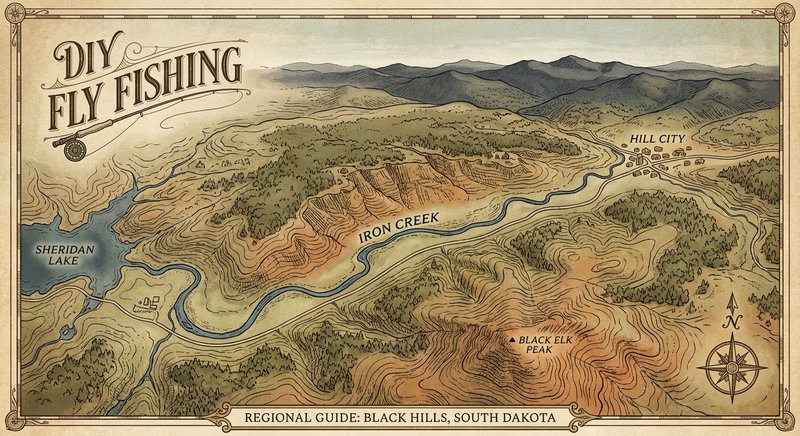
Iron Creek
Fly fishing in South Dakota · advanced · Best seasons: spring, summer
Target Species
Brook Trout
About This Water
Black Hills tributary with wild brook trout. Small stream adventure fishing.
Fishing Recommendations
Located in the heart of the Black Hills National Forest, Iron Creek is one of South Dakota’s most enchanting "blue-ribbon" style small streams. While many anglers flock to the larger Rapid Creek or Spearfish Creek, Iron Creek offers a more intimate, rugged, and wild experience for those who appreciate the pursuit of gem-like wild Brook Trout in a breathtaking canyon setting.
🎣 Location Overview
Iron Creek is a classic high-gradient Black Hills stream that flows through a dramatic limestone canyon before reaching its confluence with Spearfish Creek. What makes it special is its wild character. Unlike the tailwaters in the region, Iron Creek feels untamed.
The water is crystal clear and cold, characterized by a "stair-step" structure: a series of small plunge pools, short riffles, and deep undercut banks. It is heavily forested with ponderosa pine, birch, and willow, meaning casting is tight and technical. This is "blue line" fishing at its finest—short rods, stealthy approaches, and stunning scenery.
🐟 Target Species & Behavior
While you may occasionally find a stray Brown Trout near the confluence, Iron Creek is primarily a Brook Trout stronghold.
- Behavior: These are wild fish, not stockies. They are opportunistic but extremely spooky. Because the water is so clear, they can see an angler from a distance.
- Where they hold: Look for them in the "bubbles" at the head of plunge pools, tucked under overhanging branches, or tight against the limestone walls where the current has carved out a deep pocket.
- Feeding: They have a short growing season and are generally eager to rise to a dry fly. They key in on terrestrials in the summer and small stoneflies and mayflies in the spring.
📅 Best Times to Fish
Optimal Seasons
- Spring (Late April – June): This is prime time. As the ice thaws and the first hatches of Blue Winged Olives (BWO) and Little Brown Stoneflies appear, the Brookies become very active.
- Summer (July – September): The water remains cold due to the canyon's shade and spring influences. This is the peak of terrestrial season (hoppers, ants, beetles).
Best Times of Day
- Late Morning to Mid-Afternoon: In the spring, you want the water to warm up a few degrees to trigger insect activity.
- Early Morning/Evening: During the heat of mid-summer, the low light helps mask your presence from the fish.
Prime Windows
The "Golden Window" on Iron Creek is typically June. The water levels have stabilized after the spring runoff, the foliage is lush, and the trout are looking up for the first major caddis hatches.
🪰 Recommended Flies & Techniques
Top Fly Patterns
- Dry Flies:
- Chubby Chernobyl (Size 12-14): Great for high buoyancy and acting as a hopper or stonefly.
- Parachute Adams (Size 16-20): The gold standard for matching sporadic mayfly hatches.
- Elk Hair Caddis (Size 14-16): Tan or Olive; perfect for the evening "skittering" caddis.
- Black Ants & Beetles (Size 16-18): Essential for summer fishing under overhanging trees.
- Nymphs:
- Pheasant Tail (Size 16-18): Mimics almost any mayfly nymph in the creek.
- Perdigons (Size 16-18): Weight is key here to get down in the small, deep plunge pools quickly.
- Streamers:
- Pine Squirrel Leech (Size 12): Small and jiggy; great for tempting the larger "resident" Brookies in the deep holes.
Techniques & Presentation
- The "Dry-Dropper": This is the most effective way to fish Iron Creek. Use a buoyant dry fly (like a Chubby or Humpy) and hang a small Beadhead Pheasant Tail 18 inches below it.
- Stealth is Paramount: Wear earthy tones. Crouch when approaching a pool. If you can see the fish, they have likely already seen you.
- The "Bow and Arrow" Cast: Because of the tight brush, you will often lack the room for a traditional backcast. Mastering the bow-and-arrow cast is essential for hitting pockets under low-hanging branches.
💡 Pro Tips & Local Knowledge
- Fish Upstream: Always move upstream so you are approaching the fish from behind (their blind spot).
- Focus on the Wood: In Iron Creek, "wood is good." Fallen logs create the best overhead cover for Brook Trout. If you find a log jam with a bit of depth, spend extra time there.
- The Iron Creek Lake Area: The stretch of water below Iron Creek Lake (the dam) down toward the canyon is excellent. The lake helps regulate water temperature and provides a steady flow of nutrients.
- Tackle Choice: Leave the 5-weight at home. A 7.5ft to 8ft 3-weight rod is the perfect tool for this water. It allows for delicate presentations and makes a 9-inch Brookie feel like a monster.
⚠️ Important Information
- Access: Much of the best fishing is accessed via the Iron Creek Trail (Trail #15). This is a beautiful hiking trail that follows the stream, allowing you to hike in as far as you like to find unpressured fish.
- Regulations: South Dakota fishing licenses are required. Check the current South Dakota Game, Fish & Parks regulations for any specific seasonal closures or creel limits. Generally, this area encourages catch-and-release for wild trout.
- Safety: The canyon can be rugged. Cell service is non-existent in the deep sections. Always let someone know your plan. Also, keep an eye out for mountain lions and rattlesnakes, both of which inhabit the Black Hills.
- Leave No Trace: This is a fragile ecosystem. Pack out what you pack in to keep the Black Hills "forever wild."
Bug Hatches & Matching Flies
| Hatch | Type | Peak months | Time of day | Hook sizes | Matching flies |
|---|---|---|---|---|---|
| Blue Winged Olive Baetis spp. | mayfly | March, April, September, October | Midday | #18-22 | BWO Sparkle Dun #18-22, Pheasant Tail #18-22, RS2 #20-22 |
| Pale Morning Dun Ephemerella excrucians | mayfly | June, July | Late Morning/Afternoon | #16-18 | PMD Parachute #16-18, Split Case PMD #16-18, Trigger Finger PMD #16-18 |
| Little Black Stonefly Capniidae | stonefly | February, March, April | Midday | #16-20 | Black Stimulator #16-18, Little Black Copper John #18-20, Zebra Midge #18-22 |
| Mother's Day Caddis Brachycentrus | caddis | May | Afternoon/Evening | #14-16 | Elk Hair Caddis #14-16, LaFontaine's Deep Sparkle Pupa #14-16, Holy Grail Caddis #14-16 |
| Trico Tricorythodes spp. | mayfly | July, August, September | Early Morning | #20-24 | Trico Spinner #20-24, Sunken Trico #22-24 |
| Spotted Sedge Hydropsyche | caddis | July, August | Evening | #14-18 | Goddard Caddis #14-16, Soft Hackle Hare's Ear #14-18, Peeping Caddis #14-16 |
| Terrestrials Formicidae / Coleoptera | terrestrial | July, August, September | All Day | #12-18 | Cinnamon Ant #16-18, Foam Beetle #14-16, Dave's Hopper #12-14 |
| Midges Chironomidae | midge | January, February, March, December | Midday | #20-26 | Griffith's Gnat #20-24, Zebra Midge #20-26, Morgan's Midge #22-24 |