Kootenai River
Fly fishing in Montana · Intermediate · Best seasons: Spring, Summer, Fall
Target Species
Rainbow Trout, Cutthroat Trout
About This Water
Northwestern Montana tailwater below Libby Dam. Trophy rainbow trout with excellent dry fly fishing.
Fishing Recommendations
Welcome to the "Big River" of Northwest Montana. As a guide, I consider the Kootenai one of the most underrated and awe-inspiring fisheries in the Lower 48. Flowing out of the Libby Dam, this tailwater is massive, powerful, and holds some of the strongest Rainbow Trout you will ever encounter.
Here is your professional guide to fishing the Kootenai River.
🎣 Location Overview
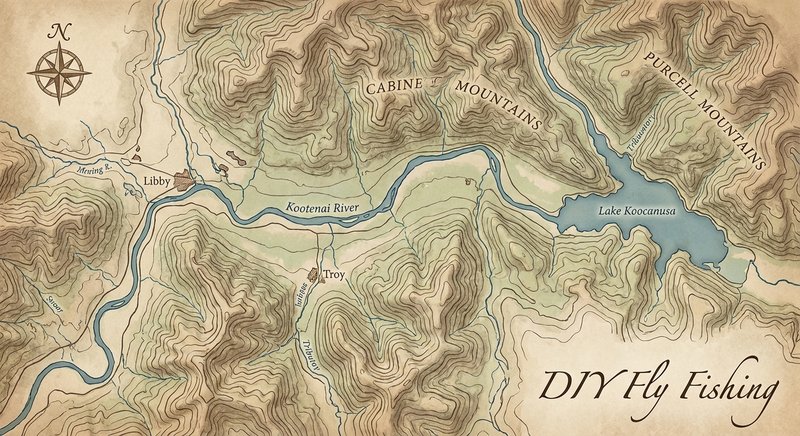
The Kootenai River is a high-volume, tailwater fishery located in the far northwest corner of Montana, near the town of Libby. What makes it special is its scale and its clarity; the water is famously emerald-green and exceptionally clear.
Unlike the technical spring creeks of the Paradise Valley, the Kootenai is a "big water" experience. It is flanked by the rugged Cabinet Mountains and the Purcell Range, offering a wilderness feel. Because of its size and the fluctuating flows from Libby Dam, it is primarily a drift boat river. While wading is possible at lower flows, the best way to see this river and reach the fish is by oar.
🐟 Target Species & Behavior
- Columbia River Redband Rainbows: These are the stars of the show. They are genetically distinct, incredibly hardy, and known for their aerial acrobatics and blistering runs. They hold in fast, highly oxygenated water—think heavy riffles and "walking speed" runs.
- Westslope Cutthroat Trout: Found more frequently in the softer water, back eddies, and tucked against the rocky banks. They are opportunistic feeders and will often rise to a dry fly even when no hatch is present.
- Bull Trout: The Kootenai is home to massive, migratory Bull Trout. Note: They are a protected species. You cannot intentionally target them, and if you hook one incidentally, it must remain in the water and be released immediately.
📅 Best Times to Fish
The Kootenai is a tailwater, meaning water temperatures stay relatively stable, but the seasons dictate the insect life.
- Spring (April – May): Excellent fishing before the summer heat. You’ll see heavy Midge hatches and the start of the March Browns. This is also prime time for streamer fishing as the fish wake up from winter.
- Summer (July – August): The "Main Event." Once the dam stabilizes flows post-runoff, the dry fly fishing is world-class. You’ll see PMDs (Pale Morning Duns), various Caddis, and legendary Terrestrial fishing (Hoppers and Ants) along the canyon walls.
- Fall (September – October): My personal favorite. The October Caddis (size 8-10) bring the largest fish in the river to the surface. You will also see Blue Winged Olives (BWO) on cloudy days.
🪰 Recommended Flies & Techniques
Dry Flies
- Hoppers/Terrestrials: Chubby Chernobyls (Gold, Purple, Royal), Morrish Hoppers, and Amy’s Ants.
- Mayflies: Sparkle Duns (PMD), Parachute Adams (#14-18), and Tilt-Wing BWOs.
- Caddis: Elk Hair Caddis (Tan/Orange) and the October Caddis (orange Stimulators or dedicated patterns).
Nymphing
- Pat’s Rubber Legs: The "Kootenai Candy." Black and tan or olive.
- Perdigons & Jigs: In the deep, fast runs, you need to get down fast. Purple or Red Perdigons work wonders.
- San Juan Worms: Especially effective if the flows are bumping up.
Streamers
- Sculpin Patterns: The river is loaded with sculpins. Use a sink-tip line with a Near Nuff Sculpin or Galloup’s Dungeon in olive or black.
Presentation Tips
- The Long Drift: Because the river is so big, fish aren't always tucked against the bank. Many fish hold in the middle-of-the-river "slick" lines. Work on mending for long, 40-foot drag-free drifts.
- Heavy Tippet: These Redbands are powerful. Don't go lighter than 4X unless you are fishing tiny midges. 3X is standard for hopper-dropper rigs.
💡 Pro Tips & Local Knowledge
- Watch the CFS: Check the USGS flow rates for Libby Dam. If the discharge is above 10,000 CFS, wading is dangerous and limited. 4,000–7,000 CFS is the "sweet spot" for most anglers.
- The "China Rapids" Stretch: The section from the Libby Dam down to the Flower Creek bridge is legendary. However, be wary of China Rapids; it requires expert rowing skills. If you aren't an experienced oarsman, hire a guide or stick to the calmer lower sections.
- The "Dry-Dropper" specialized setup: On the Kootenai, we often run a very large, buoyant foam dry fly with a heavy nymph (like a tungsten beadhead) 3-4 feet below it. The dry acts as a strike indicator but also triggers aggressive Cutthroat strikes.
- Stealth on the Banks: Even though it’s a big river, the water is crystal clear. If you are wading, move slowly. If you can see the fish, they have likely already seen you.
⚠️ Important Information
- Regulations: Always check the current Montana FWP (Fish, Wildlife & Parks) regulations. The Kootenai has specific sections that are catch-and-release only for trout.
- Access: Key access points include the Libby Dam Launch, Blackwell Flats, and Osprey Landing.
- Safety: This is a big, cold river. Even in summer, the water is cold enough to cause hypothermia quickly. Wear a PFD while in a boat.
- Kootenai Falls: Downstream of Libby, there is a massive waterfall (Kootenai Falls). Do not attempt to float through this. There are clear signs—pay attention to them.
Final Guide Advice: If you want a fish that fights twice as hard as its size suggests, target the "white water" riffles for those Redbands. Hold on tight—they will take you into your backing before you know it!
Bug Hatches & Matching Flies
| Hatch | Type | Peak months | Time of day | Hook sizes | Matching flies |
|---|---|---|---|---|---|
| Blue Winged Olive Baetis | mayfly | April, May, September, October | Late Morning/Afternoon | #18-22 | Parachute Adams #18-22, RS2 #20-22, BWO Sparkle Dun #18-20 |
| Mother's Day Caddis Brachycentrus occidentalis | caddis | May | Morning/Afternoon | #14-16 | Peacock Caddis #14-16, LaFontaine's Deep Sparkle Pupa #14-16, Elk Hair Caddis (Olive) #14-16 |
| Pale Morning Dun Ephemerella inermis/infrequens | mayfly | June, July, August | Late Morning/Afternoon | #16-18 | PMD Sparkle Dun #16-18, Pheasant Tail Nymph #16-18, Split Case PMD #16-18 |
| Golden Stonefly Hesperoperla pacifica | stonefly | June, July | Morning/Evening | #8-12 | Chubby Chernobyl (Gold) #8-12, Pat's Rubber Leg #8-12, Yug's Golden Stone #10-12 |
| Hydropsyche (Spotted Sedge) Hydropsyche | caddis | July, August | Evening | #14-18 | Godard Caddis #14-16, Soft Hackle Hare's Ear #14-18, Iris Caddis (Amber) #14-16 |
| Midges Chironomidae | midge | February, March, April | Mid-day | #18-24 | Griffith's Gnat #18-22, Zebra Midge #18-24, Morgan's Midge #20-22 |
| Terrestrials Formicidae/Acrididae | terrestrial | August, September | Late Morning/Afternoon | #10-16 | Cinnamon Ant #14-16, Morrish Hopper #10-12, Black Foam Beetle #12-16 |
| October Caddis Dicosmoecus gilvipes | caddis | September, October | Afternoon/Evening | #8-12 | Orange Stimulator #8-12, October Caddis Pupa #8-12, Eldo's October Caddis #10 |