Lake Creek
Fly fishing in Colorado · Intermediate · Best seasons: Summer, Fall
Target Species
Brook Trout, Brown Trout
About This Water
Near Twin Lakes with excellent brook and brown trout. High altitude fishing below Independence Pass.
Fishing Recommendations
Welcome to the high country. As your guide, I’m excited to break down Lake Creek, one of the most scenic and rewarding small-to-medium volume fisheries in the Sawatch Range of Colorado.
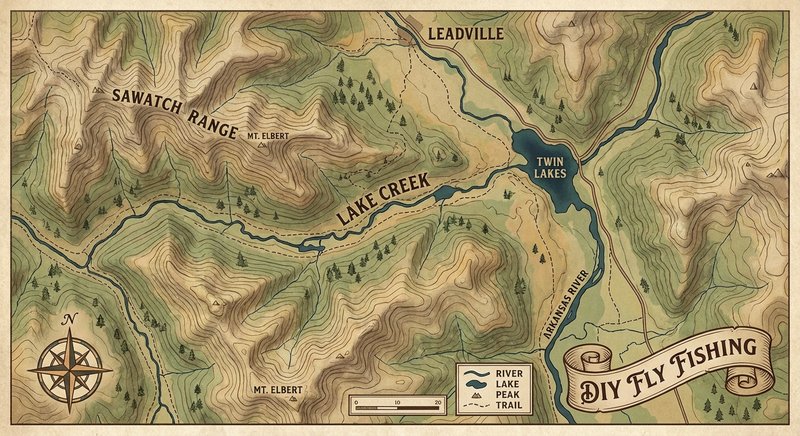
Lake Creek is the primary tributary to Twin Lakes, flowing down from the Continental Divide (Independence Pass). It offers a classic "mountain creek" experience with a mix of technical pocket water, meandering meadow stretches, and stunning alpine scenery.
🎣 Location Overview
Lake Creek is defined by its dramatic surroundings, sitting in the shadow of Mount Elbert and Mount La Plata. What makes this water special is its diversity of character.
The creek is generally divided into two distinct sections:
- The Upper Section (Above the Reservoir): Characterized by high-gradient pocket water, plunge pools, and short, tight runs. It’s rugged and beautiful.
- The Lower Section (Below Twin Lakes Dam): A shorter stretch that eventually joins the Arkansas River. This section can hold larger fish moving up from the river.
Anglers love Lake Creek because it provides an escape from the crowds of the main-stem Arkansas River while offering a high "fish-per-mile" count in a quintessential Colorado setting.
🐟 Target Species & Behavior
- Brook Trout: Found predominantly in the upper reaches and smaller side channels. They are opportunistic and aggressive, often hiding in the soft water behind large boulders or under overhanging brush.
- Brown Trout: The dominant species in the middle and lower stretches. They are more selective than the Brookies and tend to hold in the deeper undercut banks and the "tail-outs" of the larger pools.
- Bonus Species: You will occasionally encounter Cutthroat Trout in the highest reaches and Rainbow Trout near the inlet of Twin Lakes.
Feeding Behavior: These fish have a short growing season. They aren't looking to pass up a meal. While they can be spooky in the crystal-clear water, they are generally less "leader-shy" than fish in the South Platte or Fryingpan.
📅 Best Times to Fish
Optimal Seasons
- Summer (July – August): This is the prime window. Runoff usually subsides by late June or early July. Once the water clears, the dry fly fishing is world-class.
- Fall (September – October): My personal favorite time. The Brown Trout become aggressive as they prepare to spawn, and the Brookies take on magnificent orange hues. The water is low and clear, requiring a stealthy approach.
Best Times of Day
- Summer: 9:00 AM to 4:00 PM. The water is cold; you need the sun to hit the canyon floor to activate the bug life.
- Fall: 11:00 AM to 3:00 PM. Focus on the warmest part of the day.
Prime Windows
Watch for the Green Drake hatch in late July and the Hopper season in August. If you catch a cloudy day in September, the Blue Winged Olives (BWOs) can bring every fish in the creek to the surface.
🪰 Recommended Flies & Techniques
Top Fly Patterns
- Dry Flies:
- Parachute Adams (#14-18) – The gold standard here.
- Chubby Chernobyl (#10-14) – Best in summer as an attractor/indicator.
- Elk Hair Caddis (#14-16) – Great for the pocket water.
- Amy's Ant (#12) – Perfect for the meadow stretches in August.
- Nymphs:
- Pheasant Tail (#16-20) – Works year-round.
- Prince Nymph (#14-16) – The extra flash helps in the bubbly pocket water.
- Pat’s Rubber Legs (#10-12) – Effective in the deeper holes during higher flows.
- Streamers:
- Black or Olive Wooly Bugger (#8-12) – Strip these through the deeper pools for the larger Browns.
Effective Techniques
- Dry-Dropper: This is the most effective way to fish Lake Creek. Use a buoyant dry fly (like a Chubby or a Hopper) and hang a small Pheasant Tail or Hares Ear 18-24 inches below it.
- High-Sticking: In the pocket water sections, keep as much line off the water as possible to avoid drag. The currents are complex; a "drag-free drift" is the difference between a strike and a refusal.
💡 Pro Tips & Local Knowledge
- Focus on the Inlet: The area where Lake Creek enters Twin Lakes is a transition zone. Big fish move out of the lake and into the creek to feed on fry and insects. Target this area at dawn or dusk.
- Stealth is Key: Because the water is so clear, avoid wearing bright colors. Stay low and fish your way upstream so you are approaching the fish from behind their field of vision.
- The "Meadow" Sections: Between the high-gradient areas, there are flat meadow sections. These look easy but are the most technical. The fish can see you from a mile away—long casts and fine leaders (5X or 6X) are necessary here.
- Watch the Afternoon Storms: Being at high altitude, Lake Creek is prone to sudden lightning and heavy rain. If the clouds turn black, get off the water.
⚠️ Important Information
Access
- Upper Lake Creek: Accessible via Hwy 82 west of Twin Lakes. There is plenty of National Forest access. Look for pull-offs along the road.
- Lower Lake Creek: Access is available below the Twin Lakes dam, but be mindful of private property boundaries as the creek approaches the Arkansas River.
Regulations & Permits
- A valid Colorado Fishing License is required.
- Standard mountain regulations typically apply (8 fish limit), but Catch and Release is strongly encouraged to preserve these fragile high-alpine populations.
- Always check the current CPW Fishing Brochure for seasonal emergency closures or specific tackle restrictions.
Special Considerations
- Wildlife: This is Bear and Moose country. Carry bear spray and give moose a very wide berth—they are more dangerous than bears.
- Altitude: You are fishing at over 9,000 feet. Stay hydrated and wear plenty of sunscreen.
Guide’s Final Word: Lake Creek isn't about trophy-sized fish (though 16-inch Browns exist); it’s about the purity of the experience. Bring a 3-weight or 4-weight rod, a box of dries, and enjoy one of the finest high-country streams Colorado has to offer. Tight lines!
Bug Hatches & Matching Flies
| Hatch | Type | Peak months | Time of day | Hook sizes | Matching flies |
|---|---|---|---|---|---|
| Midges Chironomidae | midge | March, April, May | All Day | #18-24 | Zebra Midge #18-22, Griffith's Gnat #20-22, Morgan's Midge #20-24 |
| Blue Winged Olive Baetis | mayfly | April, May, September, October | Mid-day | #18-22 | RS2 #18-22, Parachute Adams #18-22, Pheasant Tail #18-20 |
| Western Green Drake Drunella doddsii | mayfly | July, August | Afternoon | #10-14 | Colorado Green Drake #10-12, Hairwing Drake #12-14, Quill Gordon Nymph #12-14 |
| Golden Stonefly Hesperoperla pacifica | stonefly | June, July | Morning/Afternoon | #8-12 | Pat's Rubber Leg #8-12, Amy's Ant #10-12, Golden Rogue Stone #10-12 |
| Pale Morning Dun Ephemerella excrucians | mayfly | July, August | Late Morning/Afternoon | #14-18 | PMD Sparkle Dun #16-18, Military Mayfly #16-18, Barr Emerger PMD #16-18 |
| Yellow Sally Isoperla | stonefly | July, August | Afternoon/Evening | #14-16 | Yellow Sally Foam #14-16, Iron Sally #14-16 |
| Spotted Sedge Hydropsyche | caddis | July, August, September | Evening | #14-18 | Elk Hair Caddis #14-18, LaFontaine's Deep Sparkle Pupa #14-16, X-Caddis #16-18 |
| Grasshoppers Acrididae | terrestrial | August, September | Afternoon | #8-12 | Hopper Juan #10-12, Parachute Hopper #10-14, Chubby Chernobyl #8-12 |
| Brachycentrus (Grannom) Brachycentrus | caddis | May, June | Morning/Evening | #12-16 | Peacock Caddis #14-16, Guide's Choice Hare's Ear #12-16 |