McCloud River
Fly fishing in California · Intermediate · Best seasons: Summer, Fall
Target Species
Rainbow Trout, Brown Trout
About This Water
Home to native McCloud redband trout. Beautiful freestone river below Mt. Shasta.
Fishing Recommendations
The McCloud River is legendary in the world of fly fishing. Not only is it breathtakingly beautiful with its turquoise, glacial-tinted water and rugged canyon scenery, but it is also the ancestral home of the "McCloud River Strain" of Rainbow Trout, which have been exported to populate rivers across the globe (including New Zealand and Argentina).
Here is your comprehensive guide to fishing this Northern California gem.
🎣 Location Overview
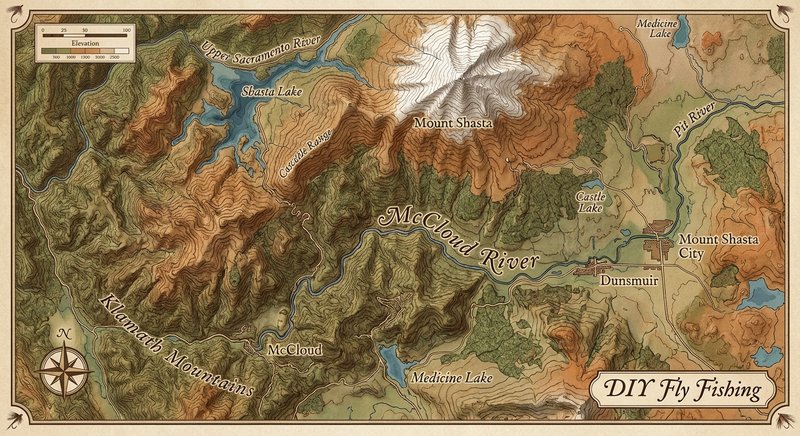
The McCloud River, located south of Mt. Shasta, is a unique fishery divided into two distinct sections: the Upper McCloud (above the falls) and the Lower McCloud (below McCloud Reservoir). For serious fly anglers, the Lower McCloud is the primary destination.
What makes it special is its "glacial milk" appearance—a fine silt from the glaciers of Mt. Shasta that gives the water a stunning cobalt-turquoise hue. The river flows through a steep, rugged canyon characterized by massive boulders, deep plunges, and heavy pocket water. It is a demanding river to wade, but it rewards the adventurous angler with some of the most beautiful wild trout in the United States.
🐟 Target Species & Behavior
- McCloud River Rainbow Trout: These are the stars of the show. They are known for their brilliant red lateral lines and incredible fighting strength. They hold in oxygenated "pocket water," at the heads of pools, and behind large boulders. They are opportunistic but can be selective during a hatch.
- Brown Trout: The McCloud holds some massive, elusive Brown Trout. These fish often migrate up from Lake Shasta, especially in the fall. They are predatory and light-sensitive, typically holding in deep, dark undercut banks or at the very bottom of deep pools during the day, becoming active in the low light of dawn and dusk.
📅 Best Times to Fish
The McCloud is a late-opening river (late April) and fishes through November.
- Late Spring/Early Summer (May - June): This is the time for the famous Salmonfly hatch. The river is high and cold, but the fish are looking for big meals.
- Summer (July - August): The "dog days" can be productive due to the cold water releases from the dam. Focus on the early morning and the last two hours of light. Evening caddis hatches can be spectacular.
- Fall (September - November): This is the prime window. The crowds thin out, the water levels are stable, and the big Brown Trout begin their move upstream. The colors of the canyon change, and the "October Caddis" hatch brings fish to the surface for large dries.
🪰 Recommended Flies & Techniques
Top Fly Patterns
- Nymphs:
- Pulsating Caddis / Pupa: (Sizes 14-18)
- Zebra Midges: (Sizes 18-20) in black or olive.
- Prince Nymph: (Sizes 12-16) for the faster water.
- Rubber Legs / Pat’s Stone: (Sizes 6-10) in black or brown.
- Dry Flies:
- October Caddis: (Sizes 8-10) Large orange Stimulators or specialized October Caddis patterns.
- Elk Hair Caddis: (Sizes 14-18) Tan or olive.
- Parachute Adams: (Sizes 14-18) For general mayfly imitations.
- Streamers:
- Sculpzilla: (Size 4-8) in olive or black.
- Woolly Bugger: (Size 6-10) Black or olive with a bead head.
Techniques
- Heavy Nymphing: Because the McCloud is deep and fast, you often need to use "Euro-style" or heavy indicator rigs. Getting your flies to the bottom quickly is the key to success in the plunge pools.
- Dry-Dropper: In the summer, a large foam attractor (like a Chubby Chernobyl) with a small pheasant tail or caddis pupa dropped 2-3 feet below is deadly in the pocket water.
- Streamer Stripping: In the fall, swinging or stripping streamers through deep holes is the best way to entice a trophy Brown Trout.
💡 Pro Tips & Local Knowledge
- The "McCloud Crawl": The river bottom is notorious for large, slick, basalt boulders. Do not fish here without felt soles and studs, and a wading staff is highly recommended. It’s a physical river; take your time moving between spots.
- The Nature Conservancy (TNC) Section: There is a prestigious stretch of water owned by The Nature Conservancy. They allow a limited number of rods per day via a self-sign-in box at the McCloud River Club gate. Arrive very early (before dawn) to secure one of these coveted tags.
- Look for the "Milk": If the water looks slightly cloudy/turquoise, don't be discouraged. The fish feel more secure in low-visibility water and are often less "spooky" than in crystal clear streams.
- Stealth Matters: Despite the heavy water, the trout are wild and wary. Avoid casting your shadow over a pool and keep a low profile when approaching "fishy" spots.
⚠️ Important Information
- Access: Access is primarily via the Ah-Di-Na Campground or the Lower Falls area. The road down to Ah-Di-Na is a long, rough dirt road. High-clearance vehicles are strongly recommended.
- Regulations: The Lower McCloud has specific regulations. From the bridge at Lake McCloud to the powerline crossing, it is generally Catch and Release only, with barbless hooks and artificial lures/flies only. Always check the current California CDFW regulations before heading out.
- Wildlife: This is bear and mountain lion country. Keep your food secured in bear-proof containers and be aware of your surroundings.
- Conservation: This river is a fragile ecosystem. Practice strict Leave No Trace principles and handle all wild trout with wet hands, keeping them in the water as much as possible.
The McCloud is not a river for the faint of heart, but for those who respect its power and beauty, it offers perhaps the finest wild trout experience in the Lower 48. Tight lines!
Bug Hatches & Matching Flies
| Hatch | Type | Peak months | Time of day | Hook sizes | Matching flies |
|---|---|---|---|---|---|
| Giant Salmonfly Pteronarcys californica | stonefly | May, June | All day | #4-8 | Rogue River Stone #4-6, Pats Rubber Legs #4-8, Chubby Chernobyl (Orange) #6-8 |
| Golden Stonefly Hesperoperla pacifica | stonefly | June, July | Morning/Evening | #8-12 | Norm Wood Special #8-10, Golden Twenty Incher #8-12, Clark's Stone #10-12 |
| Pale Morning Dun Ephemerella excrucians | mayfly | June, July, August | Late Morning/Afternoon | #14-18 | Sparkle Dun #14-18, Pheasant Tail #14-18, Parachute Adams #14-16 |
| October Caddis Dicosmoecus gilvipes | caddis | September, October, November | Afternoon/Evening | #8-12 | Stimulator (Orange) #8-10, Pecka's October Caddis #10-12, Morrish October Caddis Adult #8-10 |
| Blue Winged Olive Baetis tricaudatus | mayfly | March, April, October, November | Mid-day | #18-22 | RS2 #18-22, BWO Parachute #18-20, Micro Mayfly #18-22 |
| Yellow Sally Isoperla | stonefly | June, July, August | Afternoon/Evening | #14-16 | Little Yellow Sloan #14-16, Yellow Sally Nymph #14-16, Kush's Yellow Sally #14-16 |
| Spotted Sedge Hydropsyche | caddis | June, July, August | Evening | #14-16 | Elk Hair Caddis (Tan) #14-16, Mercer's Missing Link #14-16, Bird's Nest #14-18 |
| Little Slate-Winged Brown Paraleptophlebia | mayfly | April, May | Afternoon | #16-18 | Mahogany Dun #16-18, HBI Nymph #16-18 |