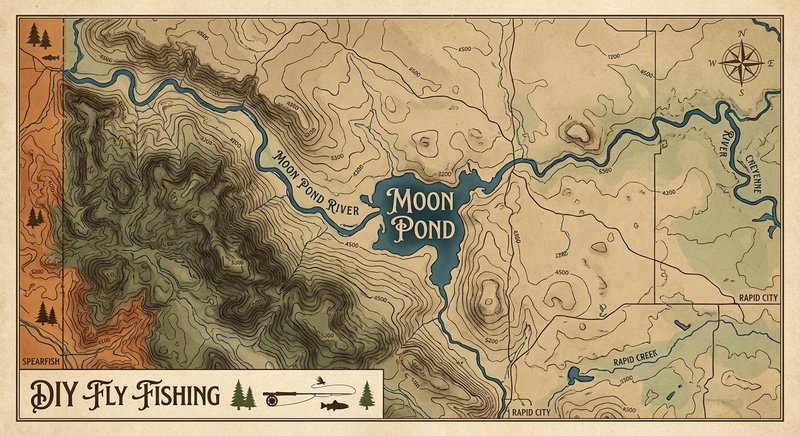
Moon Pond
Fly fishing in South Dakota · beginner · Best seasons: spring, summer, fall
Target Species
Rainbow Trout
About This Water
Black Hills pond with stocked trout. Easy access near Lead.
Fishing Recommendations
Greetings, angler. It is a pleasure to guide you through one of the Black Hills’ most serene and rewarding stillwater gems: Moon Pond.
Tucked away in the high limestone plateau of western South Dakota, Moon Pond is a high-elevation, spring-fed sanctuary. If you are looking for a break from the more crowded waters of Rapid Creek or Spearfish Canyon, this is where you go for solitude and technical trout fishing.
Here is your comprehensive guide to fly fishing Moon Pond.
🎣 Location Overview
Moon Pond is a small, high-altitude alpine pond located in the Black Hills National Forest, west of Deerfield Reservoir. What makes this water special is its seclusion and clarity. Unlike the larger reservoirs in the area, Moon Pond is a "walk-in" fishery, requiring a short hike to reach.
The water is remarkably clear and relatively shallow, surrounded by pine forests and grassy meadows. It feels like a high-mountain tarn you’d find in the Rockies. Because it is spring-fed, the water remains cooler than other Black Hills ponds, allowing trout to thrive even in the heat of summer. Anglers love it because it offers a "stalking" experience—you can often sight-fish for cruising rainbows in the crystal-clear shallows.
🐟 Target Species & Behavior
Primary Species: Rainbow Trout.
- Behavior: These fish are known for being more "selective" than your average stocked trout. Because the water is so clear, the fish are incredibly spooky. They spend much of their time cruising the perimeter of the pond, following the drop-offs.
- Feeding Habits: They focus heavily on aquatic insects. Expect them to key in on midge larvae, scuds (the Black Hills are famous for these), and small damselfly nymphs. During summer afternoons, they become opportunistic, looking for terrestrial insects blown off the surrounding meadow grasses.
📅 Best Times to Fish
While you can fish here year-round (including ice fishing), the open-water seasons are spectacular.
- Spring (May – June): This is prime time. As the ice melts and the water warms, the trout become very active. You'll see the first major midge hatches and the beginning of the damselfly migrations.
- Summer (July – August): Unlike lower-elevation streams that might suffer from high temps, Moon Pond remains fishable. Focus on early mornings and late evenings. This is the "Terrestrial Window" where grasshoppers and ants become the main course.
- Fall (September – October): My personal favorite. The crowds vanish, and the rainbows begin to feed aggressively before winter. The brook trout in nearby feeder streams (if present) show their spawning colors, and the rainbows in the pond become very territorial.
- Optimal Window: The "Golden Hour"—the 90 minutes before sunset—is magical here. The wind usually dies down, the water turns to glass, and the surface becomes dimpled with rising fish.
🪰 Recommended Flies & Techniques
Top Fly Patterns
- Nymphs/Sub-surface:
- Olive Scud (#14-18): A Black Hills staple. Fish this slow.
- Zebra Midge (#18-22): Red or Black with a silver bead.
- Marabou Damefly Nymph (#12-14): In light olive.
- Dry Flies:
- Parachute Adams (#16-20): The ultimate searcher pattern.
- Griffith’s Gnat (#18-22): Essential for midge clusters on calm evenings.
- Hopper Patterns (#10-14): In late summer (Joe’s Hopper or Dave’s Hopper).
- Streamers:
- Pine Squirrel Leech (#12): In black or olive. Use a slow, pulsating retrieve.
Techniques
- The "Stillwater Stalk": Do not march right up to the water’s edge. Stay back 10 feet and observe. Look for cruising fish. Cast ahead of their path, not directly on top of them.
- The Indicator Drop: Use a very small, sensitive indicator (or just a dry fly as a dropper). Hang a Zebra Midge or a Scud about 3–5 feet below the surface.
- Slow Stripping: If using a leech or damselfly nymph, use a "figure-eight" retrieve. You want the fly to crawl, not dart.
💡 Pro Tips & Local Knowledge
- Stealth is Paramount: Because the pond is small and clear, heavy wading will ruin the fishing for an hour. If you must wade, do so gingerly. Better yet, fish from the bank using the tall grass as cover.
- Long Leaders: Use a 9-foot to 12-foot leader tapered down to 5X or 6X fluorocarbon. These fish are leader-shy.
- The "Meadow Wind": If a breeze picks up, focus your casts on the leeward side where "terrestrials" (ants and hoppers) are being blown into the water.
- Check the Inflow: Look for where the small spring-fed trickles enter the pond. These areas are oxygen-rich and often hold the most active feeders.
⚠️ Important Information
- Access: Moon Pond is located off forest service roads near Deerfield Lake. The roads can be rough after a heavy rain; a vehicle with decent clearance is recommended. There is a small parking area followed by a short walk-in trail.
- Regulations: Always check the current South Dakota Game, Fish and Parks (SDGFP) handbook. Generally, a standard South Dakota fishing license is required.
- Leave No Trace: This is a fragile ecosystem. Pack out everything you pack in.
- Wildlife: This is mountain lion and cattle country. Be aware of your surroundings, though the cows are usually your only competition for the shoreline.
Tight lines, and enjoy the silence of the Hills!
Bug Hatches & Matching Flies
| Hatch | Type | Peak months | Time of day | Hook sizes | Matching flies |
|---|---|---|---|---|---|
| Midges Chironomidae | midge | March, April, May, September, October | All Day | #18-24 | Zebra Midge #18-22, Griffith's Gnat #20-22, Palomino Midge #20-24 |
| Speckled Wing Mayfly Callibaetis | mayfly | June, July, August | Late Morning/Afternoon | #14-16 | Callibaetis Spinner #14-16, Hares Ear Nymph #14-16, Parachute Adams #16 |
| Cinnamon Caddis Ceraclea | caddis | July, August | Evening | #14-18 | Elk Hair Caddis #14-16, LaFontaine's Emerger #16, Pupa Sedge #14-18 |
| Blue Winged Olive Baetis | mayfly | April, May, September, October | Afternoon | #18-22 | BWO Parachute #18-22, RS2 #20-22, Pheasant Tail #18-20 |
| Carpenter Ants Camponotus | terrestrial | July, August | Afternoon | #12-16 | Black Foam Ant #12-16, Chernobyl Ant #12-14 |
| Damselflies Enallagma | terrestrial | June, July | Morning/Afternoon | #10-14 | Marabou Damsel Nymph #10-12, Adult Damsel #12-14 |
| Grasshoppers Acrididae | terrestrial | August, September | Afternoon | #8-12 | Dave's Hopper #10-12, Morrish Hopper #8-12 |
| Black Hills Scuds Gammarus lacustris | terrestrial | May, June, September | All Day | #14-18 | Ray Charles #14-18, Scud (Orange or Olive) #14-16 |