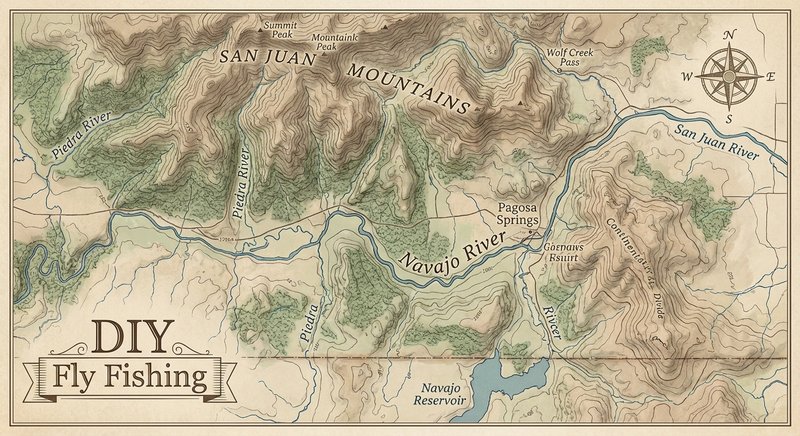
Navajo River
Fly fishing in Colorado · Intermediate · Best seasons: Summer, Fall
Target Species
Brown Trout, Rainbow Trout
About This Water
Remote stream on Colorado-New Mexico border. Wild trout in scenic southern San Juans.
Fishing Recommendations
The Navajo River in Southern Colorado is one of the state's best-kept secrets—a rugged, intimate, and often overlooked fishery that offers a true wilderness experience. Flowing through the South San Juan Wilderness and private ranch lands near Chromo, Colorado, this river is a high-desert gem that rewards the observant angler with solitude and stunning scenery.
🎣 Location Overview
The Navajo River is a freestone stream that originates high in the South San Juan Mountains. It flows southward toward the New Mexico border before eventually feeding into Navajo Lake. What makes this water special is its remoteness and diversity.
The upper reaches are characterized by classic alpine pocket water, tumbling over boulders and through tight canyons. As it descends toward the village of Chromo, it transitions into a meandering meadow stream with deep undercut banks and long, glassy glides. Unlike the high-traffic tailwaters of the nearby San Juan River in New Mexico, the Navajo offers a "step back in time" feel where you are more likely to see an elk than another angler.
🐟 Target Species & Behavior
- Brown Trout: The stars of the show. The Navajo is famous for its healthy population of wild Browns. They are opportunistic but wary. In the meadows, they hold tight to undercut banks and submerged structure. In the canyon stretches, they sit in the soft water behind boulders.
- Rainbow Trout: Found primarily in the faster riffles and well-oxygenated runs. They tend to be more aggressive than the Browns and will often move further to chase a fly.
- Behavior: During the summer, these fish are highly tuned to terrestrial activity. In the fall, the larger Browns become aggressive and territorial as they prepare for the spawn, making them susceptible to streamers.
📅 Best Times to Fish
Optimal Seasons: Summer & Fall
- Summer (Late June – August): This is the prime window for dry fly fishing. Once the spring runoff subsides (usually mid-June), the water clears, and the fish look up.
- Fall (September – October): My personal favorite. The cottonwoods turn gold, the air gets crisp, and the Brown trout become exceptionally aggressive. The water levels are lower, concentrating fish in deeper pools.
Best Times of Day
- Summer: Early mornings (dawn until 10:00 AM) and late evenings (6:00 PM until dark) provide the best surface action. Mid-day can be slow unless there is cloud cover.
- Fall: The "banker's hours" apply here. Wait for the sun to hit the water (around 10:00 AM) to activate insect life. Fishing remains strong until the shadows hit the water in the late afternoon.
🪰 Recommended Flies & Techniques
Top Fly Patterns
- Terrestrials: Amy’s Ant (Size 10-14), Morrish Hopper (Tan/Pink), and Fat Albert. These are essential for "hopper-dropper" rigs in the summer.
- Dries: Parachute Adams (14-18), Elk Hair Caddis (12-16), and Stimulators (Orange or Yellow).
- Nymphs: Bead-head Prince Nymph, Pheasant Tail (16-20), and Pat’s Rubber Legs (for high or murky water).
- Streamers: Gold or Olive Sculpzilla, Black Wooly Bugger, and the Autumn Splendor (a local favorite for Fall Browns).
Effective Techniques
- Hopper-Dropper: The most effective summer tactic. Use a buoyant foam hopper as your indicator and hang a bead-head nymph 18–24 inches below it.
- Streamer Stripping: In the fall, swing streamers through deep holes or strip them tight against undercut banks. Use a "strip-strip-pause" cadence.
- Tight-Line Nymphing: In the canyon sections, a short-line nymphing approach through the pocket water is deadly.
💡 Pro Tips & Local Knowledge
- The "Chromo" Reach: Much of the river near Chromo is private, but there are key public access points. Focus on the Navajo State Park (near the headwaters) or the stretches within the National Forest.
- The Undercut Strategy: Many anglers overlook the "skinny" water near the banks. In the meadow sections, the biggest Browns are often tucked inches from the grass. Land your fly right against the dirt.
- Stealth is Key: The water is often crystal clear. Wear earthy tones (olive/tan) and avoid "lining" the fish. Approach pools from downstream and keep a low profile.
- Watch the Gauge: The Navajo can blow out quickly after a heavy monsoon rain in July/August. Always check the USGS gauges before making the drive.
⚠️ Important Information
Access & Permissions
- Private vs. Public: Be extremely careful about property lines. Colorado has strict trespass laws; you cannot touch the riverbed or banks if the land is private, even if you are floating (though the Navajo is generally too small to float).
- Public Access: Focus on the San Juan National Forest access points and the Navajo River State Wildlife Area.
Regulations
- License: A valid Colorado Fishing License is required.
- Barbless Hooks: While not always mandated by law in every stretch, I highly recommend barbless hooks to protect the wild trout populations here.
- Catch & Release: To maintain the quality of this fishery, please practice 100% catch and release on all wild Brown trout.
Special Considerations
- Wildlife: This is bear and mountain lion country. Carry bear spray and be aware of your surroundings.
- Gear: A 9-foot 5-weight rod is the perfect "all-around" tool for this river. If you are focusing strictly on the upper canyons, a 7.5-foot 3-weight is a blast.
Bug Hatches & Matching Flies
| Hatch | Type | Peak months | Time of day | Hook sizes | Matching flies |
|---|---|---|---|---|---|
| Midges Chironomidae | midge | February, March, April | All Day | #18-24 | Zebra Midge #18-22, Griffith's Gnat #20-24, Morgan's Midge #20-22 |
| Blue Winged Olive Baetis spp. | mayfly | April, May, September, October | Late Morning/Afternoon | #18-22 | RS2 #18-22, Parachute Adams #18-22, Pheasant Tail #18-20 |
| Pale Morning Dun Ephemerella invaria | mayfly | June, July | Late Morning/Early Afternoon | #14-18 | PMD Sparkle Dun #16-18, Military Mayfly #16-18, Barr's PMD Emerger #14-18 |
| Golden Stonefly Hesperoperla pacifica | stonefly | June, July | Morning/Afternoon | #8-12 | Pat's Rubber Legs #8-12, Chubby Chernobyl #10-12, Golden Rogue Stone #8-10 |
| Mother's Day Caddis Brachycentrus occidentalis | caddis | May | Late Afternoon/Evening | #14-16 | Peacock Caddis #14-16, Graphic Caddis #14-16, Holy Grail #14-16 |
| Spotted Sedge Hydropsyche spp. | caddis | July, August | Evening | #14-18 | Elk Hair Caddis #14-18, LaFontaine's Deep Sparkle Pupa #14-16, X-Caddis #16-18 |
| Trico Tricorythodes | mayfly | August, September | Early Morning | #20-24 | Trico Spinner #20-24, Sunray Trico #22-24 |
| Grasshoppers Orthoptera | terrestrial | August, September | Late Morning/Afternoon | #8-12 | Hopper Juan #10-12, Amy's Ant #10-14, Parachute Hopper #8-12 |