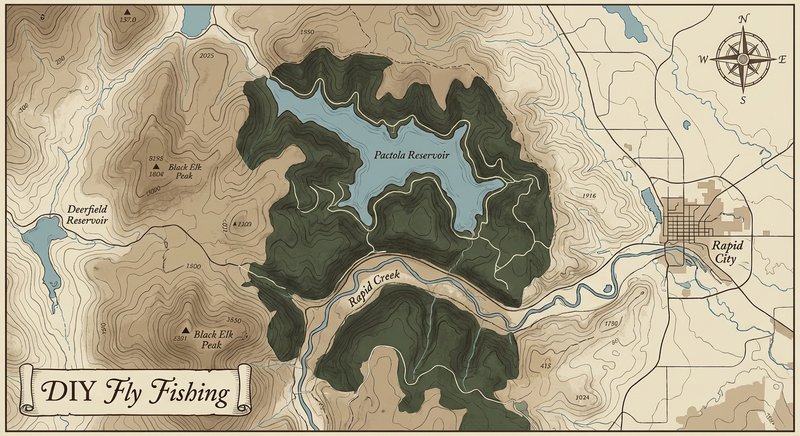
Pactola Reservoir
Fly fishing in South Dakota · intermediate · Best seasons: spring, summer, fall
Target Species
Rainbow Trout, Brown Trout, Lake Trout
About This Water
Black Hills reservoir with trophy trout potential. Deep water lake trout fishery.
Fishing Recommendations
Pactola Reservoir is the crown jewel of the Black Hills of South Dakota. As the largest and deepest reservoir in the region, it offers a unique "big water" experience that contrasts sharply with the intimate limestone creeks found nearby. For the fly angler, Pactola is a place of extremes—from sight-casting to rising rainbows in the shadows of ponderosa pines to stripping heavy streamers for legendary lake trout.
🎣 Location Overview
Pactola Reservoir is a massive impoundment of Rapid Creek, located about 15 miles west of Rapid City. What makes it special is its clarity and depth (reaching over 150 feet). The water is crystal clear, often taking on a turquoise hue that allows for incredible sight fishing opportunities.
Anglers love Pactola because it is one of the few places in the Midwest where you can legitimately target "trophy" sized trout on the fly. Because it is a bottom-release dam system (feeding the legendary tailwaters of Rapid Creek below), the reservoir stays cool enough to support cold-water species year-round. The shoreline is rugged, with steep granite drop-offs, submerged timber, and shallow bays that act as nurseries for forage.
🐟 Target Species & Behavior
- Rainbow Trout: These are the most active targets for fly anglers. They cruise the shorelines and weed edges in schools. During the summer, they retreat to the thermocline (20–30 feet down) but move into the shallows during low-light hours or when the "Gulper" hatch (Trico/Callibaetis) is on.
- Brown Trout: The "wolves" of the lake. Brown trout in Pactola grow massive by feeding on smaller rainbow trout and panfish. They are notoriously shy and are best targeted in the spring or late fall near rocky points or the mouth of Rapid Creek where it enters the reservoir.
- Lake Trout (Mackinaw): Pactola is famous for its state-record Lake Trout. While they usually hold in 60+ feet of water, they move into fly-rod range (0–20 feet) in the early spring (immediately after ice-out) and late fall (October/November) to spawn.
📅 Best Times to Fish
- Spring (April – June): This is the prime window for Lake Trout and big Browns. As the ice melts, the water temperature is uniform, allowing big fish to roam the shallows.
- Summer (July – August): Best for Rainbows. Focus on the early morning (sunrise to 9:00 AM) and evening. Look for "Gulper" activity—fish rising to tiny insects on a glass-calm surface.
- Fall (September – November): The most scenic and productive time. Brown trout become aggressive as they prepare to spawn, and Lake Trout return to the shallows.
- Prime Window: The "Golden Hour"—the 60 minutes before sunset is when the wind usually dies down, and the big cruisers move within casting distance of the shore.
🪰 Recommended Flies & Techniques
Techniques
- Intermediate Sinking Lines: This is the "secret weapon" for Pactola. An intermediate line (Slow Sink) allows you to keep your fly in the "strike zone" (5–10 feet deep) longer without getting snagged on the bottom.
- Indicator Nymphing: Using a long leader (12–15 feet) under a slip-indicator is highly effective in the spring, suspended over drop-offs.
- Sight Casting: On calm days, walk the high banks to spot cruising rainbows and "lead" them by 5 feet with a dry-dropper rig.
Top Fly Patterns
- Streamers: Balanced Leeches (Black or Olive), White Booby Flies (fished on a sinking line), and Pine Squirrel Leeches. For Lake Trout, use large white or silver patterns like the Gamechanger or ZP Minnow.
- Nymphs: Size 14-18 Pheasant Tails, Zebra Midges (Red or Silver), and Scuds (Pactola has a massive population of freshwater shrimp).
- Dries: Parachute Adams (Size 14-20), Tricos, and Callibaetis Spinners. In late summer, Hopper patterns twitched near the rocky cliffs can produce violent strikes.
💡 Pro Tips & Local Knowledge
- The "Inlet" Secret: The area where Rapid Creek enters the reservoir (the West side) is a magnet for fish. The moving water brings in oxygen and food. It is often the best spot for big Brown Trout in the late fall.
- Watch the Wind: Because the reservoir is surrounded by mountains, the wind can swirl. Look for "slick" spots on the water; trout love to cruise the edge of the ripple where insects get trapped in the surface film.
- The "Pactola Twitch": When fishing leeches or nymphs under an indicator, don't just let them sit. Give your rod tip a tiny wiggle every 10 seconds. The movement often triggers a strike from a fish that has been following the fly.
- Stealth Matters: Because the water is so clear, these fish are "spooky." Wear natural colors (tan/grey) and avoid splashing when wading.
⚠️ Important Information
- Access: There are several excellent access points. The Pactola Marina area offers good dock and shore access. Jenney Gulch (on the north end) is the most popular spot for fly anglers due to its shallower flats and creek-like feel.
- Regulations: South Dakota fishing licenses are required. Pactola has specific length and limit regulations, especially for Lake Trout. Check the current SD Game, Fish & Parks (GFP) handbook, as these change annually to protect the trophy fishery.
- Safety: The shoreline is steep and rocky. If you are wading, felt-soled boots or studs are highly recommended. If fishing from a float tube or kayak, be extremely wary of motorized boat traffic and sudden wind shifts.
- Permits: A National Forest "Day Use" fee is required for parking at most developed trailheads and boat ramps around the lake.
Bug Hatches & Matching Flies
| Hatch | Type | Peak months | Time of day | Hook sizes | Matching flies |
|---|---|---|---|---|---|
| Callibaetis Callibaetis ferrugineus | mayfly | June, July, August | Late Morning/Afternoon | #12-16 | Parachute Callibaetis #14-16, Callibaetis Spinner #14-16, Hare's Ear Nymph #12-16 |
| Chironomids Chironomidae | midge | April, May, September, October | All Day | #18-24 | Zebra Midge #18-22, Ice Bud #18-20, Griffith's Gnat #20-24 |
| Damselfly Enallagma | terrestrial | June, July | Morning/Afternoon | #10-14 | Marabou Damsel Nymph #10-14, Adult Damsel #12-14 |
| Blue Winged Olive Baetis | mayfly | April, May, September, October | Mid-day | #18-22 | RS2 #20-22, Parachute BWO #18-22 |
| Cinnamon Caddis Hydropsyche | caddis | July, August | Evening | #14-18 | Elk Hair Caddis #14-18, LaFontaine's Deep Sparkle Pupa #14-16 |
| Scud Gammarus | terrestrial | March, April, May | All Day | #12-18 | Ray Charles #14-18, Flashback Scud #12-16 |
| Trico Tricorythodes | mayfly | August, September | Early Morning | #20-24 | Trico Spinner #22-24, Sunken Trico #20-22 |
| Terrestrials (Ants/Beetles) Hymenoptera / Coleoptera | terrestrial | July, August, September | Afternoon | #12-18 | Cinnamon Ant #14-18, Foam Beetle #12-16 |