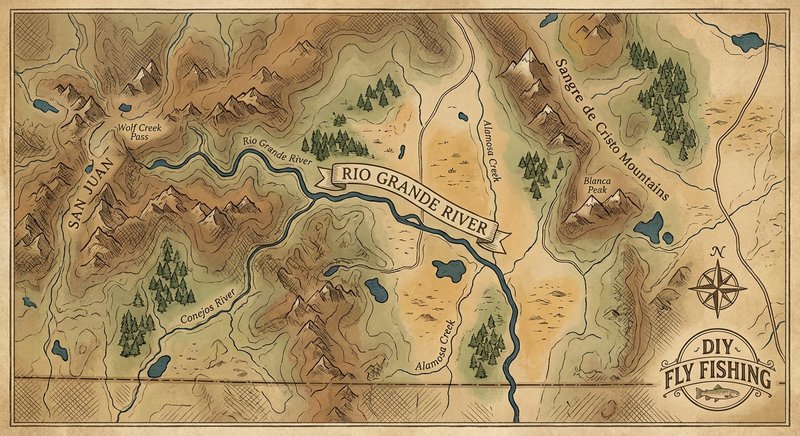
Rio Grande River
Fly fishing in Colorado · Intermediate · Best seasons: Summer, Fall
Target Species
Rainbow Trout, Brown Trout
About This Water
The headwaters in Colorado offer excellent fishing for rainbow and brown trout in scenic high mountain meadows.
Fishing Recommendations
The Rio Grande in Colorado is a legendary destination, offering some of the most scenic and productive trout fishing in the American West. As an expert guide, I consider this river a "bucket list" water, particularly the stretch between South Fork and Del Norte, which holds the prestigious Gold Medal status—the longest such stretch in the state.
Here is your comprehensive guide to fly fishing the Rio Grande.
🎣 Location Overview
The Rio Grande begins its 1,900-mile journey high in the San Juan Mountains near Creede, Colorado. In its upper reaches, it is a classic freestone mountain stream, but as it flows toward the San Luis Valley, it transforms into a massive, powerful river.
What makes it special:
- The "Gold Medal" Stretch: Nearly 20 miles of water from the South Fork confluence to Del Norte is designated Gold Medal, meaning it produces a high volume of large trout.
- Remote Beauty: Flanked by high desert cliffs, cottonwood groves, and the San Juan wilderness, it feels much wilder than the crowded rivers of the Front Range.
- The Salmon Fly Hatch: One of the most prolific hatches in the country occurs here, bringing the river’s massive trout to the surface for "dry fly mayhem."
🐟 Target Species & Behavior
The Rio Grande is primarily a Brown Trout fishery, though Rainbows are present and often reach impressive sizes.
- Brown Trout (70-80% of population): These are wild, wary, and highly aggressive. They are notorious for "living in the wood"—hiding under overhanging willows and submerged logs. In the fall, they become territorial and will strike large streamers with predatory ferocity.
- Rainbow Trout: Found more frequently in the faster riffles and oxygenated "bubble lines." They are hard-fighting and often take nymphs and dries in the center of the river.
- Feeding Behavior: Because this is a freestone river (un-dammed), fish are highly dependent on seasonal hatches. They move from deep winter holes into shallow riffles as the water warms and insects become active.
📅 Best Times to Fish
Summer (Late June – August)
- The Window: This is the peak season. Fishing usually begins as the spring runoff recedes (late June).
- The Salmon Fly Hatch: Typically occurs from mid-June to early July. This is the main event.
- Conditions: Clearer water and stable flows. Morning and evening are best for dries, while midday is great for hopper-dropper rigs.
Fall (September – October)
- The Window: My personal favorite time. The crowds vanish, and the scenery turns golden.
- Brown Trout Spawn: As browns prepare to spawn in October, they become extremely aggressive. This is the best time to hunt for a trophy (20"+) using streamers.
- Conditions: Low, clear water. Fish become spookier, requiring longer leaders and stealthier approaches.
🪰 Recommended Flies & Techniques
Dry Flies
- Salmon Flies (June/July): #4-8 Rogue River Stone, Chubby Chernobyl (Orange/Black), Sofa Pillow.
- Attractors (Summer): #12-16 Stimulators, Amy’s Ant, PMXs.
- Terrestrials (August/Sept): #10-14 Morrish Hopper, Dave’s Hopper, Tan/Pink Beetles, and Ants.
- Mayflies: #14-16 Green Drakes (July), #16-18 PMDs, and #18-22 Blue Winged Olives (Fall).
Nymphs
- Stoneflies: #8-12 Pat’s Rubber Legs (Black/Tan), 20-Incher Stone.
- Generalists: #14-18 Prince Nymph, Pheasant Tail, and Hare’s Ear.
- Caddis: #14-16 Holy Grail, Buckskin, or Breadcrust.
Streamers
- The "Meat": #2-6 Sex Dungeon (Olive/Yellow), Sparkle Minnows, and Autumn Splendor.
Techniques
- Pounding the Banks: If you are in a boat, cast within inches of the grassy banks and overhanging willows. The biggest fish sit where the "land meets the water."
- Hopper-Dropper: A high-visibility hopper with a bead-head nymph 2-3 feet below is the most effective summer setup.
- The "Swing": In the fall, swing streamers across the tailouts of deep pools to trigger an aggressive strike from pre-spawn Browns.
💡 Pro Tips & Local Knowledge
- Float vs. Wade: The Rio Grande is big water. While there is great wade access near Creede and at State Wildlife Areas, the best way to see the Gold Medal water is by float (drift boat or raft).
- The "Willow Bash": Local guides know that the Rio's Browns love to sit deep under the willows. If you aren't occasionally losing a fly to a tree, you aren't fishing close enough to the fish.
- Watch the Gauge: Use the USGS gauge at Del Norte. If the flow is dropping and clearing after a rain or runoff, fishing will be "lights out."
- Stealth in the Fall: In September, the water gets crystal clear. Downsize your tippet to 5X and use a longer leader (9-12 feet) to avoid lining the fish.
⚠️ Important Information
Access
- Coller State Wildlife Area: Located between South Fork and Creede. Excellent public wade access and boat ramps.
- Palisades: Stunning rock formations with great pocket water for wading.
- Rio Grande SWA: Good access points for floating/launching near Del Norte.
Regulations
- Gold Medal Section: From the Hwy 149 bridge at South Fork downstream to the Rio Grande Canal diversion (near Del Norte).
- Artificial Flies and Lures ONLY.
- Bag Limit: Two trout, 16 inches or longer (though most guides and locals practice 100% Catch and Release here to preserve the fishery).
Safety
- The Rio is a cold, powerful river. If wading, use a wading staff and a belt.
- Be aware of private property; the Rio has many sections where the banks are private, even if the riverbed is not. Stay in your boat or within the high-water mark where applicable.
Guide’s Final Word: The Rio Grande is a "reward river." It can be tough if your casting isn't accurate, but when you land a buttery 22-inch Brown Trout against the backdrop of the San Juan Mountains, there is nowhere else you’d rather be. Tight lines!
Bug Hatches & Matching Flies
| Hatch | Type | Peak months | Time of day | Hook sizes | Matching flies |
|---|---|---|---|---|---|
| Salmonfly Pteronarcys californica | stonefly | June, July | All day | #4-8 | Sofa Pillow #6-8, Pats Rubber Legs #4-8, Chubby Chernobyl (Orange) #6-10 |
| Golden Stonefly Hesperoperla pacifica | stonefly | June, July | Morning/Afternoon | #8-12 | Golden Rogue Stone #8-10, 20 Incher #10-12, Yellow stimulator #10-14 |
| Green Drake Drunella doddsii | mayfly | July | Afternoon/Evening | #10-12 | Drake Hairwing #10-12, Quigley Cripple #12, Green Drake Sparkle Dun #10-12 |
| Pale Morning Dun (PMD) Ephemerella excrucians | mayfly | July, August | Late Morning/Afternoon | #16-18 | RS2 #16-18, Parachute PMD #16-18, Pheasant Tail #14-18 |
| Blue Winged Olive (BWO) Baetis spp. | mayfly | April, May, September, October | Afternoon | #18-22 | Barr's BWO Emerger #18-22, Parachute Adams #18-22, JujuBaetis #18-22 |
| Mother's Day Caddis Brachycentrus occidentalis | caddis | May | Late Afternoon/Evening | #14-16 | Peacock Caddis #14-16, Deep Sparkle Pupa #14-16, Elk Hair Caddis (Dark) #14-16 |
| Grasshoppers Acrididae family | terrestrial | August, September | Late Morning/Afternoon | #8-12 | Morrish Hopper #8-12, Dave's Hopper #10-12, Amy's Ant #10-14 |
| Spotted Sedge Hydropsyche spp. | caddis | July, August | Evening | #14-18 | Godzilla Caddis #14-16, Holy Grail #14-18, LaFontaine's Emergent Pupa #16 |
| Midges Chironomidae | midge | March, April, December | All day | #18-24 | Zebra Midge #18-22, Griffith's Gnat #20-24, Mercury Midge #20-22 |