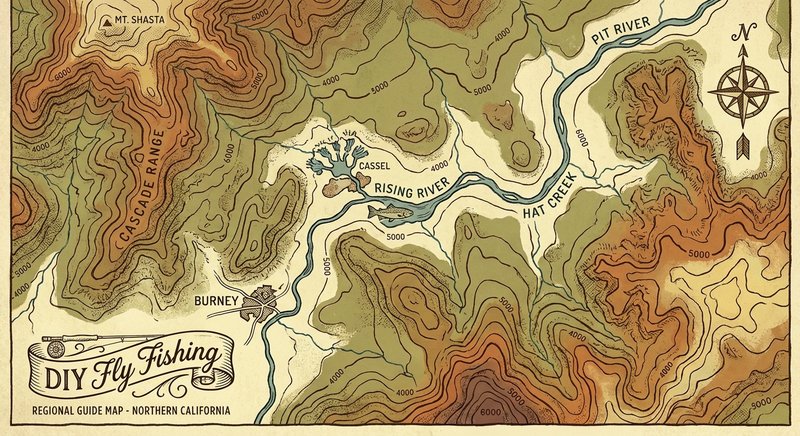
Rising River
Fly fishing in California · Intermediate · Best seasons: Spring, Summer, Fall
Target Species
Rainbow Trout
About This Water
Spring creek near Rising River Lake. Crystal-clear water with wild rainbow trout.
Fishing Recommendations
As an expert guide who has spent years decoding the complex spring creeks of Northern California, I can tell you that Rising River is both a paradise and a puzzle. Located near Burney, California, this spring-fed system is a classic "chalk stream" environment. It is the literal birthplace of the water that feeds the famous Hat Creek, and it demands the utmost stealth, technical precision, and patience.
Here is your comprehensive guide to fly fishing the Rising River.
🎣 Location Overview
Rising River is a short, spring-fed gem that bubbles out of the ground in the Hat Creek Valley. Because it is spring-fed, the water temperature remains a constant, chilly 52–54°F year-round. This creates a stable biomass and an incredibly productive nursery for wild trout.
What makes it special is its clarity and pace. The water is "gin-clear" and moves with a slow, rhythmic glassy surface. To the uninitiated, it looks like a pond that is barely moving; to the experienced angler, it is a high-stakes game of chess. The river is characterized by thick beds of elodea and ranunculus (river weeds) that create deep channels where trout hide. Anglers love it because it offers true sight-fishing opportunities for wild, "Ph.D." trout in a breathtakingly beautiful setting.
🐟 Target Species & Behavior
The primary resident is the Wild Rainbow Trout, though you will occasionally encounter a wild Brown Trout.
- Selective Feeding: These fish are notorious for being some of the most selective in the state. They have plenty of time to inspect your fly in the slow current.
- The "Weed Channel" Hold: Unlike mountain freestone streams where fish hide behind rocks, Rising River trout hold in the "alleys" between thick weed beds. They use the weeds for cover and move into the lanes to intercept nymphs and emergers.
- Spooky Nature: Because the water is so still and clear, these fish are highly sensitive to vibration, shadows, and heavy fly lines hitting the water. If you see them, they have likely already seen you.
📅 Best Times to Fish
The Rising River follows the general California inland trout season (typically Saturday preceding Memorial Day through November 15th), but its character shifts significantly:
- Spring (Late May – June): This is the prime window. The hatches are prolific, and the fish are hungry after the winter. The weather is mild, and the water levels are stable.
- Summer (July – August): This is the season of the Damselfly. Rising River is one of the few places where you can specifically target trout on damselfly hatches. It gets hot in the valley, so early mornings and late evenings are mandatory.
- Fall (September – October): The crowds thin out, and the Blue-Winged Olives (BWO) start to pop on overcast days. This is when the larger Brown Trout become more aggressive.
Best Times of Day:
- Morning (Dawn to 10:00 AM): Trico and Midge activity.
- Evening (6:00 PM to Dark): The "Magic Hour" for Caddis and Spinner falls.
🪰 Recommended Flies & Techniques
Top Fly Patterns
- Dries: Parachute Adams (#18-22), Sparkle Dun (#16-20), Mercer’s Missing Link (#16-18), and Adult Blue Damselfly patterns (#10-12).
- Nymphs: Zebra Midge (Black or Red, #18-22), Mercer’s Micro Mayfly (#18-20), and FB Pheasant Tail (#18-20).
- Specialty: Damselfly Nymphs (long, olive, and slender) are a must-have in July.
Effective Techniques
- Dry Fly Sight Fishing: This is the gold standard here. Use a long leader (12–15 feet) tapered down to 6X or 7X fluorocarbon. You must lead the fish significantly so the fly line doesn't land over their heads.
- The "Slow" Strip: When fishing Damselfly nymphs, use a very slow, rhythmic twitch near the edges of the weed beds.
- Unweighted Nymphing: Because of the weeds, traditional heavy split shot will snag constantly. Use unweighted nymphs or "hover" flies that sit just below the surface film.
💡 Pro Tips & Local Knowledge
- The Boat Advantage: Much of the land surrounding Rising River is private (notably the Rising River Ranch once owned by Bing Crosby). To fish it effectively, many anglers use a pram, kayak, or float tube. Being on the water allows you to approach fish from angles that shore anglers cannot.
- Dress in Camo: I tell my clients to wear drab greens, tans, or grays. A bright white hat or a high-vis shirt will send every trout in the pool to the bottom of the weed beds.
- The Reach Cast: Mastery of the reach cast is non-negotiable. You need to put the fly in the fish's lane while keeping the fly line in a different current tongue to prevent "micro-drag."
- The "Sip" vs. The "Splash": On Rising River, a 20-inch Rainbow will often take a fly with a tiny, subtle bubble (a "sip"). Don't wait for a violent strike; if the fly disappears or the water ripples near your fly, set the hook gently.
⚠️ Important Information
- Access: The most popular public access point is at the bridge on Cassel Road or via the public access area near the Hat Creek Powerhouse #2. Be extremely mindful of private property signs; the local landowners are very protective of their boundaries.
- Regulations: This is generally a Barbless Hook water. Always check the California Department of Fish and Wildlife (CDFW) manual before heading out, as specific sections may have different gear restrictions or catch limits (most locals practice 100% Catch and Release here).
- Wading Safety: The bottom of Rising River is often "plutonic silt" or deep mud. It is very easy to get stuck or step into a hole hidden by weeds. If wading, use a staff and move slowly.
Final Guide Note: Rising River is a place for the "meditative" angler. You may only cast at five fish all day, but if you fool one of them, it will be a career highlight. Tight lines!
Bug Hatches & Matching Flies
| Hatch | Type | Peak months | Time of day | Hook sizes | Matching flies |
|---|---|---|---|---|---|
| Blue Winged Olive Baetis tricaudatus | mayfly | March, April, October, November | Mid-day | #18-22 | BWO Sparkle Dun #18-22, RS2 #20-22, Pheasant Tail #18-20 |
| Pale Morning Dun Ephemerella excrucians | mayfly | May, June, July | Late Morning | #14-18 | PMD Parachute #16-18, Quigley Cripple #16-18, Military Mayfly #16-18 |
| Callibaetis Callibaetis ferrugineus | mayfly | May, June, September | Morning | #14-16 | Callibaetis Spinner #14-16, Hare's Ear Nymph #14-16, Mercer's Missing Link #14-16 |
| Trico Tricorythodes | mayfly | July, August, September | Early Morning | #20-24 | Trico Spinner #20-24, Trico Parachute #20-22, Zebras Midge #20-22 |
| Spotted Sedge Hydropsyche | caddis | May, June, July | Evening | #14-18 | Elk Hair Caddis #14-18, LaFontaine's Deep Sparkle Pupa #14-16, Z-Wing Caddis #16-18 |
| Damselfly Enallagma | terrestrial | June, July, August | Mid-day | #10-14 | Marabou Damsel Nymph #10-12, Adult Damsel #12-14 |
| Midges Chironomidae | midge | January, February, March, December | All Day | #20-26 | Zebra Midge #18-22, Griffith's Gnat #20-24, WD-40 #20-22 |
| Terrestrials (Ants & Beetles) Formicidae / Coleoptera | terrestrial | July, August, September | Afternoon | #12-18 | Cinnamon Ant #14-18, Foam Beetle #12-16, Parachute Ant #16-18 |