San Joaquin River (Upper)
Fly fishing in California · Intermediate · Best seasons: Summer, Fall
Target Species
Brown Trout, Rainbow Trout
About This Water
Below Mammoth Lakes with wild brown and rainbow trout. High Sierra fishing experience.
Fishing Recommendations
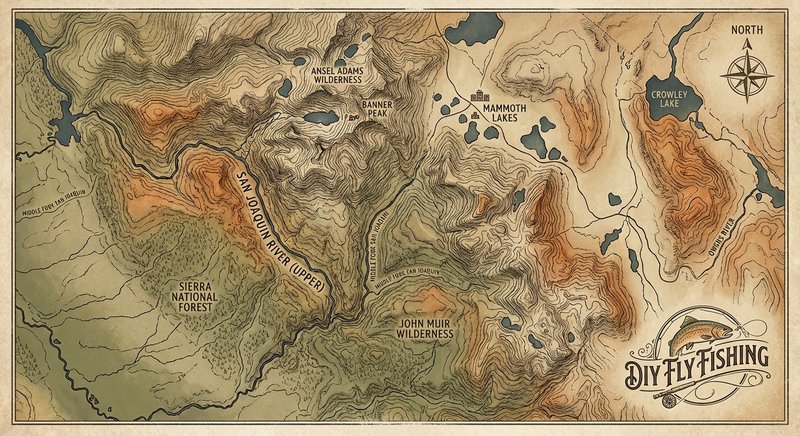
The Upper San Joaquin River, specifically the Middle Fork near Mammoth Lakes, is one of the most breathtaking alpine fly fishing destinations in the Sierra Nevada. Flowing through a dramatic glacial valley beneath the Minarets and the Ritter Range, this river offers classic freestone pocket water, meadow stretches, and wild, opportunistic trout.
Here is your comprehensive guide to fly fishing the Upper San Joaquin.
🎣 Location Overview
The Upper San Joaquin is a high-elevation freestone river that begins in the Ansel Adams Wilderness. What makes it special is the Devils Postpile National Monument area and the surrounding Reds Meadow Valley.
The water is crystal clear and cold, characterized by steep gradients, plunges, deep pools, and meandering meadow sections at Agnew Meadows. Anglers love it because it represents the quintessential Sierra experience: high catch rates, stunning scenery, and fish that are eager to rise to a well-placed dry fly. Unlike the lower reaches of the San Joaquin, which are heavily dammed, the Upper San Joaquin feels raw, wild, and intimate.
🐟 Target Species & Behavior
- Rainbow Trout: These are the most common residents. They are extremely athletic and tend to hold in the faster oxygenated water, riffles, and the heads of pools. They are opportunistic feeders due to the short high-country growing season.
- Brown Trout: Found more frequently in the deeper, slower pools and undercut banks, particularly in the meadow sections. The Browns here can be more cautious than the Rainbows, requiring a stealthier approach and better presentation.
- Brook Trout: While you asked for Rainbows and Browns, you will likely encounter wild Brookies in the higher reaches and smaller tributaries. They are small but brilliantly colored.
Behavior: Because the water is nutrient-poor compared to lowland rivers, these fish are not "picky" in the traditional sense. They are looking for calories. If you don't spook them, they will generally strike a well-presented fly.
📅 Best Times to Fish
- Summer (Late June – August): This is the prime window. Once the snowpack melts and the road to Reds Meadow opens (usually mid-to-late June), the "Golden Days" begin. The water temperature hits the 50s and 60s, and the fish become highly active.
- Fall (September – October): This is the "Local’s Secret" season. The crowds vanish, the aspens turn gold, and the Brown Trout become aggressive as they prepare to spawn. Low, clear water requires longer leaders and thinner tippet.
- Best Time of Day: During mid-summer, the morning and evening "magic hours" are best. However, because it is high elevation, the water can be chilly in the morning; often the best dry fly action starts around 10:00 AM once the sun hits the water.
🪰 Recommended Flies & Techniques
Top Fly Patterns
- Dry Flies:
- Parachute Adams (Size 14–18): The gold standard.
- Elk Hair Caddis (Size 14–16): Tan or Olive.
- Royal Wulff or Humpy: High visibility for fast pocket water.
- Terrestrials: Foam Ants, Beetles, and Hopper patterns (August–September).
- Nymphs:
- Bead Head Prince Nymph (Size 14–16).
- Pheasant Tail (Size 16–18).
- Zebra Midge (Size 18–20) for the slower meadow sections.
- Streamers:
- Woolly Bugger (Size 10–12) in Black or Olive. Great for deep pools where the big Browns hide.
Effective Techniques
- Dry-Dropper: This is the most effective way to cover this water. Use a high-vis dry (like a Stimulator) with a small weighted nymph (like a Copper John) 18–24 inches below it.
- Pocket Water Picking: Short, accurate casts into "buckets" behind boulders. You often only have a 3-second drift before the current takes your line.
- The "Stealth Crawl": In the meadow sections (near Agnew Meadows), the water is glassy. Stay low, wear drab clothing, and cast well upstream of the fish to avoid lining them.
💡 Pro Tips & Local Knowledge
- Follow the Shade: In the heat of the afternoon, trout will move to the shaded side of the canyon or under overhanging willows. Target these micro-climates.
- Agnew Meadows vs. Devils Postpile: If you want easy access and pocket water, fish near the Postpile. If you want a technical challenge and a chance at a larger Brown Trout in winding oxbows, hike into Agnew Meadows.
- The "Tenkara" Water: This river is a dream for Tenkara rods. The tight quarters and constant pocket water allow for the vertical line control that Tenkara excels at.
- Don't Ignore the Small Stuff: While big hoppers are fun, some of the most consistent hatches are tiny Midges. If fish are rising but ignoring your Adams, drop down to a size 20 or 22 Griffith’s Gnat.
⚠️ Important Information
- Access (The Shuttle): During the summer, the road to Reds Meadow is closed to private vehicles during the day. You must take the mandatory shuttle from Mammoth Mountain Main Lodge unless you arrive before/after hours or are camping. Note: Check current US Forest Service updates, as road construction has significantly impacted access in 2024-2025.
- Regulations: Most of the Upper San Joaquin follows general CA District regulations, but always check the California Department of Fish and Wildlife (CDFW) map for specific reach closures or gear restrictions.
- Permits: A standard California fishing license is required for anyone 16 or older.
- Safety: This is bear country. Store all food in bear-proof containers if camping. Also, be mindful of high-altitude exertion; you are fishing at roughly 7,500–8,000 feet. Stay hydrated!
Bug Hatches & Matching Flies
| Hatch | Type | Peak months | Time of day | Hook sizes | Matching flies |
|---|---|---|---|---|---|
| Golden Stonefly Hesperoperla pacifica | stonefly | June, July | Morning/Evening | #8-12 | Rogue River Stone #8-10, 20 Incher Stone #8-12, Pats Rubber Legs #8-12 |
| Yellow Sally Isoperla | stonefly | July, August | Afternoon/Evening | #14-16 | Little Yellow Sloan #14-16, Yellow Sally Stimulator #14-16, Iron Lotus #16 |
| Pale Morning Dun Ephemerella excrucians | mayfly | July, August | Late Morning/Afternoon | #16-18 | Sparkle Dun #16-18, Pheasant Tail #16-18, PMD Emerger #16-18 |
| Spotted Sedge Hydropsyche | caddis | July, August, September | Evening | #14-16 | Elk Hair Caddis #14-16, LaFontaine's Deep Sparkle Pupa #14-16, Peeking Caddis #14-16 |
| Blue Winged Olive Baetis | mayfly | May, September, October | Mid-day | #18-22 | RS2 #18-22, Parachute Adams #18-22, JujuBaetis #18-22 |
| Sierra Green Drake Drunella doddsi | mayfly | July | Afternoon | #10-12 | Green Drake Hairwing #10-12, Hares Ear Nymph #10-12, Quigley's Green Drake Hackle Stacker #10-12 |
| High Sierra Terrestrials Formicidae / Coleoptera | terrestrial | August, September | All Day | #12-18 | Carpenter Ant #14-16, Foam Beetle #12-16, Amy's Ant #12-14 |
| Midges Chironomidae | midge | June, July, August, September | Morning | #18-24 | Zebra Midge #18-22, Griffith's Gnat #18-22, Top Secret Midge #20-24 |