San Miguel River
Fly fishing in Colorado · Intermediate · Best seasons: Summer, Fall
Target Species
Brown Trout, Rainbow Trout
About This Water
Near Telluride with wild brown and rainbow trout. Beautiful canyon fishing in the western San Juans.
Fishing Recommendations
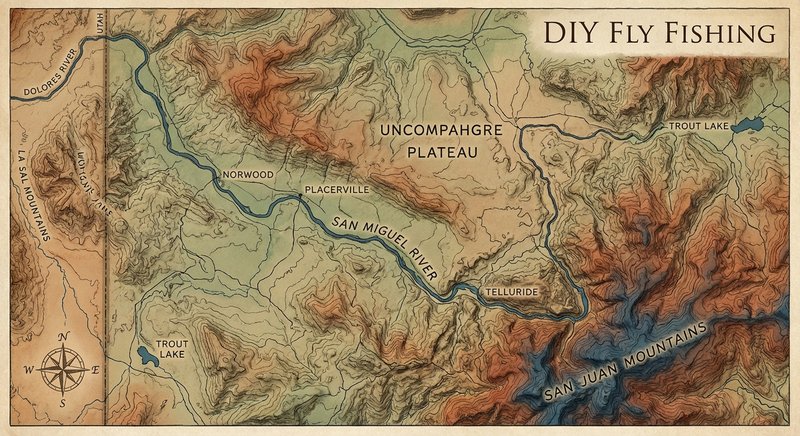
The San Miguel River is one of the last truly wild, free-flowing rivers in Colorado. Unlike many other Western rivers, it is largely un-dammed, meaning it follows a natural "freestone" cycle. Tumbling out of the high peaks above Telluride and descending nearly 7,000 vertical feet to the desert floor, the San Miguel offers a diverse, rugged, and incredibly rewarding fly fishing experience.
🎣 Location Overview
The San Miguel is a high-gradient, fast-moving freestone river. It is characterized by pocket water, riffles, and plunge pools. Because it isn't tailwater-controlled, the river feels "alive"—it changes slightly every year after the spring runoff.
Anglers love the San Miguel for its unpretentious nature. While the nearby Gunnison or Taylor rivers get the glory, the San Miguel offers solitude and hungry, opportunistic fish. The scenery shifts dramatically from alpine evergreens and red rock canyons near Telluride to high-desert sandstone cliffs near Placerville and Norwood. It is a quintessential Colorado mountain stream: crystal clear, cold, and full of oxygen.
🐟 Target Species & Behavior
The river is home to a healthy population of Brown Trout and Rainbow Trout, with occasional Cutthroat in the upper reaches and Colorado River Cutthroat hybrids.
- Behavior: Because the water is fast and the growing season is short, these fish are not "PhD fish" like you might find on the Fryingpan. They are opportunistic predators. If they see food, they generally eat it before it sweeps past them in the current.
- Where they hold: Look for "the soft water." In a high-gradient river like this, fish spend most of their time behind boulders, in the foam lines (the "seams"), and in the slow-moving "buckets" at the tail of a run.
- Feeding: Their diet consists heavily of Stoneflies, Caddis, and various Mayflies (BWO and PMDs). In late summer, terrestrials (grasshoppers and ants) become a major food source.
📅 Best Times to Fish
The San Miguel is highly dependent on snowpack and runoff.
- Summer (Late June – August): This is the prime window. Once the spring runoff subsides (usually by late June), the "Dry Fly Frenzy" begins. July is spectacular for Stoneflies and Caddis.
- Fall (September – October): This is many guides' favorite time. The water is low and clear, the Cottonwoods turn gold, and the Brown Trout become aggressive as they prepare for the spawn.
- Best Times of Day:
- Summer: 9:00 AM to 4:00 PM (active hatches).
- Fall: 10:00 AM to 5:00 PM (waiting for the water to warm slightly).
- Prime Window: The Caddis hatch in early July and the Blue Winged Olive (BWO) hatches on overcast September afternoons.
🪰 Recommended Flies & Techniques
Top Fly Patterns
- Dries:
- Chubby Chernobyl (Size 8-12) – The gold standard for the San Miguel.
- Elk Hair Caddis (Size 14-16) – Tan or Olive.
- Parachute Adams (Size 14-18) – For technical morning rises.
- Amy’s Ant (Size 10-12) – Great attractor pattern.
- Nymphs:
- Pat’s Rubber Legs (Size 8-12) – Black/Tan.
- Prince Nymph (Size 12-16) – The flash works well in the bubbly water.
- Pheasant Tail (Size 16-18) – Classic dropper.
- Streamers:
- Wooly Bugger (Size 8-10) – Black or Olive for the deeper canyon pools.
Effective Techniques
- Dry-Dropper: This is the most effective way to fish the San Miguel. Use a high-visibility dry (like a Chubby) and hang a weighted nymph (like a Copper John or Pheasant Tail) 18–24 inches below it.
- High-Sticking: Because the currents are complex, keep as much fly line off the water as possible to avoid drag.
- Pocket Picking: Don't spend an hour in one hole. Hit the pockets, give them 5-10 good drifts, and move on.
💡 Pro Tips & Local Knowledge
- Follow the Shade: In the heat of August, the fish will move into the shadows of the canyon walls or under overhanging willows. Accuracy matters more than distance here.
- The "Placerville to Norwood" Stretch: While many people fish right in Telluride, the water between Placerville and the Norwood Bridge offers larger fish and more consistent depth.
- Watch the Gauge: The San Miguel is "bony." If the flow drops below 100 cfs, the fish get very spooky. If it’s above 600 cfs, it’s generally too fast to wade safely. The "sweet spot" is 150–350 cfs.
- Stealth Wading: The water is clear. If you can see the fish, they’ve likely already seen you. Wade slowly and cast from a distance when possible.
⚠️ Important Information
- Access: Much of the river follows Highway 145. There is excellent public access through BLM lands and US Forest Service stretches. However, there are "islands" of private property—look for signage and respect fences.
- Regulations: Most of the San Miguel is under standard Colorado fishing regulations (4 fish limit), but many stretches are Catch and Release preferred by the local community to maintain the wild population. Always check the current Colorado Parks & Wildlife (CPW) brochure for specific reach restrictions.
- Wading Safety: The rocks on the San Miguel are notoriously "greasy" and round. Felt-soled boots or studs are highly recommended, and a wading staff is a life-saver in the swifter sections.
- Permits: A valid Colorado Fishing License is required for everyone 16 and older.
The San Miguel is a "reward" river. It rewards the angler who likes to move, who loves dry flies, and who appreciates the wild, rugged beauty of the San Juan Mountains. Tight lines!
Bug Hatches & Matching Flies
| Hatch | Type | Peak months | Time of day | Hook sizes | Matching flies |
|---|---|---|---|---|---|
| Blue Winged Olive Baetis spp. | mayfly | March, April, September, October | Afternoon | #18-22 | RS2 #20-22, Parachute Adams #18-22, WD-40 #20-22 |
| Mother's Day Caddis Brachycentrus occidentalis | caddis | May | Afternoon/Evening | #14-16 | Peacock Caddis #14-16, Graphic Caddis #14-16, Elk Hair Caddis #14-16 |
| Pale Morning Dun Ephemerella excrucians | mayfly | July, August | Late Morning/Afternoon | #16-18 | Pheasant Tail #16-18, PMD Sparkle Dun #16-18, Parachute PMD #16-18 |
| Western Green Drake Drunella doddsi | mayfly | August | Afternoon/Evening | #10-12 | Quigley Cripple #12, Hair Wing Green Drake #10-12, Drunella Nymph #10-12 |
| Golden Stonefly Hesperoperla pacifica | stonefly | June, July | All day | #8-12 | Pat's Rubber Leg #8-12, Chubby Chernobyl #8-12, Golden Rogue Stone #10-12 |
| Yellow Sally Isoperla spp. | stonefly | June, July, August | Afternoon/Evening | #14-16 | Yellow Sally Dry #14-16, Iron Sally #14-16 |
| Midges Chironomidae | midge | March, April, December | Morning/Afternoon | #20-24 | Zebra Midge #20-22, Griffith's Gnat #20-22, Top Secret Midge #22-24 |
| Grasshoppers | terrestrial | August, September | Afternoon | #10-14 | Amy's Ant #10-12, Parachute Hopper #12-14, Morrish Hopper #10-12 |