Scott River
Fly fishing in California · Intermediate · Best seasons: Fall, Winter
Target Species
Steelhead, Chinook Salmon
About This Water
Klamath tributary in Siskiyou County. Steelhead and salmon in remote mountain setting.
Fishing Recommendations
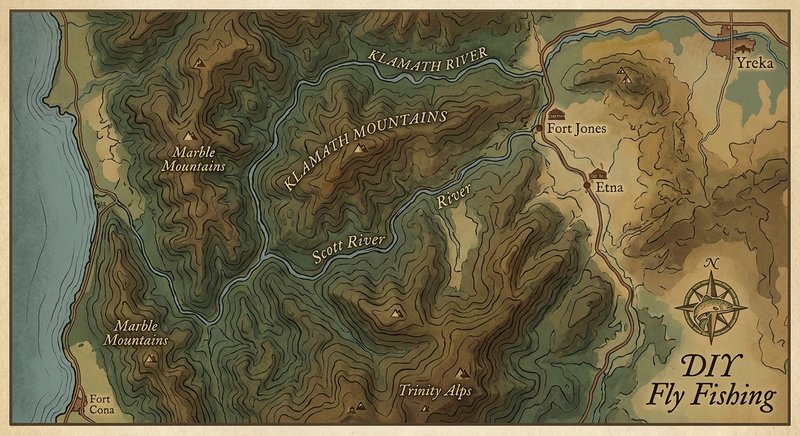
The Scott River is one of the most vital and scenic tributaries of the Klamath River system. Carving its way through the stunning Marble Mountains and the pastoral Scott Valley in Siskiyou County, it offers a "wilder" feel than some of its more famous neighbors. For the fly angler, the Scott is a river of contrasts—it features technical canyon water, meandering valley sections, and some of the most critical spawning habitats for wild salmonids in California.
As your guide, here is the comprehensive breakdown for tackling the Scott River.
🎣 Location Overview
The Scott River is a "wild and scenic" gem. It is primarily known for its high-gradient canyon section before it meets the Klamath and its wide, alluvial valley section near Etna and Fort Jones.
What makes the Scott special is its wild character. Unlike the mainstem Klamath, which is heavily regulated by dams, the Scott is a free-flowing system (though impacted by irrigation diversions in the summer). In the late fall and winter, when the rains return, the river transforms into a prime corridor for migrating fish. Anglers love it because it offers a more intimate experience; you aren’t fighting the crowds of the Trinity or the Lower Klamath, and the fish here are often "bright" and full of energy.
🐟 Target Species & Behavior
Steelhead (Winter & Fall Run)
The Scott hosts both "half-pounders" (immature steelhead) and large adults.
- Behavior: They are highly migratory. In the early fall, they move through the lower canyon quickly. As water temperatures drop in winter, they hold in classic "tailouts" and the heads of pools.
- Feeding: While migrating, they are opportunistic. They will strike out of aggression or feed on drifting eggs from spawning salmon.
Chinook Salmon (Fall Run)
The Scott is famous for its run of Fall Chinook (King Salmon).
- Behavior: These fish are on a mission to spawn. They hold in deep, dark holes during the day and move into the shallower gravel "redds" in the evening and early morning.
- Feeding: They generally stop feeding once they enter the river, but they remain highly territorial. They will strike flies that irritate them or trigger a predatory instinct.
📅 Best Times to Fish
- Fall (October – November): This is the prime window for Chinook Salmon and the arrival of the first "half-pounder" steelhead. Look for the first major rains to "open" the mouth of the river at the Klamath confluence.
- Winter (December – February): This is the peak for Adult Winter Steelhead.
- Best Time of Day: During the fall, early morning and late evening are best to avoid the high sun. In the dead of winter, the "10 AM to 2 PM" window is often best as the water temperature rises a few degrees, activating the fish.
- Prime Conditions: You want "receding and clearing" water. After a heavy rain, wait for the river to drop and turn a "steelhead green" (transparent but with a turquoise tint).
🪰 Recommended Flies & Techniques
Techniques
- Indicator Nymphing: The most productive method for the Scott. Use a 7-8 weight rod with a floating line and a long leader to get flies deep into the slots.
- Swinging (Spey/Switch): Very popular in the lower canyon. Swinging large, colorful leeches or traditional flies is the "purist" way to find a Scott River chrome.
- Egg Dropper: During the salmon spawn, trailing an egg pattern behind a nymph is lethal.
Top Fly Patterns
- Steelhead:
- Intruders (Black/Blue or Pink/Orange) for swinging.
- Glo-Bugs / Bead Eggs (Oregon Cheese, Mottled Orange).
- Rubber Legs Stoneflies (Size 4-8, Black or Golden).
- Prince Nymphs (Size 10-12).
- Chinook:
- Comets (Red or Chartreuse).
- Woolly Buggers (Black or Olive with flash).
- Egg-Stasy Patterns.
💡 Pro Tips & Local Knowledge
- Focus on the Canyon: The lower 20 miles of the river (the canyon stretch before the Klamath) offer the most public access and the best holding water for fresh fish.
- The "Rain Rule": The Scott is prone to "blowing out" (becoming muddy and unfishable) quickly because of its geology. Always check the USGS gauge at Fort Jones. If the graph is a vertical line up, go to the pub. If it's a slow slope down, get your gear.
- Watch the Redds: Be extremely careful not to wade on "redds" (bright, clean patches of gravel where salmon have laid eggs). Stepping on these kills the next generation of fish.
- Temperature Matters: If the water is below 38°F, the fish will be lethargic. Slow your presentation down and put the fly right on their nose.
⚠️ Important Information
Access
- Much of the Scott Valley (upper river) is private ranch land. Respect "No Trespassing" signs.
- The Lower Scott River Road (Hwy 96 side) provides excellent access to the canyon section with many pull-outs and public river access points.
Regulations & Permits
- California Fishing License: Required for all anglers 16 and older.
- Steelhead Report Card: You must have a valid Steelhead Restoration Card in your possession.
- Barbless Hooks Only: The Scott is a wild trout/steelhead water; barbless hooks are mandatory.
- Closures: Parts of the Scott can close seasonally to protect spawning fish. Always check the current CDFW (California Department of Fish and Wildlife) Special Regulations for District 1 before heading out.
Special Considerations
- Cell Service: Virtually non-existent in the Scott Canyon. Download your maps for offline use.
- Safety: The canyon is steep and slippery. Felt-soled boots with studs are highly recommended. Always tell someone where you are going.
Bug Hatches & Matching Flies
| Hatch | Type | Peak months | Time of day | Hook sizes | Matching flies |
|---|---|---|---|---|---|
| Salmonfly Pteronarcys californica | stonefly | May, June | All Day | #4-8 | Rogue River Stone #4-6, Kaufmann's Stone #4-8, Chubby Chernobyl #6-8 |
| Golden Stonefly Hesperoperla pacifica | stonefly | June, July | Morning/Evening | #8-12 | Golden Stimulator #8-12, Pat's Rubber Legs #8-10, Picket Pin #10-12 |
| Blue-Winged Olive Baetis spp. | mayfly | March, April, October, November | Mid-day | #18-22 | RS2 #18-22, Parachute Adams #18-22, Pheasant Tail #18-20 |
| Pale Morning Dun Ephemerella excrucians | mayfly | June, July | Late Morning/Afternoon | #14-18 | PMD Sparkle Dun #16-18, Military May #16-18, Quigley Cripple #14-16 |
| October Caddis Dicosmoecus gilvipes | caddis | September, October | Afternoon/Evening | #8-12 | Orange Stimulator #8-10, Morrish October Caddis #10-12, Pecka's October Caddis #10-12 |
| Little Yellow Stonefly Isoperla spp. | stonefly | June, July, August | Evening | #14-16 | Yellow Sally #14-16, Iron Lotus #16, Little Yellow Sloan #14-16 |
| Mother's Day Caddis Brachycentrus occidentalis | caddis | April, May | Afternoon | #14-16 | Elk Hair Caddis #14-16, Holy Grail #14-16, Deep Sparkle Pupa #14-16 |
| Green Drake Drunella doddsii | mayfly | June | Afternoon | #10-12 | Green Drake Paradrake #10-12, Hare's Ear #10-12, CDC Green Drake #12 |
| Spotted Sedge Hydropsyche spp. | caddis | July, August, September | Evening | #14-18 | Mercer's Missing Link #14-16, LaFontaine Pupa #16-18, Z-Wing Caddis #14-16 |