Shasta River
Fly fishing in California · Intermediate · Best seasons: Spring, Summer, Fall
Target Species
Rainbow Trout, Brown Trout
About This Water
Klamath tributary known for large trout. Spring creek characteristics with wild fish.
Fishing Recommendations
The Shasta River in Northern California is one of the most unique and productive spring-fed systems in the West. Often overshadowed by its famous neighbors—the Upper Sacramento and the McCloud—the Shasta is a "hidden gem" for those who appreciate technical spring creek fishing and the chance to hook into surprisingly large, well-fed trout.
🎣 Location Overview
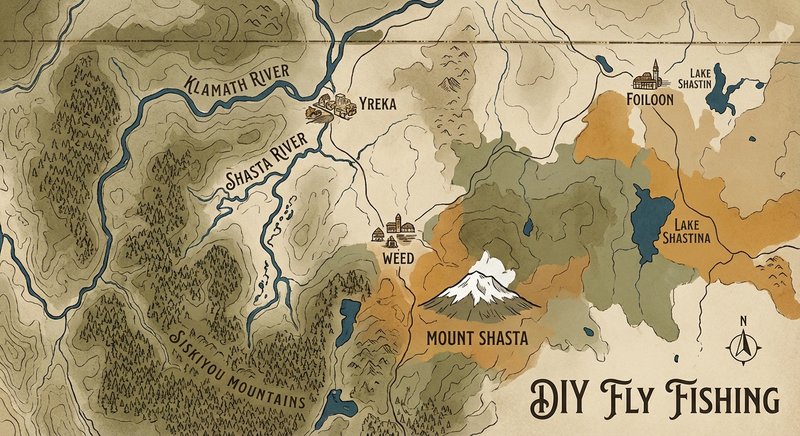
The Shasta River is a major tributary of the Klamath River, originating from the snowmelt of Mt. Shasta and the massive underground aquifers of the High Desert. What makes this river special is its high alkaline mineral content and stable spring-fed temperatures.
These conditions create a "bug factory." The river is incredibly nutrient-rich, supporting massive populations of aquatic insects and crustaceans. Morphologically, it transitions from a classic, meandering meadow spring creek in its upper reaches to a more rugged, boulder-strewn canyon as it approaches its confluence with the Klamath. Anglers love it because the fish grow fast and fight hard, but they are also notoriously wary, requiring a stealthy approach and precise presentations.
🐟 Target Species & Behavior
- Rainbow Trout: The "Redbands" here are native, incredibly colorful, and known for their aerial acrobatics. They typically hold in the faster oxygenated riffles and at the heads of pools.
- Brown Trout: The Shasta holds some truly legendary Brown Trout. These fish are more secretive, residing under undercut banks, beneath overhanging willows, and in deep, slow-moving holes.
- Behavior: Because the water is so clear and often slow-moving, these fish are "line shy." They feed heavily on sub-surface nymphs but will rise readily during the prolific evening caddis hatches. In the fall, they become highly opportunistic, feeding on the eggs of migrating Chinook salmon.
📅 Best Times to Fish
- Spring (April – June): This is the prime window for dry fly action. As the air warms, you'll see massive hatches of Pale Morning Duns (PMDs) and various Caddis species. Water levels are generally stable.
- Summer (July – August): Mid-day can be tough due to heat. Focus on "The Golden Hour" (dawn and dusk). This is also peak terrestrial season—think grasshoppers and ants dropped tight against the banks.
- Fall (September – November): This is the trophy hunter’s season. As the days shorten, the big Browns become more aggressive. The arrival of salmon in the lower river also triggers an "egg bite" that can be incredibly productive for resident trout.
🪰 Recommended Flies & Techniques
Top Fly Patterns
- Dries: Sparkle Dun (PMD) #16-18, Elk Hair Caddis (Tan or Olive) #14-16, Parachute Adams #16-20, and Morrish Hopper #8-10.
- Nymphs: Ray Charles or Scud patterns (Orange or Pink) #16-18, Zebra Midge #18-22, Pheasant Tail (Flashback) #16-18, and Mercer’s Poxyback Caddis.
- Streamers: Woolly Buggers (Black or Olive) and Sculpin patterns for the canyon stretches.
Effective Techniques
- Dry Fly: Use a long leader (12ft+) tapered to 5X or 6X. A "reach cast" is essential here to prevent drag, as the current seams are subtle but deceptive.
- Nymphing: European-style nymphing (high-sticking) is very effective in the canyon sections. In the meadow stretches, use a small, unobtrusive yarn indicator or "dry-dropper" rig to avoid spooking fish.
- The "Scud Strip": In the slower spring-creek water, fishing a scud pattern under a tiny bit of weight with a very slow, rhythmic twitch can be deadly.
💡 Pro Tips & Local Knowledge
- The "Crayfish Factor": The Shasta has a massive population of crayfish. If you are hunting for a trophy Brown Trout, swinging or stripping a crayfish imitation near undercut banks at twilight is the best way to entice a monster.
- Stealth is Mandatory: In the meadow sections, avoid wearing bright colors. Stay low, move slowly, and try to keep the sun in front of you so you don't cast a shadow over the water.
- Check the Water Temp: During late summer, irrigation draw-downs can raise water temperatures. If the water hits 68°F, give the fish a break and head to the higher-elevation tributaries.
⚠️ Important Information
- Access: This is the biggest challenge on the Shasta. Much of the river flows through private ranch land. Public access is primarily available:
- Near the mouth (Klamath River confluence).
- At the Nature Conservancy’s Shasta River Big Springs Ranch (check for specific public access days or guided opportunities).
- Various bridge crossings (ensure you stay within the high-water mark).
- Regulations: The Shasta has specific regulations to protect spawning Salmon and Steelhead. It is typically Catch and Release only with barbless hooks. Always check the current California Department of Fish and Wildlife (CDFW) regulations before heading out.
- Cattle: You are in ranch country. If you pass through a gate, leave it exactly as you found it (open or closed). Respect the landowners so that access remains available for others.
Bug Hatches & Matching Flies
| Hatch | Type | Peak months | Time of day | Hook sizes | Matching flies |
|---|---|---|---|---|---|
| Blue Winged Olive Baetis | mayfly | March, April, October, November | Late Morning/Afternoon | #18-22 | RS2 #18-22, Parachute Adams #18-22, Pheasant Tail #18-20 |
| Pale Morning Dun Ephemerella | mayfly | May, June, July | Late Morning | #14-18 | Sparkle Dun #16-18, Mercer's Trigger Case PMD #16-18, Quill Gordon #16 |
| Mother's Day Caddis Brachycentrus | caddis | April, May | All Day/Evening | #14-16 | LaFontaine's Deep Sparkle Pupa #14-16, Peacock Caddis #14-16 |
| Golden Stonefly Calineuria californica | stonefly | May, June | Morning/Evening | #8-12 | Chubby Chernobyl (Gold) #8-12, Pat's Rubber Leg #8-12 |
| Spotted Sedge Hydropsyche | caddis | June, July, August, September | Evening | #14-18 | Elk Hair Caddis (Tan) #14-18, Zebra Midge #18-20, Hydropsyche Larva #14-16 |
| Trico Tricorythodes | mayfly | July, August, September | Early Morning | #20-24 | Trico Spinner #20-24, WD-40 #20-22 |
| October Caddis Dicosmoecus | caddis | September, October | Afternoon/Evening | #8-10 | Orange Stimulator #8-10, October Caddis Pupa #8-10 |
| Midges Chironomidae | midge | December, January, February | All Day | #20-26 | Griffith's Gnat #20-24, Zebra Midge (Red or Black) #20-24 |