South Platte River
Fly fishing in Colorado · Advanced · Best seasons: Spring, Summer, Fall, Winter
Target Species
Rainbow Trout, Brown Trout
About This Water
Multiple sections including Cheesman Canyon and Deckers offer technical fishing for educated trout. Gold Medal water with excellent public access.
Fishing Recommendations
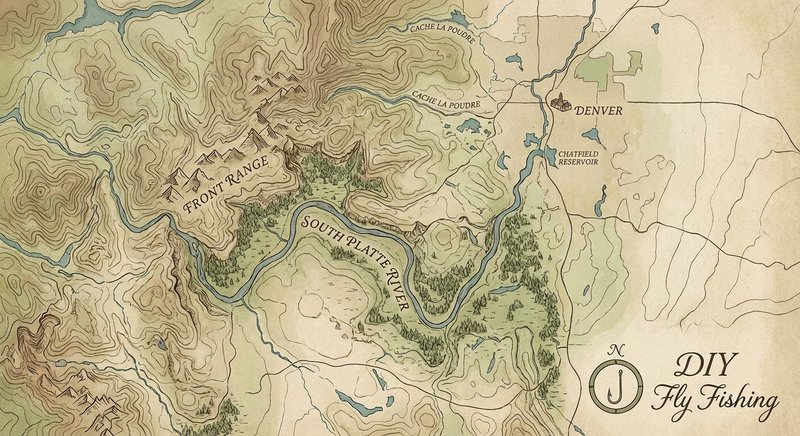
The South Platte River is the crown jewel of Front Range fly fishing. Running from the high mountains of South Park through deep canyons and eventually into the Denver metro area, it offers some of the most diverse—and challenging—technical trout fishing in the United States.
🎣 Location Overview
The South Platte is a complex river system characterized by its "Gold Medal" stretches and tailwater sections. What makes it special is the sheer variety of water: from the meandering, meadow-style streams of the "Dream Stream" (between Spinney and Eleven Mile Reservoirs) to the deep, pocket-water canyons of Cheesman Canyon and the Deckers area.
Anglers love the South Platte because it is a "chess match" river. The water is often crystal clear, and the trout are highly educated. It is a place where technical proficiency is rewarded, and the scenery—ranging from high-alpine plateaus to dramatic granite boulders—is world-class.
🐟 Target Species & Behavior
- Rainbow Trout: Found throughout the system. In the Dream Stream, you’ll encounter massive lake-run rainbows that move up from the reservoirs to spawn in the spring. In the canyons, they are hardy, acrobatic fish that hold in fast oxygenated water.
- Brown Trout: The South Platte is famous for its wild brown trout. They are notorious for hugging the undercut banks in the meadows and hiding behind large granite boulders in the canyons. They become particularly aggressive during the fall spawn.
- Behavior: These fish see a lot of flies. They are "micro-feeders," often focusing on tiny midges and mayflies. They have a small "feeding window," meaning your drift must be perfect. If your fly has a hint of drag, they will refuse it.
📅 Best Times to Fish
- Spring (March - May): The season of the Blue Winged Olive (BWO) and the Rainbow spawn. This is peak season for the Dream Stream. Early spring can be cold, but the midge hatches are intense.
- Summer (June - August): Prime dry fly season. Look for Tricos in the early morning and Caddis in the evenings. The Pale Morning Duns (PMDs) hatch in July. Terrestrials (hoppers/ants) become vital in August.
- Fall (September - November): My personal favorite. The Brown trout are moving and aggressive. BWO hatches return, and the crowds begin to thin. Kokanee Salmon also run up certain sections, bringing giant trout behind them to eat their eggs.
- Winter (December - February): The South Platte is a premier winter fishery because the tailwaters (below dams) stay at a constant temperature. Fishing is strictly technical nymphing with tiny midges (#22-26) during the warmest part of the day (10 AM – 2 PM).
🪰 Recommended Flies & Techniques
Top Fly Patterns
- Nymphs: RS2 (Grey/Black, #20-24), Chocolate Foam Wing Emerger (#20-24), Juju Baetis (#20-22), Pat's Rubber Legs (as a lead fly, #8-12), and the Mercury Midge (#22-24).
- Dry Flies: Parachute Adams (#18-24), Griffiths Gnat (#20-24), Puterbaugh’s Foam Caddis (#16-18), and Amy’s Ant (#10-12).
- Streamers: Pine Squirrel Leeches, Black Ghost Kelly Galloup’s Dungeon (for big Browns in the fall).
Techniques
- Technical Nymphing: This is the bread and butter of the South Platte. Use a light leader (6X or 7X fluorocarbon) and small weights. You need to get the fly to the "fish zone" quickly without it looking unnatural.
- Sight Fishing: In the clear water of Cheesman or the Dream Stream, don't just blind cast. Spend time on the bank spotting fish. Observe their feeding rhythm before making a cast.
- The "Dry-Dropper": Very effective in the summer in the Deckers section. Use a high-visibility foam hopper and hang a small RS2 about 18 inches below it.
💡 Pro Tips & Local Knowledge
- The "Deckers Drift": In the popular Deckers stretch, the fish see thousands of San Juan Worms. Try a more natural "Annelid" pattern or a very small, dark stonefly nymph instead to stand out.
- Move Your Weight, Not Your Float: If you aren't getting hits, don't just change your fly. Adjust your split shot. Often, the fish are pinned to the bottom, and being 2 inches too high means no fish.
- Cheesman Canyon Stealth: The fish in the canyon can see you from 20 feet away. Wear earth-toned clothing, move slowly, and try to stay low to the ground.
- Avoid the "Redds": In the spring and fall, you will see cleared-out gravel patches (redds) where fish spawn. Do not walk on these or fish for trout sitting on them. It protects the future of the river.
⚠️ Important Information
- Access:
- The Dream Stream: Located between Spinney and Eleven Mile Reservoirs (Hwy 24).
- Cheesman Canyon: Accessed via the Gill Trail. Requires a hike; very rugged terrain.
- Deckers: Easy roadside access along Hwy 67 and 126.
- Regulations: Most Gold Medal sections are Catch and Release Only and restricted to Artificial Flies and Lures Only. Check the current Colorado Parks and Wildlife (CPW) brochure for specific boundary rules.
- Permits: A valid Colorado Fishing License is required. If fishing within Eleven Mile State Park, a park pass is also needed.
- Wading Safety: The South Platte can fluctuate wildly due to dam releases. Always check the CFS (cubic feet per second) before heading out. Over 500 CFS in Deckers makes wading difficult; over 800 CFS can be dangerous.
Bug Hatches & Matching Flies
| Hatch | Type | Peak months | Time of day | Hook sizes | Matching flies |
|---|---|---|---|---|---|
| Midges Chironomidae | midge | January, February, March, December | Morning/Afternoon | #18-24 | Black Beauty #20-24, Manhattan Midge #20-22, Griffith's Gnat #18-22 |
| Blue Winged Olive Baetis | mayfly | April, May, September, October | Late Morning/Afternoon | #18-22 | RS2 (Grey/Olive) #18-22, JujuBaetis #18-22, Parachute Adams #18-22 |
| Pale Morning Dun Ephemerella | mayfly | June, July, August | Morning/Early Afternoon | #14-18 | Barr's PMD Emerger #16-18, Pheasant Tail #14-18, Sparkle Dun #14-18 |
| Trico Tricorythodes | mayfly | July, August, September | Early Morning | #20-24 | Trico Spinner #20-24, Chocolate Foam Wing #20-22, Suncurl Trico Nymph #20-22 |
| Brachycentrus Caddis Brachycentrus | caddis | May, June | Evening | #14-18 | Elk Hair Caddis #14-16, LaFontaine's Deep Sparkle Pupa #14-18, Buckskin #16-18 |
| Golden Stonefly Hesperoperla pacifica | stonefly | June, July | Throughout day | #8-12 | Pat's Rubber Legs #8-12, Amy's Ant #10-12, 20 Incher Stone #10-14 |
| Red Quill Rhithrogena hageni | mayfly | May, June | Afternoon | #12-14 | Red Quill Cripple #12-14, Quill Gordon #14, Hares Ear #12-14 |
| Grasshoppers Acrididae | terrestrial | August, September | Midday/Afternoon | #8-12 | Parachute Hopper #10-12, Morrish Hopper #8-12, Charlie Boy Hopper #10-12 |