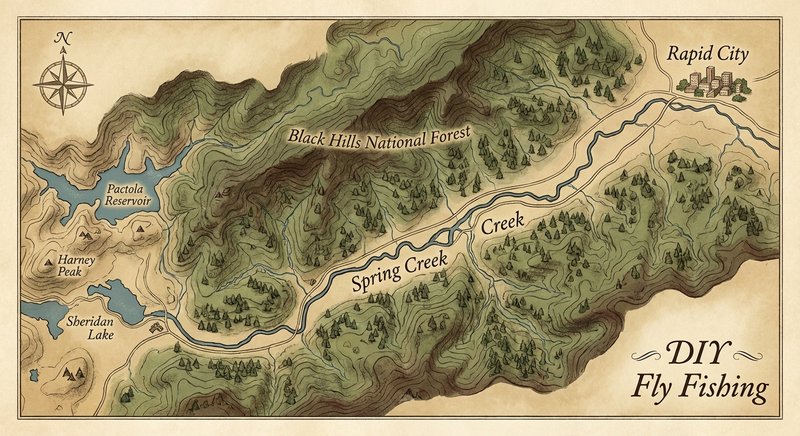
Spring Creek
Fly fishing in South Dakota · intermediate · Best seasons: spring, summer, fall
Target Species
Brown Trout
About This Water
Black Hills stream near Hill City. Wild brown trout in forested canyon.
Fishing Recommendations
Welcome to the Black Hills of South Dakota. As a guide in these parts, I can tell you that Spring Creek is often overlooked by folks rushing to the more famous Rapid Creek or Spearfish Creek—and that is exactly why we love it.
Spring Creek is a classic tailwater-freestone hybrid that flows through the heart of the Black Hills. It offers some of the most technical and rewarding fly fishing in the region, particularly if you are hunting for wild, buttery Brown Trout.
🎣 Location Overview
Spring Creek is a gem located just south and west of Rapid City. It originates in the high limestone plateau and flows into Sheridan Lake, then emerges below the dam to wind through a spectacular, rugged canyon before eventually reaching the prairie.
What makes it special is the diversity of the water. Below Sheridan Lake, the "Spring Creek Trail" area offers miles of public access through a steep-walled canyon filled with deep pools, pocket water, and undercut banks. It feels much more remote than it actually is. The water chemistry is rich, supporting incredible insect life, which in turn supports a healthy population of wild, spooky, and beautiful Brown Trout.
🐟 Target Species & Behavior
While there are some Rainbows (mostly near the lake or stocked sections), Brown Trout are the undisputed kings of Spring Creek.
- Behavior: These fish are notorious for being "drifters." They will move into the shallow riffles and tailouts during a hatch but retreat into the darkest, deepest shadows of the canyon walls or under submerged logs when the sun is high.
- Holding Patterns: Look for them in the "seams" where fast water meets slow water. Because the creek isn't massive, the trout are very "structure-oriented." If you see a downed pine tree in the water or a large limestone boulder, there is a Brown Trout living under it.
- Feeding: They are opportunistic but wary. They feed heavily on scuds and midges year-round, but they are also known to be aggressive toward crayfish and smaller minnows (Dace).
📅 Best Times to Fish
Optimal Seasons
- Spring (April - June): This is prime time. As the water warms, the Mother’s Day Caddis hatch can be spectacular. Runoff is generally manageable here compared to other Western states.
- Summer (July - August): Early mornings and late evenings are key. The canyon provides shade, which keeps water temps stable, but mid-day can be tough. This is terrestrial season—think grasshoppers and ants.
- Fall (September - November): My favorite time. The Brown Trout are preparing to spawn and become aggressive. The colors in the canyon are world-class, and the Blue Winged Olive (BWO) hatches on overcast days are legendary.
Best Times of Day
- Low Light: Brown Trout hate bright sun. The first two hours of daylight and the last hour before dark are the most productive windows.
🪰 Recommended Flies & Techniques
Top Fly Patterns
- Nymphs:
- Scuds: (Orange or Olive, sizes 14-18) – A staple below the dam.
- Pheasant Tail: (Sizes 16-20) – Always works.
- Zebra Midge: (Black or Red, sizes 18-22).
- Dry Flies:
- Elk Hair Caddis: (Sizes 14-16) – Great for prospecting.
- Blue Winged Olive (BWO): (Sizes 18-22) – Essential for spring and fall.
- Hi-Viz Ant: (Sizes 14-16) – The best "searcher" pattern in August.
- Streamers:
- Woolly Buggers: (Black or Olive, sizes 8-12).
- Near Nuff Crayfish: (Size 8).
Techniques & Presentation
- Technical Nymphing: Use a "Tippet Recovery" cast to ensure no drag. Because the current is complex, a standard strike indicator can sometimes spook fish in the clear pools. Consider "Euro-nymphing" or using a very small "pinch-on" wool indicator.
- Dry-Dropper: This is the most effective way to cover Spring Creek in the summer. Use a buoyant Hopper or Foam Ant as your indicator and hang a small Beadhead Pheasant Tail 18 inches below it.
- The "Slow Strip": When fishing streamers in the deep canyon pools, don't burn them back. Strip them slowly and let them sink near the rock faces.
💡 Pro Tips & Local Knowledge
- The "Stealth" Factor: The water in Spring Creek is often crystal clear. If you can see the fish, they have likely already seen you. Wear earthy tones (no white hats!), stay low, and move slowly. Approach a pool from downstream and cast to the tail before the head.
- Focus on the Canyon: The stretch below Sheridan Lake (accessible via the Spring Creek Trailhead) is where the "real" fishing is. The further you hike away from the parking lot, the better the fishing gets.
- The "Bushes" Rule: Don't be afraid to lose flies. The Brown Trout here love to sit right against the brushy banks. If you aren't casting within inches of the "nasty stuff," you're missing the big fish.
- Crayfish Secret: In the late summer, the Brown Trout in the deeper holes become very focused on crayfish. A brown or tan streamer jigged along the bottom can produce the largest fish of the season.
⚠️ Important Information
- Access: Much of the creek runs through US Forest Service land (Black Hills National Forest), but there are pockets of private property. Look for the "Walk-In Area" signs and respect private fences.
- Regulations: South Dakota fishing licenses are required. You can buy them online via the SD Game, Fish & Parks website. Check for specific "Trophy Management" or "Catch and Release" signs, as regulations can change by section.
- Safety: The canyon can be slippery and steep. Sturdy wading boots with felt or studs are highly recommended. Also, be aware that this is mountain lion and rattlesnake country—keep your eyes open.
- Cell Service: Expect zero bars once you drop into the canyon. Let someone know where you are going.
Guide’s Final Word: Spring Creek isn't about high fish counts; it's about the quality of the experience. Slow down, match the hatch, and enjoy one of the most beautiful canyon fisheries in the American West. Tight lines!
Bug Hatches & Matching Flies
| Hatch | Type | Peak months | Time of day | Hook sizes | Matching flies |
|---|---|---|---|---|---|
| Blue-Winged Olive (BWO) Baetis spp. | mayfly | March, April, October, November | Late Morning/Afternoon | #18-22 | Parachute Adams #18-22, RS2 #20-22, Pheasant Tail Nymph #18-20 |
| Midges Chironomidae | midge | January, February, March, April | All Day | #18-24 | Zebra Midge #18-22, Griffith's Gnat #20-22, Morgan's Midge #20-24 |
| Pale Morning Dun (PMD) Ephemerella excrucians | mayfly | June, July | Morning/Early Afternoon | #16-18 | PMD Sparkle Dun #16-18, Military Mayfly #16-18, Split Case PMD #16-18 |
| Little Tan Caddis Hydropsyche | caddis | May, June | Evening | #14-18 | Elk Hair Caddis #14-18, Soft Hackle Hare's Ear #14-16, LaFontaine's Deep Sparkle Pupa #14-18 |
| Trico Tricorythodes | mayfly | August, September | Early Morning | #20-24 | Trico Spinner #20-24, Sunken Trico Spinner #20-22 |
| Yellow Sally Isoperla spp. | stonefly | June, July | Afternoon/Evening | #14-16 | Yellow Sally Foam Dry #14-16, Iron Lotus #16 |
| Terrestrials (Hoppers/Ants) Orthoptera/Formicidae | terrestrial | July, August, September | All Day | #10-18 | Morrish Hopper #10-14, Parachute Ant #16-18, Beatles #14-16 |
| Grannom Caddis Brachycentrus | caddis | April, May | Morning/Afternoon | #14-16 | Peacock Caddis #14-16, Holy Grail #14-16 |