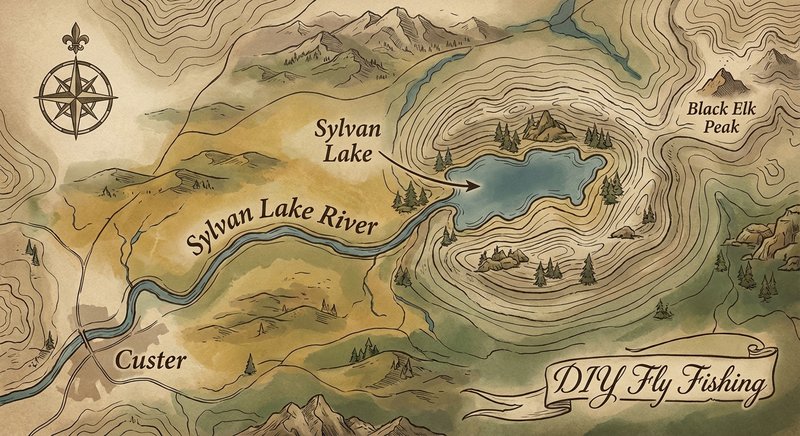
Sylvan Lake
Fly fishing in South Dakota · beginner · Best seasons: spring, summer, fall
Target Species
Rainbow Trout
About This Water
Iconic Custer State Park lake with stocked trout. Beautiful granite formations.
Fishing Recommendations
Sylvan Lake is often referred to as the "Crown Jewel" of Custer State Park. Nestled at an elevation of 6,145 feet and surrounded by massive, ancient granite monoliths and ponderosa pines, it is arguably one of the most photographed lakes in the United States. For the fly angler, it offers a unique stillwater experience where the scenery is as breathtaking as the fishing is rewarding.
🎣 Location Overview
Sylvan Lake is a high-altitude, man-made lake (created by a dam in 1891) covering about 17-20 acres. What makes it special is the geography—enormous granite "needles" rise directly out of the water, creating deep vertical drop-offs, underwater crevices, and shaded "canyons" that trout love. The water is generally crystal clear, though it can develop some aquatic vegetation (weeds) in the shallow bays during the peak of summer. It is a "no-wake" lake, meaning no gas or electric motors are allowed, making it a peaceful haven for float tubers and shore anglers alike.
🐟 Target Species & Behavior
The primary target here is Rainbow Trout.
- Behavior: The South Dakota Game, Fish & Parks stocks this lake regularly. You will find plenty of eager 10–12 inch "stockers," but there are always holdover fish that grow to 16+ inches.
- Holding Zones: These fish are cruisers. They follow the shoreline and the edges of the granite pillars. Because the water is clear, they are wary of overhead shadows. They often hold deep against the cool faces of the submerged rocks during the heat of the day and move into the shallower gravel sections near the dam or the inlet during low light.
- Food Sources: Their diet consists heavily of midges (year-round), scuds (in the weeds), damselfly nymphs, and "terrestrials" (ants and beetles) that fall off the surrounding trees and rocks.
📅 Best Times to Fish
- Spring (Late May – June): This is prime time. As the ice melts and the water warms, trout are exceptionally active in the shallows. The hatches are consistent, and the fish are aggressive after the long winter.
- Summer (July – August): Fishing remains good, but you must adapt. The lake becomes a tourist hub during the day. Early morning (dawn to 9:00 AM) and late evening (7:00 PM to dusk) are the magic windows. The fish head to deeper, cooler water or the shade of the rocks during the midday sun.
- Fall (September – October): My personal favorite. The crowds thin out, the air turns crisp, and the trout undergo a "fall feed" to bulk up for winter. The Brook and Brown trout in the area (though rarer in Sylvan) become more aggressive.
- Optimal Conditions: Overcast days are a gift at Sylvan Lake. The lack of glare makes the fish feel secure, and they will cruise closer to the surface all day long.
🪰 Recommended Flies & Techniques
1. Nymphing (The Consistent Producer)
Because of the midge population, a "midge under an indicator" setup is deadly.
- Patterns: Zebra Midges (size 18-22) in black/silver or red; Pheasant Tails (size 16-18); Gold-Ribbed Hare’s Ears.
- Technique: Use a small, sensitive indicator. Suspend your fly 4–7 feet deep. If there is a slight breeze, let the chop on the water provide the action.
2. Dry Fly Fishing (The Visual Thrill)
When the water is glassy in the evening, the "rise rings" will tell you exactly where to cast.
- Patterns: Parachute Adams (size 16-20); Griffith’s Gnat (for midge clusters); Foam Ants or Beetles in late summer.
- Technique: Use a long, fine leader (9ft 5X or 6X). Cast well ahead of a cruising fish rather than right on top of it.
3. Streamer Stripping (For the Big Ones)
If you want to target the holdover Rainbows, go sub-surface.
- Patterns: Woolly Buggers (size 8-12) in Olive, Black, or Thin Mint; Pine Squirrel Leeches.
- Technique: Use a slow, erratic strip-strip-pause retrieve. Many hits occur on the "drop" near the granite walls.
💡 Pro Tips & Local Knowledge
- The Shadow Factor: The massive granite pillars cast large shadows over the water even in the afternoon. Trout will often congregate in these "shade lines" to stay cool and hidden. Focus your casts on the transition zone between light and shadow.
- Go Mobile: While shore fishing is accessible, the best spots are the rock faces opposite the lodge that are difficult to reach by foot. A float tube, kayak, or paddleboard is a game-changer here. It allows you to fish back toward the rocks, which is where the bigger fish hide.
- The "Back Side" Rocks: Walk the trail around the lake to the far side (northwest). There are several large boulders you can scramble onto that get you away from the swimming beach and into deeper water where the fish are less pressured.
- Stealth Matters: Because the water is so clear, try to wear natural-colored clothing (greens/tans) and avoid "lining" the fish (casting your thick fly line directly over their heads).
⚠️ Important Information
- Permits: You need a valid South Dakota Fishing License. You can buy these online or at most bait shops in nearby Custer or Hill City.
- Park Entry: Sylvan Lake is inside Custer State Park. A temporary or annual Park Entrance License is required for your vehicle.
- Regulations: Standard Black Hills lake regulations apply. Always check the current South Dakota Fishing Handbook for the most up-to-date creel limits, though many fly anglers here practice Catch and Release to maintain the quality of the fishery.
- Prepare for Weather: At 6,000 feet, a sunny day can turn into a thunderstorm in 15 minutes. Always carry a light rain shell.
Sylvan Lake isn't just a fishing trip; it's an aesthetic experience. Take a moment between casts to look up at the Needles—it’s one of the most unique places you’ll ever wet a line. Tight lines!
Bug Hatches & Matching Flies
| Hatch | Type | Peak months | Time of day | Hook sizes | Matching flies |
|---|---|---|---|---|---|
| Callibaetis (Speckled Duns) Callibaetis ferrugineus | mayfly | June, July, August | Morning to Afternoon | #14-16 | Parachute Adams #14-16, Callibaetis Spinner #16, Hares Ear Nymph #14-16 |
| Chironomids (Midges) Chironomidae | midge | April, May, September, October | All Day | #18-24 | Zebra Midge #18-22, Griffith's Gnat #20-22, Ice Midge #20 |
| Damselfly Enallagma | terrestrial | June, July | Mid-day | #10-14 | Marabou Damsel Nymph #12-14, Adult Damsel #12 |
| Scud Gammarus lacusris | terrestrial | May, June, September | All Day | #12-18 | Ray Charles #14-18, Orange Scud #12-16 |
| Cinnamon Caddis Ceraclea | caddis | July, August | Evening | #14-18 | Elk Hair Caddis #14-16, Pupa Sedge #16 |
| Terrestrials (Ants and Beetles) Formicidae / Coleoptera | terrestrial | August, September | Afternoon | #12-18 | Black Foam Ant #16-18, Foam Beetle #12-14 |
| Dragonfly Anisoptera | terrestrial | July, August | Mid-day | #6-10 | Dragonfly Nymph #8-10, Woolly Bugger (Olive) #6-10 |
| Trico Tricorythodes | mayfly | August, September | Early Morning | #20-24 | Trico Spinner #22-24, RS2 (Black) #20-22 |