Teton River
Fly fishing in Montana · Beginner · Best seasons: Summer, Fall
Target Species
Rainbow Trout, Brown Trout
About This Water
Rocky Mountain Front stream with wild rainbow and brown trout. Scenic prairie fishing.
Fishing Recommendations
As an expert guide who has spent years navigating the nuances of Big Sky Country, the Teton River in North-Central Montana is one of my favorite "sleeper" rivers. While the crowds flock to the Madison or the Missouri, the Teton offers a rugged, intimate experience against the stunning backdrop of the Rocky Mountain Front.
Here is your comprehensive guide to fly fishing the Teton River.
🎣 Location Overview
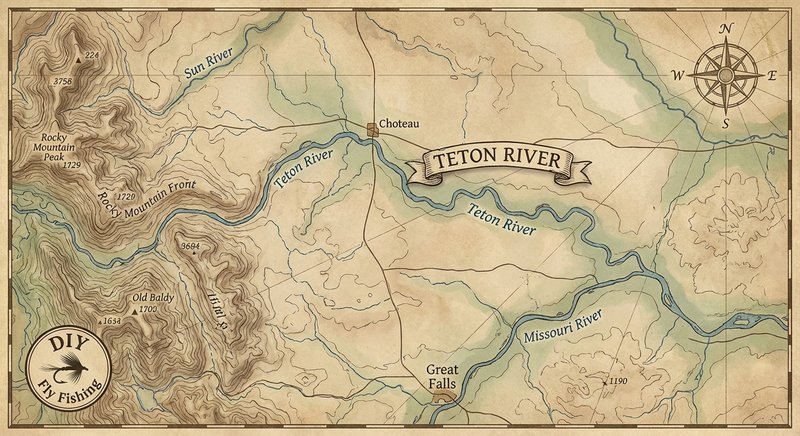
The Teton River is a river of two personalities. It begins its journey in the jagged limestone peaks of the Rocky Mountain Front, carving through deep canyons before spilling out onto the high plains near the town of Choteau.
What makes it special is the seclusion and the scenery. As you move east from the mountains, the river transforms from a classic, bouldery freestone stream into a meandering prairie river with deep undercut banks and silty bottoms. It is technically challenging but immensely rewarding for anglers who prefer "stalking" fish rather than "pounding" water. The backdrop of the "Front"—where the mountains meet the plains—is arguably the most dramatic vista in Montana.
🐟 Target Species & Behavior
While the upper reaches hold Westslope Cutthroat, the middle and lower Teton are the domains of the Rainbow and Brown Trout.
- Rainbow Trout: Found primarily in the faster water, riffles, and at the heads of pools. They are energetic and tend to move into oxygenated water during the heat of the summer.
- Brown Trout: These are the kings of the Teton. They are notoriously predatory and territorial. On this river, they love undercut banks and submerged woody debris. They feed heavily on crayfish, sculpins, and—during the summer—huge terrestrial insects.
- Behavior: Teton fish are opportunistic but wary. Because the water can run very clear in the summer, they have excellent vision. They are "structure-oriented" fish; if there is a downed cottonwood or a deep cut in the bank, there is a trout there.
📅 Best Times to Fish
The Teton is highly dependent on snowpack and irrigation draws.
- Summer (Late June – August): This is the prime window. Once the spring runoff subsides (usually by late June), the "Hopper" fishing begins. July and August offer world-class dry fly action.
- Fall (September – October): This is my personal favorite time. The crowds (which are already small) disappear. As the cottonwoods turn gold, the Brown Trout become aggressive in preparation for their spawn. Lower water levels make the fish easier to locate in deep pockets.
- Time of Day: During mid-summer, the "Trico" hatch occurs at sunrise, and the "Hopper" bite picks up around 11:00 AM as the wind rises. In the Fall, the "bank bite" stays consistent all day.
🪰 Recommended Flies & Techniques
Top Fly Patterns
- Terrestrials: Chubby Chernobyl (Size 8-12 in Gold, Purple, or Tan), Morrish Hopper, and Dave’s Hopper.
- Nymphs: Pat’s Rubber Legs (Tan/Brown), Pheasant Tail (Size 14-18), and Lightning Bugs (Silver or Pink).
- Streamers: Sculpzilla (Olive), Galloup’s Dungeon (Black or White), and the classic Woolly Bugger.
- Dries: Elk Hair Caddis (Size 14-16), Purple Haze, and PMD Sparkle Duns.
Techniques
- The Hopper-Dropper: This is the bread and butter of the Teton. Use a large, buoyant foam hopper as your indicator and hang a weighted nymph (like a Pheasant Tail) 2–3 feet below it.
- Bank Stripping: In the fall, use a sink-tip line and a streamer. Cast as close to the grassy banks as possible—literally within inches—and strip aggressively to trigger an instinctive strike from a big Brown.
- Dead-Drifting Streamers: In deep holes, dead-drifting a bugger under an indicator can often fool the largest, laziest fish in the system.
💡 Pro Tips & Local Knowledge
- Fear the Wind, Use the Wind: The Rocky Mountain Front is famously windy. While it makes casting difficult, the wind knocks grasshoppers into the water. If it’s a gusty day, focus your efforts on the leeward banks where insects are being blown into the river.
- The "Front" Canyon: For Rainbows and a faster pace, hike into the Teton Canyon west of Choteau. For "Trophy" Browns, focus on the slower, meandering water east of Choteau.
- Stealth is Key: On the lower Teton, the banks are often high. If you stand right on the edge, the fish will see your silhouette against the sky and spook. Stay low, and sometimes even fish from a kneeling position.
- Local Secret: Purple works disproportionately well on this river. A Purple Haze or a Purple Chubby Chernobyl often outfishes natural colors.
⚠️ Important Information
Access
The Teton has limited public access compared to other Montana rivers.
- Fishing Access Sites (FAS): Utilize the Eureka Reservoir area or the Priest Butte areas for access points.
- Bridge Rights: In Montana, you can access the river at bridge rights-of-way, but you must stay within the ordinary high-water marks to avoid trespassing on private ranch land. Respect the landowners; the Teton is surrounded by working ranches.
Regulations
- License: A valid Montana Fishing License and Conservation License are required.
- Limits: Check the current FWP (Montana Fish, Wildlife & Parks) Central District regulations, as catch-and-release rules or slot limits can change seasonally.
Special Considerations
- Grizzly Bears: You are in Grizzly country. The Teton River corridor is a major travel route for bears moving from the mountains to the plains. Always carry bear spray and know how to use it.
- Water Levels: This river is heavily used for irrigation. In dry years, the lower sections can become too warm/low in late August (Hoot Owl restrictions). Always check the USGS gauges before heading out.
Bug Hatches & Matching Flies
| Hatch | Type | Peak months | Time of day | Hook sizes | Matching flies |
|---|---|---|---|---|---|
| Midges Chironomidae | midge | March, April, October | All Day | #18-24 | Zebra Midge #18-22, Griffith's Gnat #20-22, Palomino Midge #20-22 |
| Blue Winged Olives (BWO) Baetis | mayfly | April, May, September, October | Late Morning/Afternoon | #16-20 | Parachute Adams #16-20, RS2 #18-20, Pheasant Tail Nymph #16-18 |
| Mother's Day Caddis Brachycentrus occidentalis | caddis | May | Morning/Evening | #14-16 | Elk Hair Caddis #14-16, LaFontaine's Deep Sparkle Pupa #14-16, Peacock Caddis #14-16 |
| Salmonflies Pteronarcys californica | stonefly | June, July | All Day | #4-8 | Chubby Chernobyl #6-10, Pat's Rubber Legs #4-8, Cat Puke #6-8 |
| Pale Morning Duns (PMD) Ephemerella excrucians | mayfly | June, July, August | Late Morning/Early Afternoon | #14-18 | Sparkle Dun #14-18, PMD Cripple #16-18, Frenchie #14-16 |
| Golden Stones Hesperoperla pacifica | stonefly | July | Afternoon/Evening | #8-12 | Goldie #8-10, Golden Stone Nymph #8-12, Yazidi Stone #10-12 |
| Yellow Sallies Isoperla | stonefly | July, August | Late Afternoon/Evening | #14-16 | Yellow Sally Foam #14-16, Little Yellow Sloan #14-16 |
| Tricos Tricorythodes | mayfly | August, September | Early Morning | #20-24 | Trico Spinner #20-24, Sunriver Trico #22-24 |
| Grasshoppers Acrididae | terrestrial | August, September | Late Morning/Afternoon | #8-12 | Morrish Hopper #8-12, Parachute Hopper #10-12, Rainy's Hopper #8-10 |