Tom Miner Creek
Fly fishing in Montana · Intermediate · Best seasons: Summer, Fall
Target Species
Cutthroat Trout
About This Water
Small stream near Yellowstone with wild cutthroat. Remote fishing experience.
Fishing Recommendations
Tom Miner Creek is a hidden gem nestled in the Paradise Valley, just north of Yellowstone National Park. As an expert guide, I consider this one of the most scenic and rewarding small-stream fisheries in the Greater Yellowstone Ecosystem. It offers a classic "Blue Ribbon" small-water experience without the crushing crowds of the nearby Yellowstone River.
🎣 Location Overview
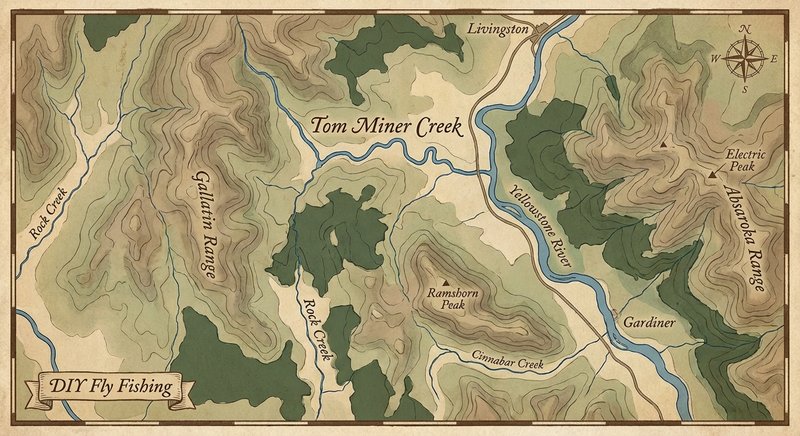
Tom Miner Creek is a high-gradient tributary of the Yellowstone River that flows through a stunning glacial basin flanked by the rugged Gallatin Range.
What makes it special is its wildness. This isn't manicured water; it’s a rugged, boulder-strewn creek that tumbles through lodgepole pine forests and open alpine meadows. The water is gin-clear, cold, and highly oxygenated. Anglers love it because it offers high-mountain solitude and the chance to catch "purist" trout in a setting that feels unchanged for centuries. The creek transitions from tight, technical pocket water in its upper reaches to slightly more open meadow sections as it descends toward the Yellowstone.
🐟 Target Species & Behavior
The star of the show here is the Yellowstone Cutthroat Trout. You may also encounter the occasional Brook Trout in the higher elevations and some Rainbows or "Cutbows" near the confluence with the Yellowstone River.
- Behavior: These fish are opportunistic but can be surprisingly spooky in the clear, shallow runs. Because the growing season is short, they are generally eager to rise to a well-presented dry fly.
- Where they hold: Look for "the bucket" behind large boulders, the soft seams on the edges of fast current, and under overhanging willow banks. In the fall, they will drop into deeper plunge pools to conserve energy.
- Feeding: Their diet consists mainly of stoneflies, mayflies (Caddis and PMDs), and terrestrials (ants, beetles, and grasshoppers) during the summer months.
📅 Best Times to Fish
Optimal Seasons:
- Summer (July – August): This is the prime window. Runoff usually subsides by late June or early July. July brings spectacular dry fly fishing as the water clears and warms slightly.
- Fall (September – Early October): This is the "secret" season. The cottonwoods turn gold, the crowds vanish, and the fish become aggressive as they prepare for winter.
Best Times of Day:
- Summer: 9:00 AM to 4:00 PM. You want the sun on the water to activate insect life and improve visibility for the fish.
- Fall: 11:00 AM to 3:00 PM. Focus on the warmest part of the day when bugs are most active.
Prime Conditions:
Look for stable barometric pressure and clear water. If there’s a heavy rain in the mountains, the creek can "blow out" (turn muddy) quickly due to the steep terrain, but it also clears faster than larger rivers.
🪰 Recommended Flies & Techniques
Top Fly Patterns:
- Dry Flies:
- Royal Wulff or Royal Trude (Sizes 12-16) – The white wings are easy to see in the bubbly pocket water.
- Parachute Adams (Sizes 14-18) – The ultimate searcher pattern.
- Elk Hair Caddis (Sizes 14-16) – Tan or olive.
- Terrestrials (Mid-Summer to Fall):
- Amy’s Ant (Size 12-14) – Great for a "Dry-Dropper" rig.
- Dave’s Hopper (Size 10-12).
- Black Ants and Foam Beetles (Sizes 16-18).
- Nymphs:
- Pheasant Tail (Size 16-18).
- Prince Nymph (Size 14-16).
- Copper John (Red or Gold, Size 16).
Effective Techniques:
- Dry-Dropper Rig: This is the bread and butter of Tom Miner. Use a buoyant dry fly (like a Chubby Chernobyl or a Hopper) and hang a small nymph 18–24 inches below it.
- High-Sticking: Because the current is complex, use a short line and keep as much fly line off the water as possible to avoid drag.
Presentation Tips:
Stealth is everything. Don't wade into the middle of the creek immediately. Fish the "near" water first while standing on the bank. These Cutthroats are sensitive to shadows and vibrations.
💡 Pro Tips & Local Knowledge
- The "Pocket Water" Secret: Many anglers bypass the fast, turbulent sections. Experienced guides know that a 12-inch Cutthroat can hide in a pocket of calm water no larger than a dinner plate behind a rock.
- Think Small on Gear: A 3-weight or 4-weight rod (7.5 to 8.5 feet) is perfect. Anything heavier is overkill and makes it harder to present flies delicately in the tight brush.
- The Upper Basin: If you have the lungs for it, hike further into the Gallatin National Forest sections. The fish may be slightly smaller on average, but they are incredibly vibrant and will hit almost anything that floats.
⚠️ Important Information
Access:
Most fishing occurs on Custer Gallatin National Forest land. Follow Tom Miner Creek Road (West of Hwy 89). There are several public access points and trailheads. Be respectful of private ranch land boundaries near the bottom of the drainage.
Regulations & Permits:
- A valid Montana Fishing License is required.
- Check the current Montana FWP (Fish, Wildlife & Parks) regulations, as specific catch-and-release rules often apply to Yellowstone Cutthroat to protect the species.
- Barbless hooks are highly recommended to ensure the safe release of these native fish.
Special Considerations (Safety):
- Grizzly Bear Country: This is prime Grizzly habitat. Always carry bear spray, know how to use it, and make noise while moving through thick willow sections.
- Weather: Mountain weather changes in minutes. Bring a rain shell even if the sky is blue when you leave the truck.
- Wading: The rocks are slick and the current is pushy. Felt soles or studs are helpful, but a wading staff is even better for the higher-gradient sections.
Bug Hatches & Matching Flies
| Hatch | Type | Peak months | Time of day | Hook sizes | Matching flies |
|---|---|---|---|---|---|
| Salmonfly Pteronarcys californica | stonefly | June, July | All day | #4-8 | Sofa Pillow #6-8, Rogue Stone #4-8, Pats Rubber Legs #4-8 |
| Golden Stonefly Hesperoperla pacifica | stonefly | July | Morning/Afternoon | #8-12 | Chubby Chernobyl #8-12, Golden Stimulator #10-12, Iron Lotus #12-14 |
| Pale Morning Dun (PMD) Ephemerella excrucians | mayfly | July, August | Late Morning/Afternoon | #14-18 | Parachute Adams #14-18, PMD Sparkle Dun #16-18, Pheasant Tail #14-18 |
| Green Drake Drunella doddsii | mayfly | July | Afternoon | #10-12 | Quigley Cripple #10-12, H&L Variant #10-12, Hare's Ear Nymph #10-12 |
| Yellow Sally Isoperla spp. | stonefly | July, August | Afternoon/Evening | #14-16 | Little Yellow Sloan #14-16, Yellow Sally Nymph #14-16 |
| Mother's Day Caddis Brachycentrus occidentalis | caddis | May | Afternoon | #14-16 | Elk Hair Caddis #14-16, Peacock Caddis #14-16, LaFontaine Sparkle Pupa #14-16 |
| Blue Winged Olive (BWO) Baetis spp. | mayfly | April, May, September, October | Afternoon | #18-22 | RS2 #18-22, BWO Parachute #18-22, Baetis Nymph #18-20 |
| Grasshoppers Acrididae family | terrestrial | August, September | Late Morning/Afternoon | #8-12 | Morrish Hopper #8-12, Dave's Hopper #10-12, Parachute Hopper #10-14 |
| Spotted Sedge Hydropsyche spp. | caddis | July, August | Evening | #14-16 | Goddard Caddis #14-16, Iris Caddis #14-16 |