Uncompahgre River
Fly fishing in Colorado · Beginner · Best seasons: Summer, Fall
Target Species
Rainbow Trout, Brown Trout
About This Water
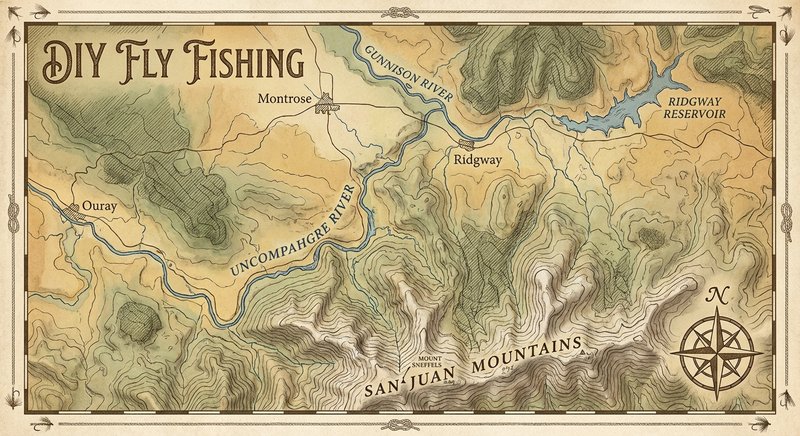
Flows through Ouray and Ridgway. Rainbow and brown trout fishing in spectacular San Juan Mountain scenery.
Fishing Recommendations
The Uncompahgre River, specifically the tailwater section below Ridgway Reservoir known as "Pa-Co-Chu-Puk" (Ute for "Cow Creek"), is one of Colorado’s most productive and technical trout fisheries. While the river continues through Montrose, the tailwater is the crown jewel, offering anglers the chance at trophy-sized fish in a stunning high-desert canyon setting.
As your guide, here is the comprehensive breakdown for fishing the "Unco."
🎣 Location Overview
The Uncompahgre is a tale of two rivers. The upper section above the reservoir is a high-gradient mountain stream, but the Pa-Co-Chu-Puk (Paco) section below the dam is a world-class tailwater.
What makes it special is the nutrient-rich water released from the bottom of Ridgway Reservoir. This creates a stable thermal environment and a massive biomass of aquatic insects and Mysis shrimp. The river here is relatively small and manageable to wade, characterized by deep man-made plunges, long riffles, and glassy tail-outs. It is a technical "chess match" river where stealth and presentation are more important than long casts.
🐟 Target Species & Behavior
- Rainbow Trout: These are the primary residents of the Paco section. Because they are fed a steady diet of Mysis shrimp and midges, they grow exceptionally large (18–24 inches is not uncommon). They tend to hold in the faster oxygenated water at the head of pools or in the deep "buckets."
- Brown Trout: You’ll find more Browns as you move downstream toward Montrose. In the fall, they become highly aggressive and move into the Paco section to spawn. They prefer undercut banks, submerged wood, and the slower "inside" seams of the river.
- Behavior: These fish are highly "educated." They see hundreds of flies a week. They are notorious for "micro-moving" to inspect a fly and rejecting it if the drift isn't perfect or the tippet is too thick.
📅 Best Times to Fish
Optimal Seasons
- Summer (July – August): This is prime time for dry fly action. While the tailwater stays cool, the terrestrial activity (grasshoppers) and Pale Morning Dun (PMD) hatches are at their peak.
- Fall (September – November): My personal favorite. The crowds thin out, the Brown trout are colored up and aggressive, and the Blue Winged Olive (BWO) hatches on cloudy days can be epic.
Best Times of Day
- Summer: Early morning (6:00 AM – 10:00 AM) for nymphing; late evening for Caddis activity.
- Fall: Mid-morning to late afternoon. The water needs to warm up slightly to trigger insect activity.
Prime Conditions
- Flows: Stable flows between 75–150 cfs (cubic feet per second) are ideal for wading.
- Weather: Overcast, drizzly days are best for BWO hatches and keeping the big, wary fish from being "spooked" by shadows.
🪰 Recommended Flies & Techniques
Top Fly Patterns
- Mysis Shrimp: (Size 18-22) Transparent styles like the Craven’s Mysis. Essential right below the dam.
- Midges: (Size 20-24) Zebra Midges (black, red, olive), RS2s, and Rim’s Chironomid.
- Beggars/Scuds: (Size 16-20) Orange or olive scuds work well in the riffles.
- Dry Flies: Parachute Adams (18-22), CDC BWO (20-22), and Hopper patterns in late summer.
- Streamers: Sculpzilla or Thin Mints for the larger Browns in the lower stretches.
Effective Techniques
- Sight Nymphing: In the clear water of Paco, don't just blind cast. Spot a fish, observe its feeding rhythm, and drift your fly directly to its nose.
- The "Dry-Dropper": In the summer riffles, use a high-visibility hopper with a small midge or pheasant tail dropped 18 inches below.
- Light Tackle: You must use 6X or 7X fluorocarbon tippet. These fish are extremely leader-shy.
💡 Pro Tips & Local Knowledge
- The "Paco Crawl": The water is crystal clear. If you stand tall on the bank, the fish will see you and stop feeding. Stay low, move slowly, and try to fish from a kneeling position when possible.
- Avoid the "Fluff": Many anglers use large indicators that splash. Use a small "Pinch-on" foam indicator or a New Zealand wool indicator to minimize surface disturbance.
- The Montrose "Riverway" Secret: If Paco is crowded, head downstream to the Uncompahgre Riverway Trail in the town of Montrose. The fish are slightly smaller on average, but they are far less picky and you will often have the water to yourself.
- Watch the Redds: In October and November, watch for bright, clean gravel patches (redds). These are spawning beds. Do not walk on them or fish for the trout actively sitting on them.
⚠️ Important Information
Access
- Ridgway State Park (Pa-Co-Chu-Puk): Requires a Colorado State Parks pass (daily or annual). There is ample parking and well-maintained trails.
- Public/Private Mix: Much of the river between Ridgway and Montrose is private. Always look for "Public Fishing Access" signs and stay within the high-water marks.
Regulations
- Pa-Co-Chu-Puk Section: Catch and release ONLY. Fishing is restricted to artificial flies and lures only.
- License: A valid Colorado fishing license is required.
Special Considerations
- Waders: The water coming out of the dam is cold (45-50°F) year-round. Even in the heat of summer, you will want breathable waders to stay comfortable for a full day.
- Safety: The rocks in the Uncompahgre are notoriously "greasy" with algae. Felt soles or studs are highly recommended to avoid a swim.
Bug Hatches & Matching Flies
| Hatch | Type | Peak months | Time of day | Hook sizes | Matching flies |
|---|---|---|---|---|---|
| Midges Chironomidae | midge | January, February, March, December | All Day | #18-24 | Zebra Midge #18-22, Griffith's Gnat #20-22, Top Secret Midge #20-24 |
| Blue-Winged Olive Baetis | mayfly | March, April, September, October | Late Morning/Afternoon | #18-22 | RS2 #20-22, JujuBaetis #18-22, Parachute Adams #18-22 |
| Pale Morning Dun Ephemerella excrucians | mayfly | June, July, August | Morning/Early Afternoon | #16-18 | Pheasant Tail #16-18, PMD Sparkle Dun #16-18, Barr's PMD Emerger #16-18 |
| Spotted Sedge Hydropsyche | caddis | June, July, August | Evening | #14-18 | Elk Hair Caddis #14-18, LaFontaine's Deep Sparkle Pupa #14-16, Holy Grail #14-18 |
| Yellow Sally Isoperla | stonefly | June, July | Late Afternoon/Evening | #14-16 | Yellow Sally Stone #14-16, Iron Lotus #16, Little Yellow Sloan #14-16 |
| Trico Tricorythodes | mayfly | August, September | Early Morning | #20-24 | Trico Spinner #22-24, Trico Dun #20-22, Sunken Trico Spinner #22-24 |
| Grasshoppers Acrididae | terrestrial | August, September | Afternoon | #8-12 | Amy's Ant #10-12, Dave's Hopper #8-12, Morrish Hopper #10-12 |
| American Grannom Brachycentrus occidentalis | caddis | April, May | Afternoon | #14-16 | Peacock Caddis #14-16, Caddistrophic Pupa #14-16, CDC Caddis Emerger #14-16 |