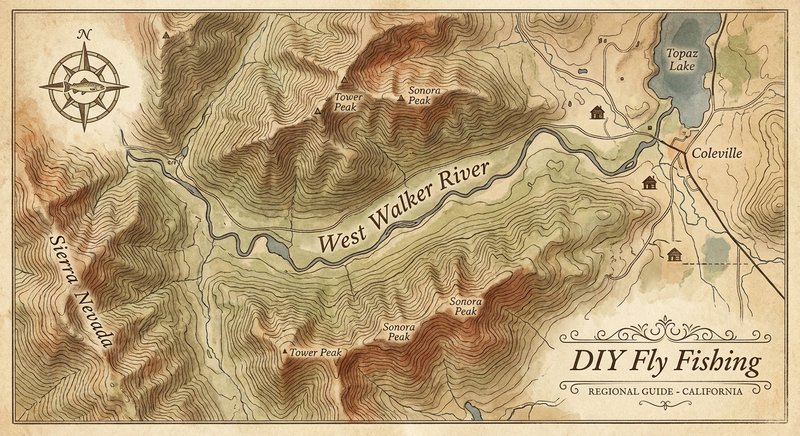
West Walker River
Fly fishing in California · Intermediate · Best seasons: Spring, Summer, Fall
Target Species
Rainbow Trout, Brown Trout
About This Water
Eastern Sierra stream with wild rainbow and brown trout. Beautiful canyon scenery near Bridgeport.
Fishing Recommendations
The West Walker River is one of the Eastern Sierra’s most cherished freestone gems. While its neighbor, the East Walker, is famous for moody tailwater giants, the West Walker offers a classic, high-energy mountain river experience. It is a river of two personalities: the rugged, tumbling pocket water of the Walker Canyon and the serene, meandering oxbows of Leavitt and Pickel Meadows.
Here is your comprehensive guide to fly fishing the West Walker River.
🎣 Location Overview
Located in Mono County near the town of Bridgeport and stretching toward the Nevada border, the West Walker is a "freestone" river, meaning its flow is dictated primarily by snowmelt rather than dam releases.
What makes it special: The scenery is quintessential High Sierra—towering granite peaks, Jeffrey pines, and crystalline water. Anglers love it for its accessibility (much of it parallels Highway 395) and the variety of water types. You can spend the morning technical-nymphing deep plunge pools in the canyon and the afternoon casting hoppers to rising trout in a wide-open alpine meadow.
🐟 Target Species & Behavior
The West Walker is home to Rainbow Trout and Brown Trout, with the occasional Mountain Whitefish.
- Rainbow Trout: These are the river's acrobats. In the canyon sections, they hold in the "heavy" water—right in the bubbles or on the edges of fast seams where oxygen is high. They are opportunistic feeders and will often slash at a well-presented dry fly.
- Brown Trout: The "wild" heart of the river. Browns tend to dominate the meadow sections and the deeper, slower pools of the canyon. They are structure-oriented; look for them under undercut banks in Leavitt Meadow or behind the largest "dead water" boulders. They become particularly aggressive in the fall as they prepare to spawn.
📅 Best Times to Fish
Seasons
- Spring (Late April – June): This is "Runoff Season." The river can be high, turbid, and dangerous. However, the edges can produce well with heavy nymphs if the water isn't chocolate milk.
- Summer (July – August): Prime time. Once the runoff subsides (usually by late June), the river becomes a dry-fly paradise. This is the most consistent time for the "classic" Sierra experience.
- Fall (September – November): My personal favorite. The water drops and clears, the crowds disappear, and the Brown Trout start moving. The fall colors in the canyon are spectacular.
Time of Day
- Summer: Fish early (6 AM – 10 AM) and late (5 PM – Dusk). The midday sun can push fish into deeper, shaded pockets.
- Fall: The "Banker’s Hours" apply. Wait for the sun to warm the water slightly; 10 AM to 4 PM is usually the sweet spot.
🪰 Recommended Flies & Techniques
Top Fly Patterns
- Dry Flies: Stimulators (Orange/Yellow #8-12), Elk Hair Caddis (#14-16), Parachute Adams (#14-18), and Hoppers (Dave’s or Pink Pookie #8-12) in late summer.
- Nymphs: Prince Nymphs (#12-14), Copper Johns (#14-16), Pheasant Tails (#16-18), and Golden Stonefly patterns (#8-10) for the heavy canyon water.
- Streamers: Woolly Buggers (Olive, Black, or White #6-10) and Muddler Minnows.
Techniques
- High-Stick Nymphing: In the canyon, the currents are complex. Use a heavy tungsten nymph and keep as much fly line off the water as possible to avoid drag.
- Hopper-Dropper: This is the "bread and butter" on the West Walker. Use a large, buoyant Stimulator or Foam Hopper as your indicator and hang a Bead-head Pheasant Tail 18–24 inches below it.
- The "Swing": In the deeper runs, swinging a small Woolly Bugger or a soft-hackle wet fly can be deadly, especially during an evening caddis hatch.
💡 Pro Tips & Local Knowledge
- The "Walk-In" Advantage: Because Hwy 395 runs right next to the river, the turnouts get pressured. If you walk just 15 minutes away from the nearest parking spot—especially in the canyon—you will find significantly more (and less spooky) fish.
- Leavitt Meadow Stealth: In the meadow sections, the water is glassy and the banks are "hollow." The fish can feel the vibrations of your footsteps. Stay low, wear drab colors, and cast from a distance.
- Watch the Little Walker: The Little Walker River is a tributary that enters near the Mountain Warfare Training Center. If the main stem is looking a bit high or crowded, the Little Walker offers excellent small-stream fishing for wild trout.
- Pocket Water Logic: In the fast canyon water, don't ignore the tiny "pockets" of calm water behind rocks that are only the size of a dinner plate. A trout will often sit there waiting for food to zip by.
⚠️ Important Information
- Access: Most of the river is on National Forest land (Toiyabe National Forest), making access excellent.
- Regulations: Always check the California Department of Fish and Wildlife (CDFW) regulations before heading out. Certain sections have different bag limits or gear restrictions (e.g., barbless hooks/artificial lures only).
- Wading Safety: The West Walker is deceptively powerful. The rocks are incredibly slick (felt or studded boots are highly recommended). During runoff, do not attempt to wade across the main channel.
- Environment: This is bear and mountain lion country. While rare to see, keep your food secured. Also, watch for rattlesnakes in the lower, warmer sections of the canyon during mid-summer.
Guide’s Final Thought: The West Walker is a "work for it" river. If you are willing to rock-hop in the canyon or trek through the meadows, it will reward you with some of the most beautiful wild trout in California. Tight lines!
Bug Hatches & Matching Flies
| Hatch | Type | Peak months | Time of day | Hook sizes | Matching flies |
|---|---|---|---|---|---|
| Blue-Winged Olive Baetis | mayfly | March, April, October, November | Late Morning/Afternoon | #18-22 | Parachute Adams #18-22, RS2 #20-22, Pheasant Tail Nymph #18-20 |
| Golden Stonefly Calineuria californica | stonefly | June, July | Morning/Evening | #8-12 | Rogue River Stone #8-10, Pats Rubber Legs #8-12, Golden Stimulator #10-12 |
| Pale Morning Dun Ephemerella excrucians | mayfly | June, July, August | Late Morning/Afternoon | #16-18 | PMD Sparkle Dun #16-18, Split Case PMD #16-18, Quigley Cripple #16-18 |
| Spotted Sedge Hydropsyche | caddis | July, August, September | Evening | #14-18 | Elk Hair Caddis #14-16, LaFontaine's Deep Sparkle Pupa #14-16, Hydropsyche Larva #14-16 |
| Yellow Sally Isoperla | stonefly | July, August | Afternoon/Evening | #14-16 | Yellow Sally Stimulator #14-16, Iron Sally #14-16 |
| Midges Chironomidae | midge | January, February, March, December | All Day | #18-24 | Zebra Midge #18-22, Griffith's Gnat #20-24, Top Secret Midge #20-22 |
| Grasshoppers Orthoptera | terrestrial | August, September | Late Morning/Afternoon | #10-14 | Hopper Juan #10-12, Parachute Hopper #12-14, Dave's Hopper #10-14 |
| Little Black Stonefly Capniidae | stonefly | February, March, April | Afternoon | #16-18 | Black Stimulator #16-18, Prince Nymph #14-18 |