White River
Fly fishing in Colorado · Intermediate · Best seasons: Summer, Fall
Target Species
Rainbow Trout, Brown Trout
About This Water
Remote northwestern Colorado river with wild rainbow and brown trout. Less fishing pressure than Front Range waters.
Fishing Recommendations
Welcome to one of the Western Slope’s best-kept secrets. As a guide, I often tell folks that while the Fryingpan and the Roaring Fork get all the press, the White River offers the kind of solitude and "fishiness" that reminds you why you started fly fishing in the first place.
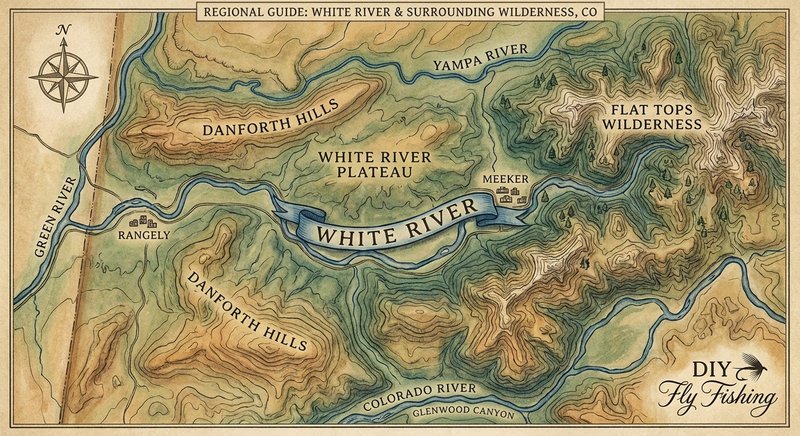
Flowing out of the Flat Tops Wilderness through the towns of Meeker and Rangely, the White is a quintessential freestone river that transitions from a high-alpine stream into a lush, meandering valley river.
🎣 Location Overview
The White River is a hidden gem of Northwest Colorado. What makes it special is its character duality: the North and South Forks begin in the Flat Tops Wilderness, offering rugged, high-gradient pocket water. Once they merge near Buford, the main stem flows through a wide, scenic valley.
The water is remarkably cold and nutrient-rich, supporting massive insect populations. Unlike the "tailrace" crowds of the Front Range, the White offers a more tranquil experience. The river is characterized by deep undercut banks, long gravel glides, and heavy riffles. It feels wild, slightly untamed, and the fish are notoriously strong for their size.
🐟 Target Species & Behavior
- Rainbow Trout: These are the primary residents in the swifter water. They hold in the "heavy" water—the heads of pools and the bubbly seams of riffles. They are acrobatic and prone to long runs.
- Brown Trout: The "stars" of the White River. These fish love the structure. Look for them tucked tight against the willow-lined undercut banks and in the slower, deeper tailouts during the low light of evening.
- Mountain Whitefish: You will find plenty of these. They are native and a sign of a healthy river. Don't be disappointed if you hook a "Whitey"—they fight hard and take the same nymphs as the trout.
Feeding Behavior: In summer, they are opportunistic surface feeders (Caddis and Terrestrials). In fall, they shift their focus to protein-rich meals like small fish (streamers) and Blue Winged Olives.
📅 Best Times to Fish
Summer (Late June – August)
- Conditions: Once the runoff subsides (usually by late June), the river becomes a dry-fly paradise.
- Time of Day: Early morning for nymphing; mid-day to afternoon for terrestrials; evening for frantic caddis hatches.
Fall (September – November)
- Conditions: My personal favorite time. The cottonwoods turn gold, the crowds vanish, and the Brown Trout become aggressive as they prepare for the spawn.
- Time of Day: 10:00 AM to 4:00 PM. The warmer window of the day triggers the Blue Winged Olive (BWO) hatches.
🪰 Recommended Flies & Techniques
Dry Flies
- Summer: Chubby Chernoby (Size 10-14) in gold or royal blue. Elk Hair Caddis (Size 14-16). Put a "Hopper-Dropper" rig on—the White is legendary for grasshopper fishing in August.
- Fall: Parachute Adams (Size 18-22) and RS2s for the BWO hatches.
Nymphs
- Year-round: Pat’s Rubber Legs (Coffee/Black) is a staple here to mimic the large Stoneflies.
- Droppers: Prince Nymphs, Flashback Pheasant Tails (Size 16-18), and Zebra Midges (Red or Black).
Streamers
- Fall Special: This is big-fish time. Swing or strip a Gold or Olive Sculpzilla or a Black Sex Gallon near the undercut banks. Brown trout in the White River love a big meal in October.
Presentation Tip
The White River can be crystal clear in the fall. Use 5X fluorocarbon tippet for nymphs and 5X nylon for dries. A downstream "reach cast" is essential here to show the fly to the fish before the line.
💡 Pro Tips & Local Knowledge
- The "Meeker" Secret: Most people fish the public stretches near Buford. However, the public water right in the town of Meeker (the Meeker City Park) holds surprisingly large fish. Don't overlook the "town water."
- The Undercut Rule: If you aren't putting your fly within 3 inches of the willow branches on the banks, you're missing 60% of the fish. These trout live under the banks, not just in the middle of the river.
- The "North Fork" Hike: If you want a true wilderness experience, head to the North Fork trailhead. It’s a bit of a hike, but the Cutthroat and Rainbows there haven't seen a fly in weeks.
⚠️ Important Information
- Access: Much of the White River flows through private ranch land. Respect "No Trespassing" signs. Use the CPW (Colorado Parks and Wildlife) "State Wildlife Area" (SWA) maps to find public access points like the Oak Ridge SWA or the Sleepy Cat access.
- Regulations: Regulations can change by section. Many areas are Catch and Release only or have "Artificial Fly and Lure" restrictions. Always check the current Colorado Fishing Brochure before casting.
- Gear: A 9-foot 5-weight rod is the perfect all-around tool. If you plan to hunt the big Browns in the fall with streamers, bring a 6-weight with a sink-tip line.
- Wildlife: This is high-country Colorado. Keep an eye out for moose and bears, especially on the North and South Forks. Give moose a wide berth; they are far more dangerous than the bears.
Guide’s Final Word: The White River isn't about counting fish; it's about the quality of the environment. Slow down, watch the banks, and enjoy the silence. Tight lines!
Bug Hatches & Matching Flies
| Hatch | Type | Peak months | Time of day | Hook sizes | Matching flies |
|---|---|---|---|---|---|
| Salmonfly Pteronarcys californica | stonefly | June, July | All Day | #4-8 | Rogue River Stone #4-6, Pats Rubber Legs #6-8, Chubby Chernobyl (Orange) #6-8 |
| Blue Winged Olive Baetis spp. | mayfly | April, May, September, October | Late Morning/Afternoon | #18-22 | RS2 #18-22, Parachute Adams #18-22, Pheasant Tail #18-20 |
| Pale Morning Dun Ephemerella excrucians | mayfly | July, August | Morning/Early Afternoon | #14-18 | PMD Sparkle Dun #16-18, Military Mayfly #16-18, Barr's PMD Emerger #16-18 |
| Golden Stonefly Hesperoperla pacifica | stonefly | June, July | All Day/Evening | #8-12 | Golden Chubby Chernobyl #8-12, 20 Incher Stone #8-12, Kaufmann's Stone #8-10 |
| Green Sedge (Grannom) Brachycentrus spp. | caddis | May, June | Afternoon/Evening | #14-16 | LaFontaine's Deep Sparkle Pupa #14-16, Elk Hair Caddis #14-16, Peacock Caddis #16 |
| Yellow Sally Isoperla spp. | stonefly | July, August | Late Afternoon/Evening | #14-16 | Yellow Sally Foam #14-16, Iron Sally #14-16 |
| Spotted Sedge Hydropsyche spp. | caddis | July, August, September | Evening | #14-18 | Puterbaugh's Foam Caddis #16-18, Soft Hackle Hare's Ear #14-18, Graphic Caddis #16-18 |
| Grasshoppers Orthoptera | terrestrial | August, September | Late Morning/Afternoon | #8-14 | Amy's Ant #10-14, Morrish Hopper #8-12, Parachute Hopper #10-14 |
| Midges Chironomidae | midge | January, February, March, December | Mid-day | #18-24 | Zebra Midge #18-22, Griffith's Gnat #20-24, Top Secret Midge #20-22 |