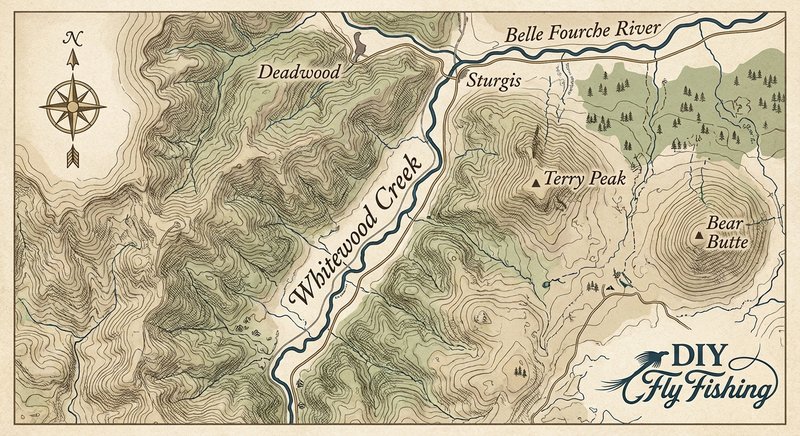
Whitewood Creek
Fly fishing in South Dakota · intermediate · Best seasons: spring, summer, fall
Target Species
Brown Trout, Rainbow Trout
About This Water
Black Hills stream near Deadwood. Wild brown trout in historic mining district.
Fishing Recommendations
Whitewood Creek is one of the Black Hills’ greatest comeback stories. Once devastated by historical mining operations in the Lead and Deadwood areas, this creek has undergone a miraculous recovery over the last few decades. Today, it stands as a premier—yet often overlooked—wild trout fishery that offers a more "rugged" experience compared to its famous neighbors, Spearfish and Rapid Creeks.
As your guide, here is the deep-dive intel you need to fish Whitewood Creek effectively.
🎣 Location Overview
Whitewood Creek flows through the northern Black Hills of South Dakota. It begins near the towns of Lead and Deadwood and carves a dramatic canyon before spilling out toward the town of Whitewood and eventually joining the Belle Fourche River.
What makes this water special is its resilience and character. It is a classic small-to-mid-sized freestone stream. You’ll find a mix of tight, brushy pocket water, deep limestone-rimmed pools, and high-gradient riffles. Because it lacks the "Blue Ribbon" fame of Spearfish Creek, you will often have long stretches of water entirely to yourself. The scenery in the canyon section is stunning, featuring dark timber, sheer rock faces, and a true sense of Black Hills solitude.
🐟 Target Species & Behavior
The creek is dominated by Wild Brown Trout, with a smaller population of Rainbow Trout (mostly found in the upper reaches or near Conata Park).
- Brown Trout: These are the primary residents. They are notoriously "spooky" due to the clarity of the water. They hold tight to undercut banks, submerged logs, and the "bubbles" at the head of deep pools. In Whitewood, the Browns are aggressive opportunists; they don't see as many flies as fish in other streams, so if you don't spook them, they will usually eat.
- Rainbow Trout: Found more frequently in the faster, highly oxygenated water. They tend to be less selective than the Browns but will move into the slower tailouts during a heavy hatch.
📅 Best Times to Fish
Whitewood Creek is a three-season fishery, though dedicated locals will fish it year-round if the ice allows.
- Spring (Late March – May): This is the window for the Blue Winged Olive (BWO) hatches. As the water warms, the fish become very active. Watch the weather; a cloudy, drizzly day in April can trigger some of the best dry fly fishing of the year.
- Summer (June – August): This is Terrestrial Season. The creek is surrounded by lush vegetation and hayfields. This is the time for hoppers, ants, and beetles. Even in the heat of July, the canyon sections stay cool enough to keep fish active throughout the day.
- Fall (September – November): The Prime Window. The Brown Trout prepare to spawn and become highly aggressive. The fall colors in the canyon are spectacular, and the lower water levels make the fish easier to locate in the deep holes.
- Best Time of Day: During summer, fish early morning or late evening. In spring and fall, the "banker’s hours" (10:00 AM – 4:00 PM) are best as the water needs time to warm up.
🪰 Recommended Flies & Techniques
Top Fly Patterns
- Nymphs:
- Tactical: Perdigons (size 14-18) in olive or jig-head Pheasant Tails.
- Attractors: Prince Nymphs and Rainbow Warriors.
- Local Favorite: The Black Hills Scud (orange or olive, size 14-16) is a staple here.
- Dry Flies:
- Matches: Parachute Adams (16-20), Elk Hair Caddis (14-16).
- Terrestrials: Fat Albert (tan/pink), Dave’s Hopper, and Cinnamon Ants.
- Streamers:
- Small Wooly Buggers (Olive or Black) or a Thin Mint. Keep them small (size 8-12) to match the creek's scale.
Effective Techniques
- The "Hopper-Dropper": This is the bread and butter of Whitewood Creek. Use a high-visibility foam dry fly and hang a weighted nymph (like a Zebra Midge or Perdigon) 18–24 inches below it.
- European Nymphing: Because the creek has many short, deep pockets, a tight-line/Euro setup is incredibly effective for getting flies down quickly without a bulky indicator spooking the fish.
- Stealth Presentation: This is a small creek. Long casts are rarely needed, but a quiet approach is mandatory. Stay low, wear drab clothing, and avoid wading in the water whenever possible.
💡 Pro Tips & Local Knowledge
- Focus on the Canyon: The stretch between Deadwood and the town of Whitewood (accessible via various pull-offs along Highway 14A and backroads) offers the best habitat. The water is cooler and the fish are wilder.
- Fish the Wood: Whitewood Creek has a lot of fallen timber. While it’s a nightmare for losing flies, the biggest Browns live under those logs. If you aren't casting into the "scary" spots, you're missing the big fish.
- The "Gray Silt" Factor: You may notice gray-colored sediment in certain banks. This is a remnant of the old mining tailings. Don't let it discourage you; the water quality itself is excellent, and the insects are thriving.
- Rod Choice: A 7'6" to 9' rod in a 3-weight or 4-weight is perfect. Anything heavier is overkill and will make delicate presentations difficult.
⚠️ Important Information
- Access: Much of the creek runs through private land, especially as it nears the town of Whitewood. Always look for US Forest Service markers or GFP Public Access signs. Use an app like OnX Maps to ensure you are on public ground.
- Regulations: A valid South Dakota fishing license is required. Most of Whitewood Creek falls under general Black Hills trout regulations, but always check the current SD Game, Fish & Parks handbook for any specific creel limits or tackle restrictions.
- Safety:
- Rattlesnakes: As you move lower toward the town of Whitewood, be mindful of Prairie Rattlesnakes, especially in the summer.
- Poison Ivy: It is thick along the banks in the canyon. Wear long pants.
- Slick Rocks: The rocks here can be "greasier" than other creeks. Felt soles or studs are highly recommended.
Guide’s Final Word: Whitewood Creek rewards the angler who is willing to hike and hunt. It’s not a "numbers" factory like the tailwaters of the Bighorn, but for the fly fisher who loves wild fish in a rugged setting, it is a hidden gem of the Black Hills.
Bug Hatches & Matching Flies
| Hatch | Type | Peak months | Time of day | Hook sizes | Matching flies |
|---|---|---|---|---|---|
| Blue-Winged Olive Baetis | mayfly | March, April, September, October | Late Morning/Afternoon | #18-22 | Parachute Adams #18-22, RS2 #20-22, Pheasant Tail #18-20 |
| Pale Morning Dun Ephemerella excrucians | mayfly | June, July | Morning/Early Afternoon | #16-18 | PMD Sparkle Dun #16-18, Flashback Pheasant Tail #16-18, Quill Gordon #16 |
| Grannom Caddis Brachycentrus | caddis | April, May | Late Afternoon/Evening | #14-16 | Elk Hair Caddis #14-16, Peacock Caddis Larva #14-16, Soft Hackle Hare's Ear #14-16 |
| Trico Tricorythodes | mayfly | July, August, September | Early Morning | #20-24 | Trico Spinner #20-24, Sunken Trico Spinner #22, Griffith's Gnat #20-22 |
| Little Yellow Sally Isoperla | stonefly | June, July | Evening | #14-16 | Yellow Sally Dry #14-16, Little Yellow Stone Nymph #14-16, Stimulator #14-16 |
| Midges Chironomidae | midge | January, February, March, December | Anytime | #18-24 | Zebra Midge #18-22, Morgan's Midge #20-22, Juju Midge #20-22 |
| Terrestrials Various | terrestrial | July, August, September | Afternoon | #10-16 | Dave's Hopper #10-12, Black Foam Ant #14-18, Cinnamon Ant #16-18 |
| Spotted Sedge Hydropsyche | caddis | June, July, August | Evening | #14-18 | Godzilla Caddis #14-16, LaFontaine's Deep Sparkle Pupa #14-18, Hydropsyche Larva #14-16 |