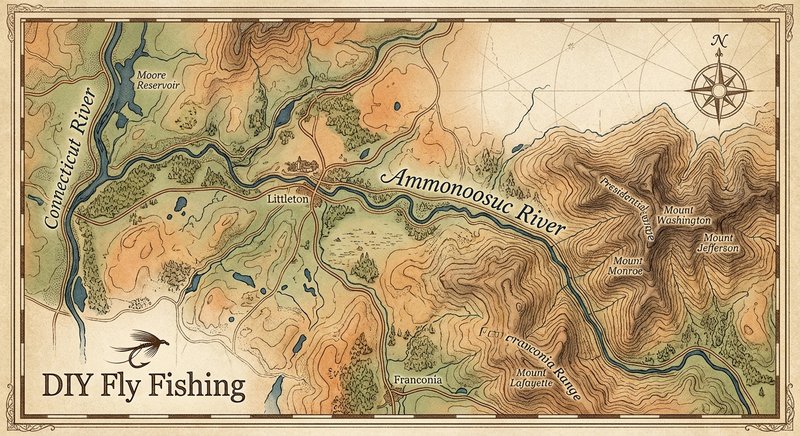
Ammonoosuc River
Fly fishing in New Hampshire · Beginner · Best seasons: Spring, Summer, Fall
Target Species
Brook Trout, Rainbow Trout
About This Water
Northern NH stream with wild brook trout. Flows from Mount Washington.
Fishing Recommendations
The Ammonoosuc River, or "The Ammo" as locals call it, is one of New Hampshire’s most iconic freestone rivers. Rising from the slopes of Mount Washington and flowing westward to the Connecticut River, it offers a diverse range of water—from tumbling high-gradient pocket water to wide, classic trout runs.
Here is your comprehensive guide to fly fishing the Ammonoosuc.
🎣 Location Overview
The Ammonoosuc is the quintessential White Mountain river. Its name is derived from the Abenaki word for "narrow fishing place," which perfectly describes its upper reaches. The river changes character significantly as it descends:
- The Upper River: Above Twin Mountain, it is a high-gradient, boulder-choked stream with cold, crystalline water. This is classic "pocket water" territory.
- The Middle/Lower River: From Bethlehem through Littleton and Bath, the river widens, the gradient mellows, and deep pools and long riffles become more common.
What makes the Ammo special is its accessibility. Following Route 302 for much of its length, it offers countless pull-offs and public access points while still maintaining a rugged, wilderness feel.
🐟 Target Species & Behavior
The Ammonoosuc is primarily a Brook and Rainbow trout fishery, though you will encounter the occasional Brown Trout in the lower reaches.
- Brook Trout: In the headwaters (above Fabyan’s), you’ll find wild, native Brookies. They are colorful, aggressive, and opportunistic. As you move downstream, the state stocks larger "catchable" Brookies. They tend to hold in the softest water, often tucked right against the bank or in the "cushion" in front of large boulders.
- Rainbow Trout: These are mostly stocked fish that thrive in the highly oxygenated riffles and faster runs of the middle river. They are notorious for sitting in the "bubble line" and will often move several feet to smash a fly.
- Behavior: Because this is a nutrient-poor freestone system, the fish are generally not "picky" about exact imitations, but they are very sensitive to a poor drift and overhead shadows.
📅 Best Times to Fish
Spring (Late May – June)
This is the prime window. Once the snowmelt (freshet) subsides and water temperatures hit the 50°F mark, the river comes alive.
- Peak: Early June.
- Hatch: Look for Hendricksons, Blue Quills, and the beginning of the Caddis hatches.
Summer (July – August)
The lower river can get warm in mid-summer.
- Strategy: Focus on the upper reaches (Twin Mountain and higher) where the water stays cool.
- Time of Day: Fish early mornings or the last two hours of light. This is peak "Terrestrial" season.
Fall (September – October)
The most beautiful time to be on the water. Brook trout are in their vibrant spawning colors.
- Strategy: Look for Blue Winged Olives (BWOs) on drizzly, overcast days.
- Peak: Late September until the season closes.
🪰 Recommended Flies & Techniques
Top Fly Patterns
- Dries: Parachute Adams (#12–18), Elk Hair Caddis (Olive or Tan, #14–16), Stimulators (Orange or Yellow, #10–14), and Royal Wulffs.
- Nymphs: Bead-head Pheasant Tails (#14–18), Prince Nymphs (#12–16), and Pat’s Rubber Legs (Stonefly imitation) for high water.
- Streamers: Woolly Buggers (Olive, Black, or White), and the classic Black Ghost (a New England staple).
- Terrestrials: Foam Ants and Beetles (#14–16) are deadly in August.
Effective Techniques
- Dry-Dropper: This is the "Ammo Standard." Use a high-visibility dry (like a Stimulator) with a weighted nymph (like a Hare's Ear) 18–24 inches below it. It allows you to cover two parts of the water column in choppy pockets.
- Tight-Line Nymphing: Because the river is so rocky, traditional indicator nymphing can be frustrating with constant tangles. Using a "Euro" style or high-sticking technique keeps your line off the complex currents and puts the fly right in the trout's face.
- Stealthy Approach: The water is exceptionally clear. Wade slowly and cast upstream to avoid spooking fish.
💡 Pro Tips & Local Knowledge
- The "Shadow" Rule: On the Ammonoosuc, if your shadow falls across a pool, the fishing is over for 20 minutes. Always fish with the sun in your face when possible.
- The "Upper Ammo" Secret: For a true wilderness experience, take the Base Station Road toward the Cog Railway. The small pockets here hold beautiful wild Brookies that will rise to almost any well-presented dry fly.
- Check the Gauges: The Ammo rises and falls quickly with rain. Check the USGS gauge at Bethlehem. If it’s spiking, the water will be turbid; if it’s dropping after a rain, the fishing is usually world-class.
- Wading Safety: The rocks in the Ammonoosuc are notoriously "greasy." Studded wading boots are highly recommended. Felt soles are good, but studs are better for the granite boulders.
⚠️ Important Information
- Regulations: New Hampshire fishing licenses are required. Most of the Ammonoosuc follows "General Law" (open April to October), but always check the NH Fish & Game Rulebook for specific gear restrictions or bag limits near the dams.
- Catch and Release: While many sections allow harvest, practicing catch and release (especially on wild Brook Trout) helps maintain this fragile mountain ecosystem.
- Wildlife: This is moose and bear country. Keep your eyes peeled, especially if fishing early or late in the day.
- Public Access: Respect private property signs. There is so much public water along Route 302 that there is never a need to trespass. Look for the "Fishing Access" signs maintained by the state.
Tight lines! The Ammo is a rewarding river that demands good footwork and accurate casts, but it pays off with some of the most beautiful trout in New England.
Bug Hatches & Matching Flies
| Hatch | Type | Peak months | Time of day | Hook sizes | Matching flies |
|---|---|---|---|---|---|
| Hendrickson Ephemerella subvaria | mayfly | May | Afternoon | #12-14 | Red Quill #12-14, Hendrickson Nymph #12-14, Pheasant Tail #14 |
| Blue-Winged Olive Baetis | mayfly | April, May, September, October | Afternoon | #18-22 | BWO Sparkle Dun #18-20, RS2 #20-22, Olive Klinkhammer #18 |
| March Brown Maccaffertium vicarium | mayfly | May, June | Afternoon | #10-12 | March Brown Dry #10-12, Hare's Ear Nymph #10-12, March Brown Wet #12 |
| Grannom Caddis Brachycentrus | caddis | May | Morning/Evening | #14-16 | Elk Hair Caddis (Green body) #14-16, LaFontaine's Deep Sparkle Pupa #14-16, Pupa-X #16 |
| Light Cahill Stenacron / Stenonema | mayfly | June, July | Evening | #12-14 | Light Cahill #12-14, Gold Ribbed Hare's Ear #14, Cream Usual #14 |
| Yellow Sally Isoperla | stonefly | June, July | Afternoon/Evening | #14-16 | Yellow Sally Dry #14-16, Little Yellow Stone Nymph #16, Stimulator (Yellow) #14-16 |
| Slate Drake Isonychia bicolor | mayfly | July, August, September | Evening | #10-12 | Isonychia Parachute #10-12, Prince Nymph #10-12, Zug Bug #12 |
| Eastern Pale Evening Dun Ephemerella invaria | mayfly | June | Evening | #14-16 | Sulphur Parachute #14-16, Sulphur Emerger #16, Pheasant Tail (Flashback) #16 |
| Common Terrestrials Formicidae / Coleoptera | terrestrial | July, August, September | All Day | #12-18 | Black Foam Ant #14-18, Beefus Beetle #14-16, Cricket (Foam) #12 |