Baker River
Fly fishing in New Hampshire · Beginner · Best seasons: Spring, Summer, Fall
Target Species
Brook Trout, Brown Trout
About This Water
Grafton County stream with trout. Scenic covered bridge region.
Fishing Recommendations
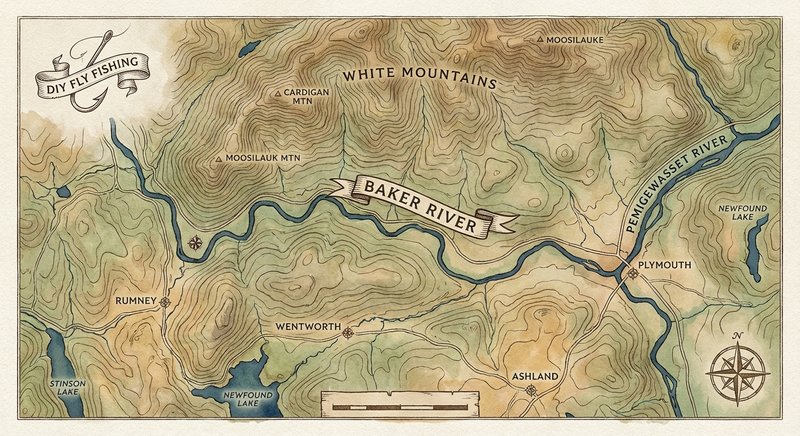
The Baker River is one of New Hampshire’s most beloved "freestone" gems. Flowing from the slopes of Mount Moosilauke down through the towns of Warren, Wentworth, and Rumney before joining the Pemigewasset River in Plymouth, it offers a quintessential New England fly fishing experience.
As your guide, here is the comprehensive breakdown for fishing the Baker River.
🎣 Location Overview
The Baker River is a classic freestone stream, meaning its flow and temperature are dictated by snowmelt, rainfall, and mountain runoff. It is a river of two characters:
- The Upper Baker (Warren to Wentworth): Small, tumbling, and rocky. This is classic "pocket water" territory where you’ll find smaller pools and quick riffles.
- The Lower Baker (Rumney to Plymouth): The river widens and slows down, featuring deep, slow-moving pools, undercut banks, and sandy bottoms.
What makes the Baker special is its accessibility and the stunning White Mountain scenery. It is heavily stocked by NH Fish & Game, but it also holds a resilient population of wild fish in its colder tributaries and headwaters.
🐟 Target Species & Behavior
Brook Trout
- Behavior: The "State Fish" of NH is the star here. Stocked brookies are found throughout the main stem. They are generally opportunistic and aggressive, especially in the spring.
- Holding Water: Look for "pillows" in front of boulders, the soft water behind rocks, and the edges of fast current.
- Wild Fish: If you seek wild brookies, head to the smaller feeder streams or the very highest reaches in Warren.
Brown Trout
- Behavior: Browns are the "smart" residents of the Baker. They tend to hold over better than brookies and can grow to impressive sizes in the deeper holes of the lower river. They are more nocturnal and cautious.
- Holding Water: Target deep undercut banks, submerged logs, and the dark "guts" of the deepest pools. During a hatch, they will move to the tail-outs of pools to sip emergers.
📅 Best Times to Fish
Spring (Late April – June)
- The Window: This is the prime season. Once the spring runoff (the "freshet") subsides in mid-May, the fishing is world-class.
- Conditions: Water is cool and oxygenated. This coincides with the major Hendrickson and Caddis hatches.
Summer (July – August)
- The Window: Early morning (6:00 AM – 10:00 AM) and "the magic hour" at dusk.
- Caution: The Baker can get dangerously warm for trout in mid-summer. If the water temperature exceeds 68°F, stop fishing to protect the trout. During heatwaves, focus on the mouths of cold-water tributaries.
Fall (September – October 15th)
- The Window: As air temperatures drop, the river comes alive again.
- Conditions: Brook trout put on their brilliant spawning colors and become very aggressive. The foliage makes this the most scenic time to be on the water.
🪰 Recommended Flies & Techniques
Top Fly Patterns
- Dry Flies:
- Adams (Parachute and Traditional): Sizes 12–16. The best general imitation for many NH mayflies.
- Elk Hair Caddis: Sizes 14–18 (Tan or Olive). The Baker has massive caddis populations.
- Stimulators: Sizes 8–12 (Orange or Yellow). Great for the "pocket water" of the upper river.
- Nymphs:
- Pheasant Tail: Sizes 14–18. Imitates almost every mayfly nymph in the river.
- Gold-Ribbed Hare’s Ear: Sizes 12–16. A must-have for the "buggy" water near Rumney.
- Prince Nymph: Sizes 12–14. Great for the faster, oxygenated riffles.
- Streamers:
- Woolly Bugger: (Olive or Black) Sizes 6–10. The gold standard for the Baker.
- Muddler Minnow: Sizes 8–12. Excellent for imitating sculpins or grasshoppers when skipped across the surface.
Techniques
- Short-Line Nymphing: In the upper rocky sections, keep as much fly line off the water as possible to avoid drag in the complex currents.
- The "Swing": In the lower river, swinging a small streamer or a wet fly (like a Partridge & Orange) through the tail-outs of pools is deadly for browns.
- Dry-Dropper: Use a high-visibility Stimulator with a small Pheasant Tail nymph tied 18 inches below it. This covers two water columns in the riffles.
💡 Pro Tips & Local Knowledge
- Follow Route 25: The highway follows the river for miles. There are numerous informal pull-offs between Warren and Rumney. If you see a "Fishing Access" sign, use it, but be respectful of private property boundaries.
- The "Rumney Stretch": The area near the Rumney climbing rocks and the bridge in the center of town holds some of the deepest holes. This is "big brown" territory.
- The Mother's Day Caddis: Usually occurring in mid-to-late May, the Baker can see a massive blizzard hatch of Grannom Caddis. If you catch this, the fishing is frantic and unforgettable.
- Stealth Matters: Because the Baker is a freestone and can run very clear, approach pools from downstream. If you can see the fish, they have likely already seen you.
⚠️ Important Information
- Licenses: A valid New Hampshire Fishing License is required for everyone 16 and older. You can buy them online via the NH Fish & Game website.
- Regulations: The Baker River is generally "Open Water" under General Law, but always check the current NH Freshwater Fishing Digest. Some tributaries may have different rules.
- Wading Safety: The Baker has many slippery "river snot" rocks and round cobbles. Studded felt or rubber boots and a wading staff are highly recommended, especially in the swifter sections near Wentworth.
- Conservation: Practice Catch and Release whenever possible, especially for wild fish. Use barbless hooks to ensure a quick and healthy release.
Tight lines, and enjoy the beauty of the Baker!
Bug Hatches & Matching Flies
| Hatch | Type | Peak months | Time of day | Hook sizes | Matching flies |
|---|---|---|---|---|---|
| Blue Winged Olive Baetis | mayfly | April, May, September, October | Afternoon | #18-22 | RS2 #18-22, BWO Parachute #18-20, Pheasant Tail #18-22 |
| Hendrickson Ephemerella subvaria | mayfly | May | Afternoon | #12-14 | Red Quill #12-14, Hendrickson Emerger #12-14, Gold Ribbed Hare's Ear #12-14 |
| Grannom Caddis Brachycentrus | caddis | April, May | Morning/Afternoon | #14-16 | Peacock Caddis #14-16, Deep Sparkle Pupa #14-16, Elk Hair Caddis (Olive/Dark) #14-16 |
| March Brown Maccaffertium vicarium | mayfly | May, June | Afternoon | #10-12 | March Brown Dry #10-12, March Brown Nymph #10-14, Spundun March Brown #10-12 |
| Eastern Green Drake Ephemera guttulata | mayfly | June | Evening | #8-10 | Green Drake Paradox #8-10, Coffin Fly #8-10, Grey Fox Variant #10-12 |
| Golden Stonefly Acroneuria | stonefly | June, July | Morning/Evening | #6-12 | Kaufmann's Stone #6-10, Stimulator (Yellow) #8-12, Pats Rubber Legs #8-12 |
| Tan Caddis Hydropsyche | caddis | June, July, August | Evening | #14-18 | Elk Hair Caddis (Tan) #14-18, LaFontaine's Emergent Pupa #14-16, Soft Hackle Hare's Ear #14-18 |
| Slate Drake Isonychia bicolor | mayfly | July, August, September | Afternoon/Evening | #10-14 | Isonychia Parachute #12-14, Prince Nymph #10-14, Zug Bug #10-14 |
| Light Cahill Stenacron / Stenonema | mayfly | June, July | Evening | #12-16 | Light Cahill #12-16, Cream Usual #14-16 |
| Terrestrials Formicidae / Coleoptera | terrestrial | July, August, September | All Day | #12-20 | Cinnamon Ant #16-20, Black Foam Beetle #14-18, Dave's Hopper #10-12 |