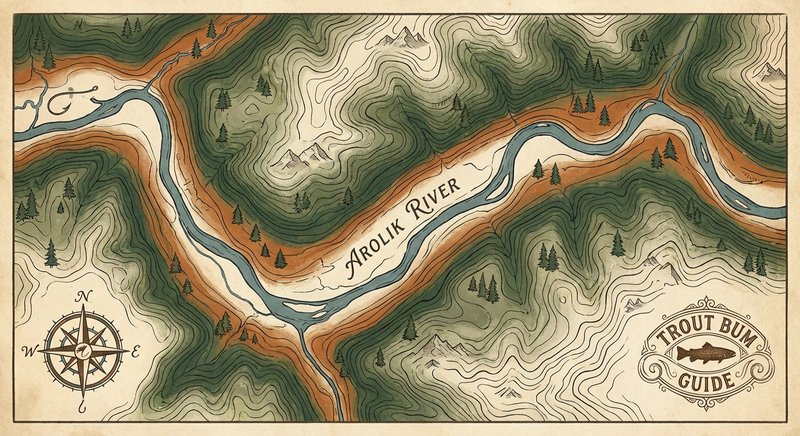
Arolik River
Fly fishing in Alaska · Advanced · Best seasons: Summer, Fall
Target Species
Rainbow Trout, Silver Salmon, Dolly Varden
About This Water
Remote western Alaska stream with trophy rainbows. Fly-out only wilderness.
Fishing Recommendations
The Arolik River is a remote, wild gemstone tucked into the Togiak National Wildlife Refuge in Southwestern Alaska. Flowing into the Kuskokwim Bay, this river is the definition of "off the beaten path." Unlike the larger, more famous rivers in the Bristol Bay region, the Arolik is intimate, wadeable, and possesses a "small stream" feel that belies the massive size of the fish it holds.
Here is your comprehensive guide to fly fishing the Arolik River.
🎣 Location Overview
The Arolik is divided into two main branches: the North Fork (flowing from Arolik Lake) and the South Fork. These merge to form a winding, crystal-clear river that meanders through the tundra.
What makes it special is its scale. While the Kvichak or Naknek require heavy spey rods and massive casts, the Arolik allows anglers to sight-fish for leopard rainbows and dollies in water that is often less than 30 feet wide. The river features classic gravel bars, deep undercut banks, and tight "S-curves" that create perfect holding water. It is a true wilderness experience—remote, rugged, and teeming with life.
🐟 Target Species & Behavior
Rainbow Trout
The Arolik is famous for its "Leopard" Rainbows. These fish are heavily spotted and incredibly vibrant.
- Behavior: They are highly predatory. Early in the season, they hold in deep holes and near woody debris. As the salmon arrive, they move behind spawning beds (redds) to gorge on eggs.
- Feeding: Smolt and sculpins in early summer; salmon eggs and flesh in late summer/fall.
Silver Salmon (Coho)
The Arolik gets a massive run of Silvers that are fresh from the salt, often still carrying sea lice.
- Behavior: They seek out "slack water" or the inside edges of current seams to rest. They are famously aggressive and will often chase a fly across the surface.
- Feeding: While they stop eating to spawn, their strike reflex is triggered by bright colors and erratic movement.
Dolly Varden
These are the "cleanup crew" of the river.
- Behavior: They follow the salmon runs by the thousands. You will find them stacked in the tailouts of runs or directly behind spawning salmon.
- Feeding: Almost exclusively focused on salmon eggs and decaying salmon flesh once the spawn begins.
📅 Best Times to Fish
Optimal Months
- July (Mid to Late): Prime time for the Dolly Varden migration and the beginning of the Chum and Pink salmon runs. Rainbow fishing is excellent with streamers and even some dry fly action (mice/caddis).
- August: The "Golden Month." Salmon are spawning, meaning egg-feeding for Rainbows and Dollies is at its peak. Silver Salmon begin to enter the river in mid-August.
- September: Peak Silver Salmon season. This is also when the Rainbows are at their fattest, preparing for winter by gorging on salmon flesh.
Conditions
- Time of Day: In the land of the midnight sun, "time of day" matters less than tide and light. Bright overhead sun can make Rainbows spooky; overcast days are prime.
- Water Levels: Clear water is the norm. If heavy rains hit, the river can cloud up, making large, dark streamers a necessity.
🪰 Recommended Flies & Techniques
For Rainbows & Dollies (The "Egg & Flesh" Game)
- Beads (6mm & 8mm): Essential. Colors should match the stage of the salmon spawn (Oregon Cheese, Mottled Roe, Creame).
- Flesh Flies: "The Bunny Leech" in white, ginger, or peach. Fish these with a dead-drift to mimic a piece of decaying salmon drifting downstream.
- Mice: The Mr. Hankey or Hood Rat. Skittering a mouse pattern against the tundra banks is the most heart-pounding way to catch Arolik Rainbows.
For Silver Salmon (The "Aggression" Game)
- Dolly Varden Specials: Pink/Purple combinations.
- Lead-Eyed Leech: Pink, purple, or chartreuse.
- Pink Wog: A foam surface fly. Skating a Wog across the surface for Silvers is a signature Alaska experience.
Techniques
- Nymphing (Indicator): The most effective way to fish beads. Ensure your weight is enough to get the bead to the "eye level" of the fish behind the salmon.
- Stripping: For Silvers, use a "strip-strip-pause" retrieve.
- The Swing: Swinging streamers through deep bends can produce the largest "resident" rainbows.
💡 Pro Tips & Local Knowledge
- Focus on the "Seams": On the Arolik, fish love the "walking speed" water. Look for where fast water meets slow water—trout will sit right on that line.
- The "Salmon Tail": When you see spawning Chum or King salmon, do not fish on them. Fish 10–20 feet behind them. That is where the Rainbows and Dollies are waiting for loose eggs.
- Walk Quietly: Because the river is small, your profile on the bank can spook fish. Stay low and approach holes with stealth.
- Sight Fishing: Bring high-quality polarized glasses (amber or copper lenses). In the clear water of the Arolik, you can often pick out individual fish before you cast.
⚠️ Important Information
Access
- The Arolik is only accessible by bush plane (usually out of Bethel or Dillingham).
- Most anglers do "float trips" via raft, starting at the headwaters and floating down to a pickup point near the mouth. There are no roads.
Regulations & Permits
- License: You must have a valid Alaska Sport Fishing License. If targeting King Salmon (rare/incidental on the Arolik), you need a King Stamp.
- Gear: This is often a Single-Hook, No-Pail (Unscented), Barbless river to protect the wild stocks. Always check the current ADF&G Emergency Orders before your trip.
- Catch & Release: Highly encouraged for all resident Rainbow Trout to maintain the trophy quality of the river.
Special Considerations
- Bears: This is Grizzly country. You are in a remote part of the Togiak Refuge. Carry bear spray, keep a clean camp, and never fish alone.
- Weather: Alaska weather is volatile. Pack high-quality GORE-TEX waders and layers. Even in August, temperatures can drop to the 40s with driving rain.
Bug Hatches & Matching Flies
| Hatch | Type | Peak months | Time of day | Hook sizes | Matching flies |
|---|---|---|---|---|---|
| Chironomids Chironomidae | midge | May, June, September | All Day | #18-24 | Zebra Midge #18-22, Griffith's Gnat #18-20, Smoke Jumper #20 |
| Blue Winged Olive Baetis tricaudatus | mayfly | June, September | Afternoon | #16-20 | RS2 #18-20, Parachute Adams #16-20, Pheasant Tail Nymph #16-18 |
| American Grannom Brachycentrus occidentalis | caddis | June, July | Evening | #14-16 | Elk Hair Caddis #14-16, Peacock Caddis #14, Deep Sparkle Pupa #14-16 |
| Golden Stonefly Hesperoperla pacifica | stonefly | July | Morning/Afternoon | #8-12 | Pats Rubber Legs #8-12, Rogue River Stone #10, Golden Twenty Incher #10-12 |
| Yellow Sally Isoperla spp. | stonefly | July, August | Afternoon/Evening | #14-16 | Yellow Sally Dry #14-16, Little Yellow Sloan #14-16 |
| Spotted Sedge Hydropsyche spp. | caddis | July, August | Evening | #12-16 | Hydropsyche Larva #12-14, Godzilla Caddis #12-14 |
| March Brown Rhithrogena morrisoni | mayfly | June | Afternoon | #12-14 | March Brown Western #12-14, Gold Ribbed Hare's Ear #12-14 |
| Giant Black Stonefly Pteronarcys californica | stonefly | June | All Day | #4-8 | Kaufmanns Stone #6-8, Black Chubby Chernobyl #6-8 |