Big Iron River
Fly fishing in Michigan · Advanced · Best seasons: Summer, Fall
Target Species
Brook Trout
About This Water
Remote Upper Peninsula stream. Wild brook trout in pristine wilderness setting.
Fishing Recommendations
Welcome to the rugged wild of Michigan’s Upper Peninsula. As your guide, I’m excited to walk you through the Big Iron River (often simply called the Iron River) in Ontonagon County. This is a quintessential "Northwoods" experience—dark, tannic water, ancient hemlocks, and the chance to catch the most beautiful fish in the world: the native coaster and resident Brook Trout.
🎣 Location Overview
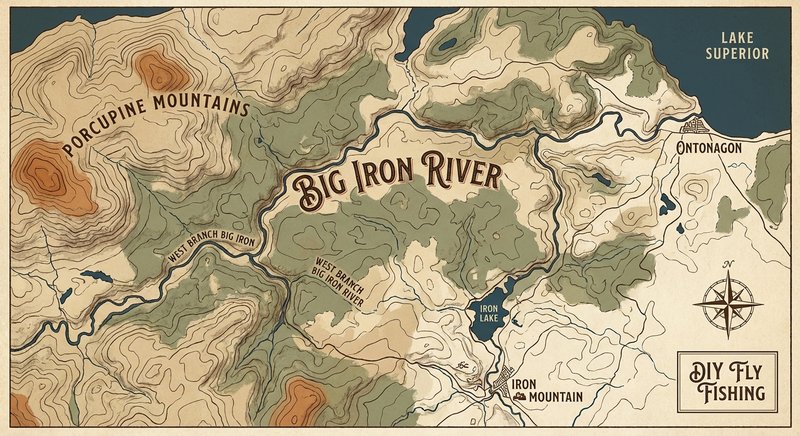
The Big Iron River is a jewel of the Western U.P., flowing through the heart of the Porcupine Mountains region before emptying into Lake Superior at Silver City. It is a river of contrasts. While the lower sections are famous for migratory runs of Steelhead and Salmon, the upper reaches and its feeder tributaries are a haven for wild Brook Trout.
What makes the Big Iron special is its geology. The river carves through precambrian rock, creating stunning ledge drops—most notably Bonanza Falls. The water is "tea-colored" due to natural tannins from the surrounding cedar and hemlock swamps. This creates a mystical atmosphere where fish can be surprisingly bold in the dark water, but the terrain is rugged, slippery, and demands respect.
🐟 Target Species & Behavior
Native Brook Trout (Salvelinus fontinalis)
- Behavior: These are aggressive, opportunistic feeders. Because the growing season is short in the U.P., they rarely pass up a meal.
- Holding Patterns: Look for "the dark spots." In the tannic water, Brookies love to hold in the shadows of overhanging tag alders, behind large submerged boulders, and in the deep "buckets" at the base of small ledge drops.
- Feeding: They focus heavily on aquatic insects (Mayflies and Caddis) in early summer, but shift toward "big protein" (grasshoppers, beetles, and small minnows) as the season progresses.
📅 Best Times to Fish
Summer (Late June – August)
This is the prime window for dry fly action.
- Conditions: Water levels stabilize, and the "Hex" hatch (Giant Michigan Mayfly) can occur in the slower, siltier reaches in late June/early July.
- Time of Day: Early morning and the "magic hour" before dusk. On overcast days, the fishing can stay hot all day long due to the shaded canopy.
Fall (September – Early October)
This is when the Brook Trout are at their most stunning, wearing their vibrant orange spawning colors.
- Conditions: Cooler water temperatures trigger aggressive feeding as they prepare for the spawn.
- Special Note: You may also encounter "Coaster" Brook Trout—larger fish that migrate from Lake Superior back into the river system. These are the prizes of the north.
🪰 Recommended Flies & Techniques
Dry Flies (The Fun Stuff)
- Royal Wulff or Royal Coachman (Size 12-16): The white wings are easy to see in the dark, shaded water.
- Elk Hair Caddis (Size 14-18): A staple for any Michigan river.
- Parachute Adams (Size 14-20): For when they are being selective during a hatch.
- Chernobyl Ant or Foam Beetles: Exceptional in late summer when "terrestrials" are falling from the overhanging brush.
Nymphs & Streamers (The Producers)
- Bead-Head Prince Nymph (Size 14-16): The flash of the ribbing helps in the stained water.
- Wooly Bugger (Black or Olive, Size 8-12): The absolute best way to hunt for larger Brookies and Coasters in the deeper holes.
- Muddler Minnow: Mimics the sculpins and grasshoppers found along the banks.
Presentation Tips
- The "Splatt" Factor: When fishing terrestrials (ants/beetles), don't be afraid to let the fly hit the water with a bit of a "splat." It mimics a bug falling from a tree and triggers an instinctive strike.
- Short Casts: The Big Iron is often brushy. Master the roll cast and the "bow-and-arrow" cast to reach tight spots under the alders.
💡 Pro Tips & Local Knowledge
- Focus on the Upper Mainstem: For the best Brook Trout densities, head south of M-64 into the Ottawa National Forest sections. The water stays cooler here throughout the summer.
- The "Bonanza" Strategy: While many tourists stop at Bonanza Falls to take photos, anglers should hike a half-mile upstream or downstream from the falls to find less-pressured pockets of fish.
- Wade With Care: The rock ledges in the Big Iron are notorious for being slick. Studded wading boots or felt (where legal) are highly recommended. A wading staff is a life-saver here.
- The "Tea" Tint: Because the water is dark, don't be afraid to use slightly heavier tippet (4X or 5X). The fish can't see it as well as they could in a crystal-clear spring creek, and it helps you pull fish out of the woody debris.
⚠️ Important Information
Access
- Lower River: Access via the bridge on M-64 near Silver City.
- Middle/Upper River: Use Forest Service roads (look for FR 326 and surrounding tracks). Be prepared for dirt roads that can be muddy after rain.
- The Porkies: Portions of the river border the Porcupine Mountains Wilderness State Park; check for required vehicle permits if parking within park boundaries.
Regulations
- Licensing: An All-Species Michigan Fishing License is required.
- Brook Trout Limits: Michigan has specific size and bag limits for Brook Trout in the U.P. (often a 7-inch minimum, but some stretches vary). Always check the current Michigan DNR Fishing Guide before heading out.
Special Considerations
- Bugs: The mosquitoes and black flies in the U.P. are legendary. Bring heavy-duty repellent and consider a head net for early summer trips.
- Bear Country: You are in black bear territory. Keep a clean camp and be aware of your surroundings.
- Cell Service: Expect zero bars once you leave the main highway. Download your maps for offline use or carry a physical DeLorme Atlas.
Tight lines, and enjoy the solitude of the Big Iron—it's one of the last truly wild places in the Midwest.
Bug Hatches & Matching Flies
| Hatch | Type | Peak months | Time of day | Hook sizes | Matching flies |
|---|---|---|---|---|---|
| Blue Winged Olive Baetis spp. | mayfly | May, September, October | Mid-day/Afternoon | #18-22 | BWO Sparkle Dun #18-22, Pheasant Tail #18-20 |
| Hendrickson Ephemerella subvaria | mayfly | May | Afternoon | #12-14 | Red Quill #12-14, Hendrickson Emerger #12-14 |
| Grannom Caddis Brachycentrus | caddis | May | All Day/Evening | #14-16 | Peacock Caddis #14-16, Deep Sparkle Pupa #14-16 |
| Sulphur Ephemerella invaria | mayfly | June | Evening | #14-16 | Sulphur Parachute #14-16, Sulphur Cripple #14-16 |
| Brown Drake Ephemera simulans | mayfly | June | Dusk | #10-12 | Brown Drake Spinner #10-12, Hare's Ear Nymph #10-12 |
| Hex Hexagenia limbata | mayfly | June, July | Night | #6-8 | Hexagenia Spinner #6-8, Hex Nymph #6-8 |
| Golden Stonefly Acroneuria | stonefly | June, July | Morning/Evening | #8-12 | Golden Stone Nymph #8-10, Stimulator #10-12 |
| Isonychia Isonychia bicolor | mayfly | July, August, September | Late Afternoon/Evening | #10-12 | Iso Parachute #10-12, Zug Bug #10-12 |
| Trico Tricorythodes | mayfly | July, August | Morning | #22-26 | Trico Spinner #22-24, RS2 #22-24 |
| Grasshoppers Orthoptera | terrestrial | August, September | Mid-day/Afternoon | #8-12 | Dave's Hopper #10-12, Joe's Hopper #8-12 |