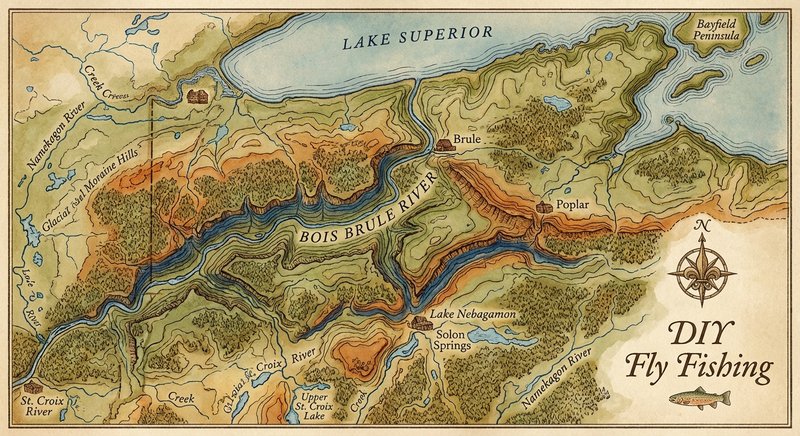
Bois Brule River
Fly fishing in Wisconsin · Intermediate · Best seasons: Spring, Summer, Fall
Target Species
Steelhead, Brook Trout, Brown Trout
About This Water
Northern Wisconsin gem with steelhead, salmon, and native brook trout. Legendary presidential fishing water.
Fishing Recommendations
The Bois Brule River, often referred to simply as the "Brule," is the crown jewel of Wisconsin fly fishing. Known as the "River of Presidents" (having hosted five U.S. Presidents), it is a legendary spring-fed stream that flows north into Lake Superior. What makes the Brule unique is its dual personality: the upper river is a classic, gentle meander through cedar swamps, while the lower river is a rugged, tumbling series of rapids and ledge drops.
🎣 Location Overview
The Brule is located in Douglas County, in the far northwest corner of Wisconsin. It is protected by the Brule River State Forest, ensuring a pristine, undeveloped wilderness experience.
The river is divided into two distinct sections by the Copper Range:
- The Upper Brule: Located south of Highway 2. It is characterized by slow-moving, spring-fed water, crystal clear visibility, and lush weed beds. This is prime "classic" trout water.
- The Lower Brule: Located north of Highway 2 toward Lake Superior. This section features a steeper gradient with famous rapids (like Lenroot and May's Ledges). This is the highway for migratory "steelhead" (lake-run rainbows), lake-run browns, and salmon.
🐟 Target Species & Behavior
Steelhead (Lake-run Rainbow Trout)
These are the most sought-after prizes. They enter the river from Lake Superior in two waves.
- Behavior: They are powerful and athletic. In the spring, they are focused on spawning; in the fall, they enter to winter over, feeding aggressively to maintain energy.
- Holding: Look for them in deep "slots," the "tail-outs" of pools, or behind large boulders in the rapids.
Brown Trout (Resident and Lake-run)
- Resident Browns: Found year-round, particularly in the middle stretches. They are wary and love woody cover.
- Lake-run Browns: These "pigs" enter the river in late summer and fall (August–October). They are some of the largest brown trout in the country, often exceeding 10-15 pounds.
Brook Trout
The Brule’s only native salmonid.
- Behavior: Found mostly in the upper river above Highway 2. They are opportunistic feeders but very spooky in the clear, slow water.
- Feeding: They rely heavily on aquatic insects (Mayflies, Caddis) and terrestrial insects falling from the overhanging brush.
📅 Best Times to Fish
- Spring (Late March – May): This is prime Steelhead season. Fishing is dictated by ice-out and water temperature. Once the water hits 40°F, the fish become active.
- Summer (June – August): This is the window for the "Hex" (Hexagenia limbata) hatch. In late June and July, the giant mayflies hatch at dusk, bringing the largest resident trout to the surface.
- Fall (Late August – November): The "Grand Slam" season. Lake-run Browns enter first (August/September), followed by Coho/Chinook Salmon, and finally the Fall Steelhead run (peak October). This is arguably the best time for a trophy fish.
🪰 Recommended Flies & Techniques
For Steelhead & Lake-run Browns
- Nymphing: The most productive method. Use a "trout spey" or a 7-8wt single-hand rod.
- Patterns: Glo-bugs (egg patterns) in peach/orange, Superior X-Stones, Prince Nymphs, and San Juan Worms.
- Swinging: For the traditionalist.
- Patterns: Black or Blue streamers, Intruders, and the "Brule Special" (a local favorite).
- Technique: High-stick nymphing through the fast pockets or swinging through the lower runs using a sink-tip line.
For Resident Trout (Upper River)
- Dry Flies:
- Patterns: Adams (sizes 12-18), Elk Hair Caddis, and the massive Hexagenia patterns for night fishing in July.
- Streamers:
- Patterns: Small Woolly Buggers or Muddler Minnows worked tight against log jams.
- Technique: A stealthy approach is mandatory. Use long leaders (9-12ft) and 5x or 6x tippet in the slow water.
💡 Pro Tips & Local Knowledge
- The "Dead Zone": Many anglers skip the stretch between the Stones Bridge and Winneboujou for migratory fish, but this area holds massive resident browns. Use a canoe to access spots that waders can’t reach.
- Temperature Matters: In the spring, a 2-degree rise in water temperature can be the difference between a skunk and a 10-fish day. Fish the afternoons as the sun warms the rocks.
- The "Brule Shuffle": Avoid it. Walking downstream kicks up silt and alerts fish. Always move slowly and try to fish "upstream" or "across" whenever possible.
- Stealth on the Upper River: If you can see the fish in the upper river, they have likely already seen you. Wear camouflage or drab colors and stay low to the bank.
⚠️ Important Information
- Regulations: The Brule has very specific regulations that change depending on the section of the river and the date. Always check the current WDNR Trout Regulations.
- Permits: A Wisconsin fishing license and a Great Lakes Salmon/Trout Stamp are required for most sections of the river.
- Access:
- Upper: Stones Bridge and Winneboujou are popular launch points.
- Lower: Copper Range Campground and the "Mouth" (where it hits Lake Superior) provide excellent foot access.
- Safety: The lower river clay banks are notoriously slippery (known as "Brule Grease"). Studded wading boots and a wading staff are highly recommended.
- Etiquette: During the steelhead runs, the river can get crowded. Give other anglers plenty of space; if someone is "swinging" a run, wait your turn or move to the next pool.
The Brule is a temperamental mistress—she can be the most rewarding river in the Midwest one day and the most frustrating the next. Respect the water, enjoy the scenery, and keep your fly in the water!
Bug Hatches & Matching Flies
| Hatch | Type | Peak months | Time of day | Hook sizes | Matching flies |
|---|---|---|---|---|---|
| Blue-Winged Olive Baetis / Pseudocloeon | mayfly | April, May, September, October | Afternoon | #18-22 | RS2 #18-22, Parachute Adams #18-22, Pheasant Tail Nymph #18-22 |
| Hendrickson Ephemerella subvaria | mayfly | May | Afternoon | #12-14 | Red Quill #12-14, Hendrickson Emerger #12-14, Gold Ribbed Hare's Ear #12-14 |
| Grannom Caddis Brachycentrus | caddis | May | Morning/Afternoon | #14-16 | Elk Hair Caddis (Olive) #14-16, Holy Grail #14-16, Deep Sparkle Pupa #14-16 |
| Brown Drake Ephemera simulans | mayfly | June | Evening | #10-12 | Brown Drake Spinner #10-12, Harrop's Brown Drake #10-12, Brown Drake Nymph #10-12 |
| Sulphur Ephemerella dorothea | mayfly | June, July | Evening | #16-18 | Sulphur Parachute #16-18, CDC Comparadun #16-18, Sulphur Soft Hackle #16-18 |
| Giant Mayfly (Hex) Hexagenia limbata | mayfly | June, July | Late Evening/Night | #4-8 | Hexagenia Spinner #4-8, Parachute Hex #6-8, Hexagenia Nymph #6-10 |
| Golden Stonefly Acroneuria lycorias | stonefly | June, July | Evening/Night | #6-10 | Golden Rogue Stone #6-10, Kaufmann's Stone (Golden) #6-10, Pat's Rubber Leg #8-12 |
| Trico Tricorythodes | mayfly | August, September | Morning | #22-26 | Trico Spinner #22-26, Trico Parachute #22-24, Sunken Trico Spinner #22-26 |