Elk Creek
Fly fishing in Wisconsin · Intermediate · Best seasons: Spring, Summer, Fall
Target Species
Brown Trout
About This Water
Driftless spring creek with wild brown trout. Technical fishing in scenic valley.
Fishing Recommendations
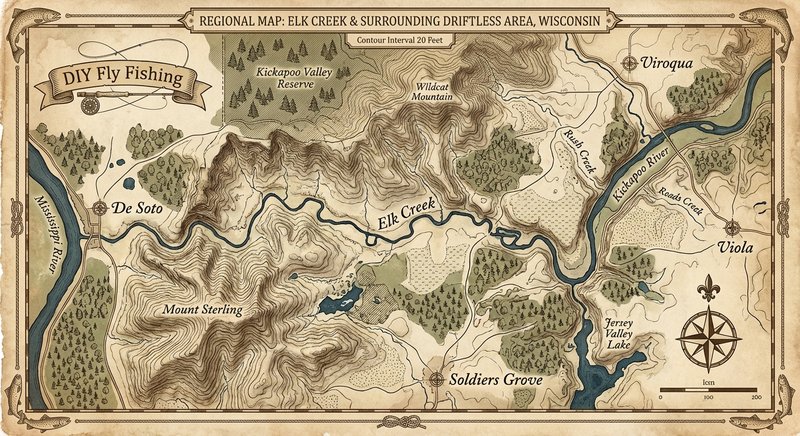
Greetings, angler. It’s a pleasure to break down one of the true gems of the American Midwest. Elk Creek, located in Dunn County, Wisconsin (near Eau Claire), is widely considered one of the finest spring creeks in the entire Driftless Area.
As a guide, I characterize Elk Creek as a "PhD program" for trout anglers. It is beautiful, challenging, and incredibly rewarding for those who value technical proficiency over brute force.
🎣 Location Overview
Elk Creek is a classic limestone spring creek. Unlike the freestone rivers of the West, Elk Creek is fed by cold, mineral-rich groundwater that keeps the water temperatures stable—cool in the summer and relatively warm in the winter.
What makes it special is its productivity. The limestone chemistry fosters an explosion of aquatic insect life and crustacea (scuds and sowbugs), leading to a high density of trout. The water is generally crystal clear, featuring a mix of silty bottoms, gravel runs, and deep undercut banks. It flows through a pastoral landscape of rolling hills and coulees, offering that quintessential Wisconsin Driftless aesthetic.
🐟 Target Species & Behavior
The primary draw here is the Wild Brown Trout. While you may occasionally encounter a Brook Trout in the upper reaches, the Browns own this water.
- Behavior: These are wild, wary fish. Because the water is often clear and the creek is relatively narrow, these fish are easily spooked. They have a "window of vision" that is highly attuned to overhead predators.
- Holding Patterns: Look for fish tight against undercut banks, beneath overhanging grasses, or in the "bubbles" at the head of pools. Big Browns love the deep woody debris (log jams) that accumulate in the bends.
- Feeding: They are opportunistic but can become highly selective during a hatch. Their diet consists heavily of scuds, sowbugs, midges, and various mayflies/caddis.
📅 Best Times to Fish
Optimal Seasons
- Spring (Late March – May): This is prime time. The early season brings the Grannom Caddis and Blue Winged Olives (BWO). The fish are hungry after winter and less pressured.
- Summer (June – August): Great for terrestrial fishing (hoppers/ants). However, midday heat can make the fish lethargic. Focus on early morning or late evening.
- Fall (September – October): The Brown Trout begin to color up for the spawn. This is your best chance at a trophy-sized fish as they become more aggressive and territorial.
Best Times of Day
- Low Light: The "Golden Hour" at dawn and dusk is legendary on Elk Creek. Brown Trout are photophobic; they feel much more comfortable feeding in the open when the sun is off the water.
- Overcast Days: A cloudy, drizzly day is an angler's best friend here. It masks your profile and often triggers massive Blue Winged Olive hatches.
🪰 Recommended Flies & Techniques
Top Fly Patterns
- Nymphs: Pink Squirrel (a Driftless staple), Gold-Ribbed Hare’s Ear (#16-18), Scuds (gray or olive, #16-18), and Zebra Midges (#18-22).
- Dry Flies: Elk Hair Caddis (#16-18), Light Cahill (#14-16), Parachute Adams (the ultimate searcher), and Trico Spinners (#20-24) for late summer mornings.
- Terrestrials: Dave’s Hopper, Black Ants, and Beetle patterns (#12-16).
- Streamers: Black or Olive Woolly Buggers and small Muddler Minnows.
Effective Techniques
- Tactical Nymphing: European-style nymphing or using a very small, sensitive strike indicator is highly effective. You must get the fly deep quickly without spooking the fish with a heavy splash.
- Dry Fly Stealth: Use long, light leaders (9-12 feet, 5x or 6x tippet). Accuracy is more important than distance.
- The "Twitch": When fishing terrestrials in the summer, a slight twitch to mimic a struggling insect can trigger a violent strike.
💡 Pro Tips & Local Knowledge
- The "Driftless Crawl": Many local experts literally crawl on their knees to approach a pool. If you can see the fish, they have likely already seen you. Stay low and wear earth-toned clothing.
- Fish the "Frog Water": Don't just fish the fast riffles. Large Browns often sit in the slow, glassy water right against the bank. These fish require a perfect, drag-free drift.
- The Bridge Pools: While the areas near bridge crossings (like Hwy 29 or County Rd H) get the most pressure, they hold fish. However, if you hike a half-mile away from any road access, the fishing pressure drops significantly and the fish become much less "educated."
- Streamer Strip: On rainy days when the water gets a "tea" stain, strip a black Woolly Bugger through the deep holes. This is how you find the 20-inch monsters.
⚠️ Important Information
- Access: Wisconsin has excellent "stream bank easement" laws. Generally, if you stay in the water (keep your feet wet), you are legally allowed to fish. However, Elk Creek has many designated DNR Public Access points. Respect "No Trespassing" signs on upland property.
- Regulations: Elk Creek is generally under Category 5 regulations or special inland trout rules. This often means Catch and Release Only and Artificial Lures/Flies Only for certain stretches. Always check the current Wisconsin DNR Trout Tool before heading out.
- Permits: You need a Wisconsin Fishing License and an Inland Trout Stamp.
- Safety: Be mindful of wild parsnip (which can cause skin burns) and ticks in the tall grasses during the summer.
Elk Creek is a masterclass in fly fishing. Respect the water, handle the fish with care (keep them in the water!), and you'll find it to be one of the most rewarding streams in the country. Tight lines!
Bug Hatches & Matching Flies
| Hatch | Type | Peak months | Time of day | Hook sizes | Matching flies |
|---|---|---|---|---|---|
| Blue-Winged Olive (BWO) Baetis | mayfly | April, May, September, October | Mid-day/Afternoon | #18-22 | BWO Sparkle Dun #18-20, RS2 (Olive) #20-22, Pheasant Tail Nymph #18-22 |
| Hendrickson Ephemerella subvaria | mayfly | May | Afternoon | #12-14 | Red Quill #12-14, Hendrickson Dark #14, Hare's Ear Nymph #12-14 |
| Grannom Caddis Brachycentrus | caddis | May | Morning/Evening | #14-16 | Elk Hair Caddis (Olive/Black) #14-16, Peeping Caddis #14-16, LaFontaine Sparkle Pupa #16 |
| Sulfur / Pale Evening Dun Ephemerella dorothea | mayfly | June | Evening | #14-18 | Sulfur Dun #16-18, Sulfur Spinner #14-18, Pheasant Tail #16-18 |
| Trico Tricorythodes | mayfly | July, August, September | Early Morning | #20-24 | Trico Spinner #20-24, Sunken Trico Spinner #22, Griffith's Gnat #20-22 |
| Light Cahill Stenacron | mayfly | June, July | Evening | #12-14 | Light Cahill #12-14, Gold Ribbed Hare's Ear #12-14 |
| Terrestrials (Hoppers/Ants) N/A | terrestrial | July, August, September | Mid-day/Afternoon | #10-18 | Dave's Hopper #10-14, Cinnamon Ant #16-18, Chernobyl Ant #10-12 |
| Zebra Midge Chironomidae | midge | March, April, October, November | All Day | #18-24 | Zebra Midge (Black/Silver) #18-22, Palomino Midge #20-22 |