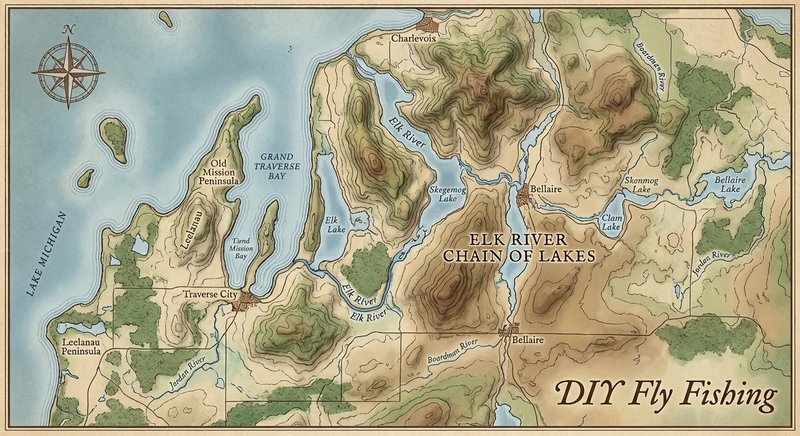
Elk River Chain of Lakes
Fly fishing in Michigan · Beginner · Best seasons: Spring, Summer, Fall
Target Species
Smallmouth Bass, Northern Pike, Brown Trout
About This Water
14 connected lakes near Traverse City. Diverse warm and cold water fishing opportunities.
Fishing Recommendations
Welcome to the Elk River Chain of Lakes, a sprawling 75-mile waterway in Northwest Lower Michigan. As a guide in this region, I can tell you that this is one of the most underrated fly fishing destinations in the Midwest. While most anglers flock to the famous trout streams nearby (like the Au Sable or Boardman), the Chain offers a diverse "mixed bag" experience ranging from crystal-clear glacial lakes to intimate river connections.
🎣 Location Overview
The Elk River Chain of Lakes consists of 14 lakes and connecting rivers, starting at the headwaters in Bellaire and flowing into East Grand Traverse Bay. The "crown jewels" for fly anglers are Torch Lake, Lake Skegemog, Elk Lake, and the intermediate rivers like the Grass and Torch.
What makes this system special is the water clarity—often compared to the Caribbean—and the sheer variety of structure. You’ll find deep drop-offs, expansive sandy flats (perfect for "sight fishing" for Smallmouth), and weedy bayous teeming with Pike. The water is generally cold, oxygen-rich, and supports a unique ecosystem where you can target apex predators and trophy trout within the same mile of water.
🐟 Target Species & Behavior
Smallmouth Bass (The "Bronzebacks")
- Behavior: These are the stars of the show. In the big lakes (Elk and Torch), they behave like saltwater bonefish, cruising the sandy flats in search of crayfish and emerald shiners.
- Holding Spots: Look for "drop-offs" where the turquoise shallow water turns to deep blue. They also hug submerged timber in the Grass River and Clam River.
- Feeding: Primary forage includes Crayfish, Emerald Shiners, and Round Gobies.
Northern Pike (The "Water Wolves")
- Behavior: These are ambush predators. They are most active in the Chain’s shallower, weedier sections like Lake Skegemog and the upper ends of Grass River.
- Holding Spots: Weed edges, lily pad fields, and the mouths of colder tributaries. In the heat of summer, they move deeper but remain near the thermocline.
- Feeding: Anything that moves. Perch, suckers, and even small waterfowl.
Brown Trout
- Behavior: The Chain holds some massive, "resident" lake-run browns that move into the connecting rivers to feed or spawn.
- Holding Spots: Focus on the upper Elk River (near the power dam) and the Torch River. They love deep undercut banks and dark holes during the day, moving into riffles at night to feed.
- Feeding: Highly piscivorous (fish-eaters). They focus on sculpins and juvenile trout but will rise for massive Hexagenia limbata (mayfly) hatches in late June.
📅 Best Times to Fish
Spring (May – Early June)
- Prime Window: This is peak Smallmouth season. As the water hits 50–55°F, bass move onto the flats to spawn.
- Pike: Excellent in the shallows of Skegemog as they recover from their own spawn.
Summer (Late June – August)
- Prime Window: Best for Brown Trout during the "Hex Hatch" (late June/early July).
- Bass/Pike: Early morning and late evening are critical. Mid-day is for deep-water dredging with sinking lines.
Fall (September – October)
- Prime Window: The "Feed Before the Freeze." This is the best time for trophy Northern Pike and aggressive Smallmouth feeding on baitfish schools.
- Brown Trout: Become aggressive and colorful as they prepare for their fall spawning run.
🪰 Recommended Flies & Techniques
For Smallmouth Bass
- Technique: Sight casting on the flats. Use a 6-weight or 7-weight rod with a floating line and a long leader (10-12ft).
- Flies:
- Clouser Minnow (Chartreuse/White)
- Murdich Minnow (Silver/Pearl)
- Near Nuff Crayfish (Olive or Orange)
- Poppers (Yellow or Frog pattern) for low-light surface action.
For Northern Pike
- Technique: "Strip-set" is mandatory. Use an 8-weight or 9-weight rod with a wire tippet to prevent bite-offs.
- Flies:
- Barry’s Pike Fly (Red/White)
- Dahlberg Diver (Large, for surface explosions)
- Game Changers (White or Perch colors)
For Brown Trout
- Technique: "Streamer stripping" near wood cover or "Dry Fly" during the night hatch.
- Flies:
- Sex Dungeon (Olive or Black)
- Rubber Legged Adams (Size 12-14)
- Hexagenia Mayfly (Size 4-6, during the hatch)
💡 Pro Tips & Local Knowledge
- The "Skegemog Transition": The area where the Torch River flows into Lake Skegemog is a biological hotspot. It’s a "fish highway" where Pike, Bass, and the occasional Muskie congregate to hunt.
- The Stealth Factor: Because the water is so clear, these fish are spooky. Long casts and fluorocarbon leaders are essential. If you can see the fish, they’ve likely already seen your boat.
- The "Hex" Window: If you are chasing Brown Trout, be prepared to fish in total darkness in late June. The Hexagenia limbata hatch on the Torch and Elk rivers brings the biggest fish in the system to the surface. Bring a red-lens headlamp.
- Wind is Your Friend: A slight "chop" on the water breaks up the surface and makes the Smallmouth less wary of your leader and fly line.
⚠️ Important Information
Access
- Boats: This is primarily "big water." A drift boat, skiff, or bass boat is highly recommended.
- Wading: Public wading access is limited but available at the Torch River Bridge, the Elk Rapids Dam park, and various road endings.
- Kayaks: This is a world-class kayak fishing destination, especially the Grass River Natural Area.
Regulations & Permits
- License: An All-Species Michigan Fishing License is required.
- Bass Season: Be aware of the "Catch and Immediate Release" vs. "Possession" seasons (usually opens late May).
- Cleaning: To prevent the spread of invasive species (like New Zealand Mud Snails), always Clean, Drain, and Dry your gear before moving to another body of water.
Special Considerations
- Weather: Torch and Elk Lakes are massive. They can kick up 3-4 foot waves quickly if a north wind blows. Always check the marine forecast before heading out.
Tight lines, and enjoy the Caribbean of the North!
Bug Hatches & Matching Flies
| Hatch | Type | Peak months | Time of day | Hook sizes | Matching flies |
|---|---|---|---|---|---|
| Hex Hexagenia limbata | mayfly | June, July | Dusk/Night | #4-8 | Hex Parasol #6-8, Hexagenia Spinner #4-6, Wiggler #6-10 |
| Brown Drake Ephemera simulans | mayfly | May, June | Evening | #10-12 | Brown Drake Spinner #10-12, Humpy Brown #12, Drake Nymph #10 |
| Hendrickson Ephemerella subvaria | mayfly | May | Afternoon | #12-14 | Red Quill #12-14, Hendrickson Emerger #14, Pheasant Tail #12-14 |
| Sulphur Ephemerella invaria | mayfly | June | Evening | #14-18 | Sulphur CDC Sparkle Dun #16-18, Sulphur Parachute #14-18 |
| Grannom Caddis Brachycentrus | caddis | May | Morning/Afternoon | #14-16 | Elk Hair Caddis (Olive) #14-16, LaFontaine's Deep Sparkle Pupa #14-16 |
| Blue Winged Olive Baetis | mayfly | May, September, October | Afternoon | #18-22 | BWO Parachute #18-22, RS2 #20-22 |
| Cinnamon Caddis Hydropsyche | caddis | June, July, August | Evening | #14-18 | Cinnamon Elk Hair Caddis #14-16, Gold Ribbed Hare's Ear #14-18 |
| White Miller Ephoron leukon | mayfly | August | Late Evening | #12-14 | White Wulff #12-14, White Miller Paradox #14 |
| Grasshoppers Acrididae | terrestrial | July, August, September | Daytime | #8-12 | Dave's Hopper #10-12, Joe's Hopper #8-12 |