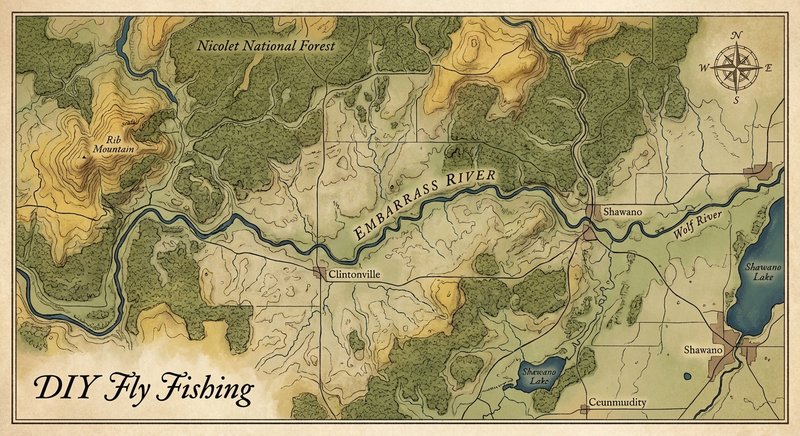
Embarrass River
Fly fishing in Wisconsin · Beginner · Best seasons: Spring, Summer, Fall
Target Species
Brook Trout, Brown Trout
About This Water
Central Wisconsin stream with trout. Wild brook trout in upper sections.
Fishing Recommendations
As an expert guide who has spent years navigating the hidden gems of the upper Midwest, I can tell you that the Embarrass River in Wisconsin is a sleeper hit. While many anglers flock to the famous Driftless Area in the southwest, the Embarrass offers a unique "Northwoods" experience with tea-colored water, wild trout, and far less foot traffic.
Here is your comprehensive guide to fly fishing the Embarrass River.
🎣 Location Overview
The Embarrass River system, located primarily in Shawano and Waupaca counties, is a diverse fishery. It is divided into three main branches: the North, Middle, and South Branches.
What makes this river special is its transition from high-gradient, rocky stretches to slow-moving, meadow-style water. Unlike the limestone spring creeks of the Driftless, the Embarrass is a "freestone" style system with heavy tannic (tea-colored) water. It feels wilder and more rugged. Anglers love it because it offers a true "stalking" experience—you aren't just casting into a pool; you are hunting fish through undercut banks, overhanging tag alders, and downed timber.
🐟 Target Species & Behavior
- Brook Trout: Found primarily in the headwaters and the smaller tributaries of the North and South branches. These are often wild, vibrant fish. They are opportunistic but spooky.
- Brown Trout: These dominate the middle reaches. The Embarrass is known for producing surprisingly large "Quality" Browns (16–20+ inches) that hide in deep wood cover.
- Behavior: Due to the tannic water, fish here often feel more comfortable feeding in shallower water than they would in crystal-clear streams. However, they are extremely "structure-oriented." If there is a fallen log or a cut bank, there is a trout under it. They feed heavily on crayfish, sculpins, and various stonefly and mayfly nymphs.
📅 Best Times to Fish
- Spring (Late April – June): This is the prime window. The early season brings the Hendrickson and Blue-Winged Olive hatches. Water levels are usually high but manageable.
- Summer (July – August): This is "Terrestrial Season." While water temperatures can rise (keep a thermometer handy!), the morning and evening windows are excellent for hopper-dropper rigs.
- Fall (September – October): My personal favorite. The Brown Trout become aggressive and territorial as they prepare for the spawn. This is the best time to throw large streamers for a trophy.
- Prime Windows: Early morning (dawn to 10:00 AM) and the "Magic Hour" before sunset. On the Embarrass, overcast days are your best friend—the fish lose their wariness in the dark water.
🪰 Recommended Flies & Techniques
Top Fly Patterns
- Dries: Sparkle Dun (size 14-18), Elk Hair Caddis (tan/olive), and the Royal Wulff (high visibility in tannic water).
- Nymphs: Prince Nymph (the flash works well in dark water), Pheasant Tail, and Gold-Ribbed Hare’s Ear.
- Terrestrials: Dave’s Hopper, Fat Albert (Pink or Tan), and Black Ants.
- Streamers: Black or Olive Woolly Buggers, Muddler Minnows, and the Galloup’s Dungeon (for big Browns in the fall).
Effective Techniques
- The "Tight-Line" Stalk: Because of the heavy brush, long casts are rarely possible. Short, accurate casts with a 7.5-foot leader are key.
- Pounding the Banks: In the summer, cast your terrestrial right against the grass line. Let it sit for three seconds before twitching it.
- Streamer Stripping: Cast streamers quartering downstream towards wood cover. Use an erratic "strip-strip-pause" retrieve to mimic a wounded baitfish.
💡 Pro Tips & Local Knowledge
- The "Shadow" Rule: Because the water is tea-colored, you often won't see the fish until they rise. Look for "bubbles" trapped against logs—that’s where the foam (and the food) collects.
- Focus on the North Branch: The North Branch near Bowler and Tilleda offers some of the best public access and consistent trout densities.
- Stealth is Mandatory: The Embarrass is not a wide river. Wading loudly will shut down a pool for an hour. Move upstream slowly and minimize your splashing.
- Tannic Contrast: Use flies with a bit of flash (bead heads) or high-contrast colors (white or chartreuse streamers) to help the fish track the fly in the darker water.
⚠️ Important Information
- Access: Much of the river runs through private land, but Wisconsin’s "Stream Access Law" allows you to fish as long as you keep your feet wet (stay in the stream bed). There are several DNR-managed easements and bridge crossings that provide excellent entry points.
- Regulations: The Embarrass River falls under Inland Trout Regulations. Many sections are "Category 2" or "Category 3," but always check the Wisconsin DNR Trout Tool before heading out, as size limits and bag limits vary by branch.
- Safety: The bottom can be sandy and soft in some spots and incredibly slippery rock in others. I highly recommend felt-soled boots or studs, and a wading staff is a life-saver in the swifter sections.
- Conservation: This is a fragile ecosystem. Please practice Catch and Release, especially for the wild Brook Trout, to ensure this hidden gem remains productive for years to come.
Guide’s Final Word: The Embarrass doesn't give up its secrets easily, but if you're willing to crawl through some alders and cast into tight windows, it will reward you with some of the prettiest wild trout in the state. Tight lines!
Bug Hatches & Matching Flies
| Hatch | Type | Peak months | Time of day | Hook sizes | Matching flies |
|---|---|---|---|---|---|
| Hendrickson Ephemerella subvaria | mayfly | April, May | Afternoon | #12-14 | Red Quill #12-14, Hendrickson Emerger #14, Pheasant Tail #12-14 |
| Blue Winged Olive Baetis | mayfly | April, May, September, October | Afternoon | #18-22 | RS2 #18-22, BWO Sparkle Dun #18-20, Baetis Nymph #18-22 |
| Grannom Caddis Brachycentrus | caddis | April, May | Morning/Afternoon | #14-16 | Peacock Caddis #14-16, Deep Sparkle Pupa #14-16, Elk Hair Caddis (Dark) #14-16 |
| Sulphur Ephemerella invaria/dorothea | mayfly | May, June | Evening | #14-18 | Sulphur Parachute #16-18, CDC Sulphur Emerger #14-18, Sulphur Spinner #16-18 |
| Light Cahill Stenonema/Stenacron | mayfly | June, July | Evening | #12-16 | Light Cahill #12-16, Gold Ribbed Hare's Ear #12-14, Cream Usual #14-16 |
| Cinnamon Caddis Hydropsyche | caddis | June, July, August | Evening | #14-18 | Elk Hair Caddis (Tan) #14-18, Iris Caddis #16, Hydropsyche Larva #14-16 |
| Trico Tricorythodes | mayfly | July, August, September | Morning | #20-24 | Trico Spinner #20-24, Trico Parachute #20-22, Zebra Midge #20-22 |
| Terrestrials Formicidae/Coleoptera | terrestrial | July, August, September | Afternoon | #10-18 | Chernobyl Ant #10-14, Black Foam Beetle #14-16, Cinnamon Ant #16-18 |