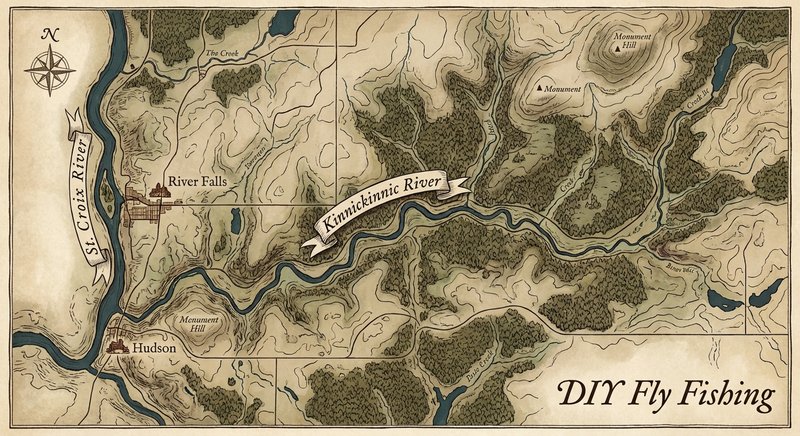
Kinnickinnic River
Fly fishing in Wisconsin · Intermediate · Best seasons: Spring, Summer, Fall
Target Species
Brown Trout
About This Water
Western Wisconsin spring creek with excellent hatches. Wild brown trout in technical water.
Fishing Recommendations
Hello, I’m glad you’re asking about the Kinnickinnic River, or as we locals call it, the "Kinni." Located in Western Wisconsin, just a short drive from the Twin Cities, the Kinni is arguably one of the finest spring-fed trout streams in the Midwest. It is a classic "driftless-style" fishery that boasts incredible natural reproduction and a high fish count per mile.
Here is your comprehensive guide to fishing the Kinni.
🎣 Location Overview
The Kinnickinnic is a cold-water gem that flows through Pierce and St. Croix counties. It is unique because it is divided into two distinct personalities by the city of River Falls:
- The Upper Kinni: Located north of River Falls, this section is characterized by narrow, meandering water, grassy banks, and classic pool-riffle-run sequences. It feels intimate and is very accessible.
- The Lower Kinni: South of the city, the river enters a dramatic, steep-walled canyon. This area is rugged, remote, and breathtakingly beautiful. The water here is larger, faster, and requires more hiking to access.
What makes it special: The Kinni is remarkably resilient. Because it is spring-fed, the water temperature stays cold in the summer and remains fishable even when other streams blow out or overheat. It supports an entirely wild population of Brown Trout—no stocking is necessary here.
🐟 Target Species & Behavior
Brown Trout are the kings of the Kinni. While you might find a stray Brook Trout in the headwaters, this is a Brown Trout factory.
- Behavior: These fish are wild and can be quite spooky. In the Upper Kinni, they hide under undercut banks and near overhanging vegetation. In the Lower Kinni, they utilize heavy pocket water and deep slots behind boulders.
- Feeding: They are opportunistic but can become highly selective during major hatches (especially the Trico and Sulphur hatches). Large "resident" browns are known to become piscivorous, feeding on sculpins and smaller trout in the low light of dawn and dusk.
📅 Best Times to Fish
Spring (April – May)
- Window: This is "Prime Time" for numbers.
- Conditions: As the water warms, the metabolism of the trout kicks into gear. Look for Blue-Winged Olives (BWO) on cloudy, drizzly days and Hendricksons in late April.
Summer (June – August)
- Window: Early morning and late evening.
- Conditions: The Sulphur hatch in June is legendary. By July and August, the Trico hatch (tiny white/black spinners) provides world-class technical dry fly fishing at sunrise. Terrestrials (hoppers/ants) become vital during the heat of the day.
Fall (September – October)
- Window: Mid-day.
- Conditions: The Brown Trout begin to dress up in their spawning colors. They become aggressive and territorial. This is the best time to throw large streamers to trigger a "pre-spawn" aggression strike.
🪰 Recommended Flies & Techniques
Dry Flies
- Sulphurs (Size 14-18): Essential for June evenings.
- Tricos (Size 20-24): For the technical summer mornings.
- BWO (Size 18-22): For overcast spring and fall days.
- Hi-Vis Ant or Foam Beetle (Size 14-16): Excellent for "searching" the banks in mid-summer.
Nymphs
- Pheasant Tail (Size 14-18): The gold standard here.
- Zebra Midge (Size 18-22): Works year-round, especially in black or red.
- Scuds (Size 14-16): Pink or orange; the Kinni is full of freshwater shrimp.
Streamers
- Woolly Buggers (Black or Olive): Drag these through deep pools in the Lower Kinni.
- Sculpin Patterns: Weighted flies fished deep near undercut banks.
Presentation Tip: Stealth is mandatory. Use 5x or 6x fluorocarbon tippet for nymphs and 6x nylon for dry flies. The Kinni is clear; if the fish see you or your line splash, the pool is "done" for the next hour.
💡 Pro Tips & Local Knowledge
- The "Lower" Hike: If you want solitude and bigger fish, park at the County Road F bridge and hike into the canyon. It’s a workout, but the pressure drops significantly the further you walk.
- Mending is Key: The Kinni has many "micro-currents." To get a drag-free drift, you must master the reach cast and the stack mend. If your fly twitches unnaturally, these wild Browns will refuse it.
- The "After Dark" Secret: During the heat of summer, some of the biggest Browns are caught after midnight using large surface flies (mice or large hex patterns). Note: Ensure you are familiar with the terrain before trying this; the canyon is dangerous at night.
- Upper Access: Use the designated DNR easements off County Road JJ or Quarry Road.
⚠️ Important Information
- Regulations: Wisconsin has a specific trout season (usually early May through mid-October), but there is often an Early Catch and Release season starting in January. Always check the current Wisconsin DNR Trout Regulations for the specific reach you are fishing.
- Permits: You need a valid Wisconsin Fishing License AND an Inland Trout Stamp.
- Wading: The Upper Kinni has a muddy/silty bottom in spots—watch your step. The Lower Kinni is very rocky and can be slippery; felt soles or studs are highly recommended.
- Etiquette: This is a popular river. If you see another angler's car at a bridge, move to the next access point. Give other anglers at least two or three bends of the river as a buffer.
Tight lines, and enjoy the beauty of the Kinnickinnic! It’s a special place that rewards patience and precision.
Bug Hatches & Matching Flies
| Hatch | Type | Peak months | Time of day | Hook sizes | Matching flies |
|---|---|---|---|---|---|
| Blue-Winged Olive (BWO) Baetis | mayfly | April, May, September, October | Afternoon | #18-22 | RS2 #18-22, Parachute Adams #18-22, Pheasant Tail Nymph #18-20 |
| Sulphur Ephemerella invaria/dorothea | mayfly | May, June | Evening | #14-18 | Sulphur Parachute #14-18, Sulphur Emerger #16-18, Frenchie #14-16 |
| Grannom Caddis Brachycentrus | caddis | April, May | Morning/Afternoon | #14-16 | Elk Hair Caddis #14-16, Peacock Caddis #14-16, Deep Sparkle Pupa #14-16 |
| Trico Tricorythodes | mayfly | July, August, September | Early Morning | #20-24 | Trico Spinner #20-24, Sunken Trico Spinner #20-22, Zebra Midge #20-22 |
| Cinnamon Caddis Hydropsyche | caddis | June, July, August | Evening | #16-18 | Tan Elk Hair Caddis #16-18, LaFontaine's Emergent Pupa #16-18, Caddis Larva #16-18 |
| Terrestrials N/A | terrestrial | July, August, September | Afternoon | #12-18 | Black Foam Ant #14-18, Crow Beetle #12-16, Dave's Hopper #10-14 |
| Midges Chironomidae | midge | January, February, March, December | Morning/Afternoon | #18-24 | Zebra Midge #18-22, Griffith's Gnat #18-22, Mercury Midge #20-24 |
| Light Cahill Stenacron | mayfly | June, July | Evening | #12-14 | Light Cahill #12-14, Gold Ribbed Hare's Ear #12-14 |