Little Red River
Fly fishing in Arkansas · Intermediate · Best seasons: Spring, Summer, Fall, Winter
Target Species
Brown Trout, Rainbow Trout
About This Water
Famous for producing world-record brown trout. Excellent tailwater below Greers Ferry Dam.
Fishing Recommendations
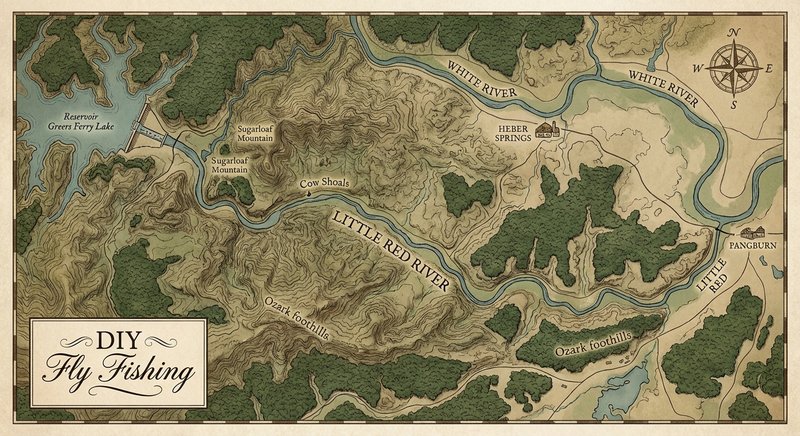
The Little Red River in north-central Arkansas is a world-class tailwater fishery that gained international fame in 1992 when a 40-pound, 4-ounce world-record Brown Trout was caught there. Flowing from the Greers Ferry Dam near Heber Springs, this river offers roughly 30 miles of cold-water habitat that stays a consistent temperature year-round, making it a "four-season" destination for serious fly anglers.
🎣 Location Overview
The Little Red is a classic Ozark tailwater characterized by a alternating pattern of shallow, rocky shoals and long, deep, slow-moving pools. Because it is a tailwater (the water is released from the bottom of Greers Ferry Lake), the water temperature remains in the high 40s to mid-50s (Fahrenheit), creating a perfect environment for trout even in the heat of an Arkansas summer.
What makes it special is the biomass. The riverbed is covered in aquatic moss that provides a home for an incredible density of sowbugs and scuds. This high-protein "soup" allows fish to grow quickly and maintain heavy weights. While the world record was broken elsewhere years later, the Little Red still produces legitimate "river monsters" every season.
🐟 Target Species & Behavior
- Rainbow Trout: These make up the majority of the river's population. They are frequently stocked but many become "holdovers," regaining their vibrant colors and wild instincts. They typically hold in the faster oxygenated water of the shoals and at the "heads" of pools where the current enters.
- Brown Trout: The Little Red is famous for its wild, self-sustaining Brown Trout population. These fish are smarter, more predatory, and more elusive. Large browns often tuck into deep undercut banks or hide in the "buckets" of deep pools during high sun. During low light or high water, they move into the shallows to hunt sculpins and smaller trout.
📅 Best Times to Fish
Optimal Seasons
- Spring (March – May): Excellent fishing. Occasional hatches of March Browns and Caddis can bring fish to the surface.
- Summer (June – August): While the air is hot, the water is cold. This is prime "dry-dropper" season. Terrestrials (ants/beetles) become very effective.
- Fall (October – November): This is the Brown Trout spawn. Large fish move onto the shoals. Note: Avoid fishing directly over active spawning beds (redds) to protect the future of the fishery.
- Winter (December – February): Shad kills are common during deep freezes. When dying shad are sucked through the dam, the river turns into a feeding frenzy.
Conditions & Water Flow
The most important factor on the Little Red is the generation schedule.
- Low Water (0 generators): Best for wading. Fish are more concentrated in shoals but are much spookier. Long leaders and light tippets are required.
- High Water (1-2 generators): Best for drift boats. This is when the big Brown Trout come out to play, as the rising water flushes worms and insects from the banks.
🪰 Recommended Flies & Techniques
Top Fly Patterns
- Sowbugs & Scuds (The "Meat and Potatoes"): Soft Hackle Sowbugs (gray/tan, sizes 14-18), Ray Charles, and UV Scuds.
- Midges: Zebra Midges (black, red, or silver), Griffith’s Gnat, and Top Secret Midges (sizes 18-22).
- Streamers: Woolly Buggers (olive/black), White Deceivers (during shad kills), and Galloup-style articulated streamers for trophy browns.
- Terrestrials: Fat Alberts, Chernobyl Ants, and Dave’s Hopper.
Techniques
- Nymphing: The most consistent producer. Use a 9ft 5wt or 6wt rod. A "two-fly rig" (e.g., a Sowbug with a Zebra Midge dropper) under a small indicator is the standard setup.
- Streamer Stripping: When the generators are running, use a sink-tip line and throw large streamers toward the banks. This is the best way to target "wall hanger" Browns.
- Dry Fly: Look for rising fish in the "slick" water at the tail-outs of shoals. Use 6X or 7X fluorocarbon tippet.
💡 Pro Tips & Local Knowledge
- The "Sowbug Drift": Unlike many rivers where you want a dead drift, sometimes a slight "swing" or lift at the end of your drift with a sowbug imitation mimics an insect swimming to the surface and triggers aggressive strikes.
- Stealth is Key: In low water, the Little Red is crystal clear. Wear earthy tones (no bright white hats) and move slowly. If you can see the fish, they have probably already seen you.
- Key Spots:
- JFK Park: High-pressure but excellent access and great shoals.
- Cow Shoals: Famous for the fall spawn (Catch & Release only during this time).
- Mossy Shoals: Great for wading and known for high insect density.
⚠️ Important Information
Access
- Public Access: Significant public access is available at JFK Park (below the dam), Cow Shoals, Mossy Shoals, and Pangburn.
- Boating: Many stretches are private property; ensure you are launching and exiting at designated public ramps (e.g., Lobo Landing, Ramsey).
Regulations & Permits
- License: You need an Arkansas Fishing License plus a Trout Permit.
- Catch & Release Zones: Specific areas (like Cow Shoals during certain months) have restrictive regulations. Always check the Arkansas Game and Fish Commission (AGFC) website before heading out.
- Barbless Hooks: Highly recommended for all catch-and-release fishing to protect the fish.
Safety
- The Siren: If you hear a horn or siren near the dam, exit the river immediately. This signals that the generators are starting, and the water level can rise several feet in minutes, creating dangerous currents.
Bug Hatches & Matching Flies
| Hatch | Type | Peak months | Time of day | Hook sizes | Matching flies |
|---|---|---|---|---|---|
| Midges Chironomidae | midge | January, February, March, December | All Day | #18-24 | Zebra Midge #18-22, Griffith's Gnat #20-24, Palomino Midge #20-22 |
| Blue-Winged Olive (BWO) Baetis spp. | mayfly | February, March, October, November | Late Morning/Afternoon | #18-22 | RS2 #20-22, Parachute Adams #18-22, Pheasant Tail Nymph #18-20 |
| Grannom Caddis Brachycentrus | caddis | March, April | Late Afternoon/Evening | #14-16 | Elk Hair Caddis #14-16, LaFontaine's Deep Sparkle Pupa #14-16, Holy Grail #16 |
| Sulphurs Ephemerella invaria | mayfly | May, June | Evening | #16-18 | Sulphur Parachute #16-18, CDC Sulphur Emerger #16-18, Split Case Sulphur #16 |
| Tricos Tricorythodes | mayfly | July, August, September | Early Morning | #22-26 | Trico Spinner #22-24, Trico Dun #22-24, Sunken Trico Spinner #22-24 |
| Terrestrials (Ants & Beetles) Formicidae / Coleoptera | terrestrial | June, July, August, September | All Day | #12-18 | Black Foam Ant #14-18, Joan Wulff’s Hoppers #10-14, beetle-bailey #12-16 |
| Light Cahill Stenonema ithaca | mayfly | June, July | Evening | #12-14 | Light Cahill #12-14, Gold Ribbed Hare's Ear #12-14 |
| Crane Flies Tipulidae | terrestrial | August, September, October | Afternoon/Evening | #8-12 | Daddy Long Legs #8-10, Crane Fly Larva #10-12 |