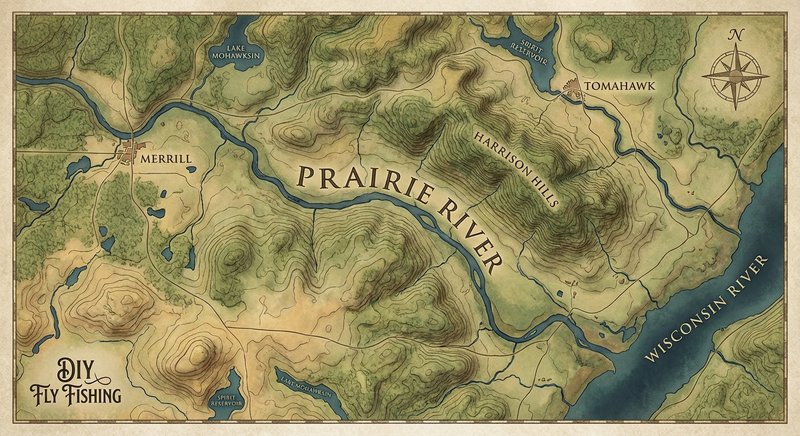
Prairie River
Fly fishing in Wisconsin · Beginner · Best seasons: Summer, Fall
Target Species
Brook Trout, Brown Trout
About This Water
Northern Wisconsin freestone with brook and brown trout. Remote wilderness fishing.
Fishing Recommendations
The Prairie River in North-Central Wisconsin is often whispered about in the same breath as the state's most legendary waters. Flowing through Langlade and Lincoln counties before joining the Wisconsin River at Merrill, it is a river of two characters: a intimate, cold-water brook trout sanctuary in its upper reaches and a robust, boulder-strewn brown trout powerhouse in its lower stretches.
Here is your comprehensive guide to fly fishing the Prairie River.
🎣 Location Overview
The Prairie River is a classic freestone-style river with significant groundwater influence. What makes it special is its diversity of habitat. Following the removal of several dams years ago, the river has reclaimed its natural gradient, creating a series of riffles, deep pools, and the famous "Old Dells" area—a scenic gorge with dramatic rock formations.
The water is generally clear but carries a slight "tannin" tea-stain common in the Northwoods. It is a wading angler’s dream, featuring a substrate of gravel, cobble, and large granite boulders. Unlike the technical spring creeks of the Driftless Area, the Prairie feels more like a mountain stream, requiring athletic wading and versatile casting.
🐟 Target Species & Behavior
- Brook Trout: Concentrated in the upper reaches (upstream of Hwy 17). These are the "jewels" of the Prairie. They are opportunistic but wary. In the summer, they hold in the coldest oxygenated bubbles—look for them in the "pocket water" behind boulders.
- Brown Trout: As the river gains volume moving toward Merrill, the Brown Trout take over. The Prairie is known for producing "trophy" class browns (18–22+ inches).
- Behavior: The big browns are notoriously light-sensitive. During the summer, they tuck deep under undercut banks or heavy log jams during the day, emerging at dusk to hunt. In the fall, they become highly territorial and aggressive as they prepare for the spawn.
📅 Best Times to Fish
Summer (June – August)
- Optimal Window: June is the peak. This is "Hatch Heaven" on the Prairie.
- Time of Day: Early morning for tricos or late evening for the heavy hitters.
- Conditions: Look for overcast days. If the water temperature hits 68°F, give the fish a break and head to the colder headwaters.
Fall (September – October)
- Optimal Window: Late September through the end of the season (check WI DNR inland closure dates, usually Oct 15).
- Time of Day: Mid-day becomes more productive as the sun warms the water slightly.
- Conditions: A crisp, drizzly October day is prime for streamer fishing for big, migrating browns.
🪰 Recommended Flies & Techniques
Dry Flies
- The Classics: Adams (12-16), Elk Hair Caddis (14-18), and Light Cahills.
- The Big Guys: During June, you must have Brown Drakes and Hexagenia patterns. The "Hex" hatch on the Prairie can be legendary.
- Terrestrials: In late summer, a Dave’s Hopper or a Chernobyl Ant dropped tight against the grassy banks is deadly.
Nymphs
- Searching: Prince Nymphs (12-14), Pheasant Tails (14-18), and Gold-Ribbed Hare’s Ears.
- The "Prairie Special": Use weighted Stonefly nymphs in the deeper runs and around the boulders of the Old Dells.
Streamers
- Patterns: Black or Olive Woolly Buggers, Muddler Minnows (representing the river's sculpin population), and Kelly Galloup-style articulated streamers for the fall.
- Technique: "Pound the banks." Cast as close to wood cover as possible and use aggressive strips.
💡 Pro Tips & Local Knowledge
- The Old Dells Section: This is the most scenic part of the river. Focus on the pocket water. Every pocket behind a boulder has the potential to hold a fish.
- The "Northwoods Swing": In the wider lower sections, swinging a pair of wet flies (like a soft hackle) across the riffles is a highly effective, traditional Wisconsin technique that covers a lot of water.
- Wading Caution: The rocks in the Prairie are notoriously "greased" with algae and can be very round. Studded wading boots and a staff are not just recommendations; they are necessities here.
- The "Dam" Effect: Focus on the stretches where the old dams used to be (Ward Dam and Prairie River Dam sites). The river is still "sorting" its gravel here, and the spawning habitat is excellent.
⚠️ Important Information
- Access: Wisconsin has excellent "Stream Bank Protection" programs. Look for the yellow DNR signs. Major access points include road crossings at Hwy 17, Hwy J, and the Hayloft Rd area.
- Regulations: The Prairie River has varying regulations. Some sections are Category 5 (Special Regulations) which may include size limits or artificial-only lures. Always check the WI DNR Trout Tool before your trip.
- Environment: This is black bear and eagle country. Keep your eyes peeled and your food secured.
- Permits: A Wisconsin Inland Trout Stamp and a valid Fishing License are required.
Guide’s Final Word: The Prairie is a "blue-collar" trout stream. It doesn't give up its trophies easily, but for the angler who is willing to wade hard, cast under low branches, and stay until the bats come out during a Hex hatch, it is one of the most rewarding rivers in the Midwest.
Bug Hatches & Matching Flies
| Hatch | Type | Peak months | Time of day | Hook sizes | Matching flies |
|---|---|---|---|---|---|
| Blue-Winged Olive Baetis / Pseudocloeon | mayfly | April, May, September, October | Midday | #18-22 | RS2 #20-22, BWO Sparkle Dun #18-20, Pheasant Tail #18-22 |
| Hendrickson Ephemerella subvaria | mayfly | May | Afternoon | #12-14 | Red Quill #12-14, Hendrickson Emerger #14, Gold Ribbed Hare's Ear #12-14 |
| Grannom Caddis Brachycentrus | caddis | May | All Day | #14-16 | Elk Hair Caddis (Olive) #14-16, LaFontaine's Deep Sparkle Pupa #14-16, Peacock Caddis #16 |
| Sulphur Ephemerella invaria | mayfly | June | Evening | #14-18 | Sulphur Parachute #16-18, Sulphur Cripple #16, Pheasant Tail (Flashback) #16-18 |
| Light Cahill Stenacron canadense | mayfly | June, July | Evening | #12-14 | Light Cahill #12-14, Cream Usual #14, Gold Ribbed Hare's Ear #14 |
| Trico Tricorythodes | mayfly | July, August, September | Morning | #22-26 | Trico Spinner #22-24, Trico Parachute #22, Zebra Midge #22 |
| Cinnamon Caddis Hydropsyche | caddis | June, July, August | Evening | #14-18 | Elk Hair Caddis (Tan) #14-18, Hydropsyche Larva #14-16, X-Caddis #16 |
| Golden Stonefly Acronuria | stonefly | June | Evening/Night | #6-10 | Pats Rubber Legs #8-10, Stimulator (Yellow) #8-12, Golden Stone Nymph #8-10 |
| Terrestrials N/A | terrestrial | July, August, September | Midday | #10-18 | Parachute Hopper #10-12, Black Foam Ant #16-18, Dave's Beetle #14-16 |